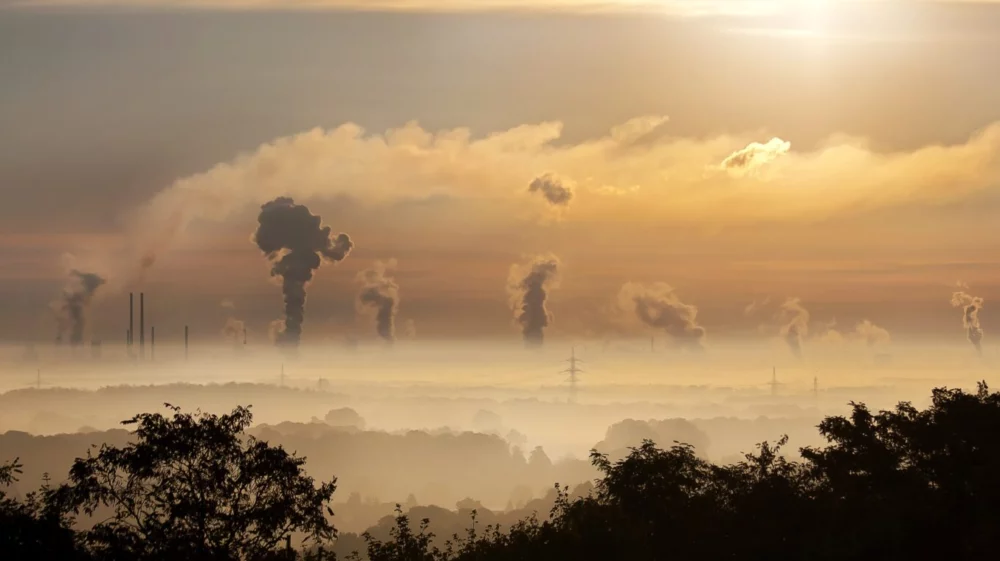
Recent articles in African Business and Inter Press Service highlighted SEI’s work in air quality monitoring, drawing attention to the high levels of air pollution in Africa.
Photo: Suee Generis/Pixabay
Inter Press Service cited a joint study by the Dar es Salaam Institute of Technology (DIT) and Stockholm Environment Institute (SEI) that revealed serious air pollution in Dar es Salaam. Real-time data from 14 air quality stations, collected from May 2021 to February 2022, showed levels of major air pollutants (PM2.5 and PM10) exceeded the guidelines by World Health Organization (WHO). At their peak, daily PM2.5 levels reached 130 µg/m³, eight times the WHO limit.
Commenting on the findings of the study, SEI’s Jacqueline Senyagwa highlighted the public health risks associated with air pollution and emphasized the importance of stronger monitoring systems and enforcement.
The African Business reported that most of South Africa’s air quality monitoring stations are not working, leaving large gaps in data on dangerous pollutants. Of 130 stations nationwide, only 44 were fully operational in July 2025, while nearly half were offline. However, South Africa still has better monitoring capacity than most African countries.
Recognizing the need to address air pollution in Africa, SEI’s Ngongang Wandji Danube Kirt highlighted the need for stakeholders to build air quality monitoring infrastructure throughout Africa.
Project / This project will build scientific evidence and knowledge platforms for urban air quality and climate resilience.
Event on 08 December / In this fourth CS Co-labs discussion session we will explore the use of digital tools in different aspects of citizen science projects.
SEI brief / This brief examines how interest-free cooperatives can help Nigerian smallholders address climate and sustainability challenges.
Media advisory / Experts from SEI will be at CBD COP17 in Yerevan from 19–30 October and are available for commentary and analysis.