As coastal ecosystems deteriorate, local communities are searching for ways to safeguard the ecosystems they rely on for food, livelihoods and storm protection. But three SEI-led living labs in the Caribbean offer hope, showing that community-led, place-based interventions can make a measurable difference. Here are central lessons on how to reverse the decline of critical ecosystems.
In the Caribbean, one of the world’s most climate-vulnerable regions, coastal ecosystems are under acute strain. Coral reefs, mangroves and coastal lagoons are being hit hard by rising seas, pollution and urbanization. Yet degradation can be addressed through practical, science-based and locally led interventions, an insight that made SEI establish a series of living labs in the Caribbean region. In Colombia, Cuba and the Dominican Republic, communities, local organizations and researchers are working together to test solutions in real-world conditions.
“The aim is not to recreate these coastal ecosystems exactly as they once were, but to strengthen their base components so they can continue providing critical ecosystem ‘services’ such as storm surge erosion protection, fish habitat productivity and biodiversity. These coastal landscapes become a frontline defence – helping to protect the ecosystems we are striving to conserve,” said Arno Rosemarin, senior research fellow with SEI’s Water, Coasts and Ocean team.
The living labs are now starting to show real results.
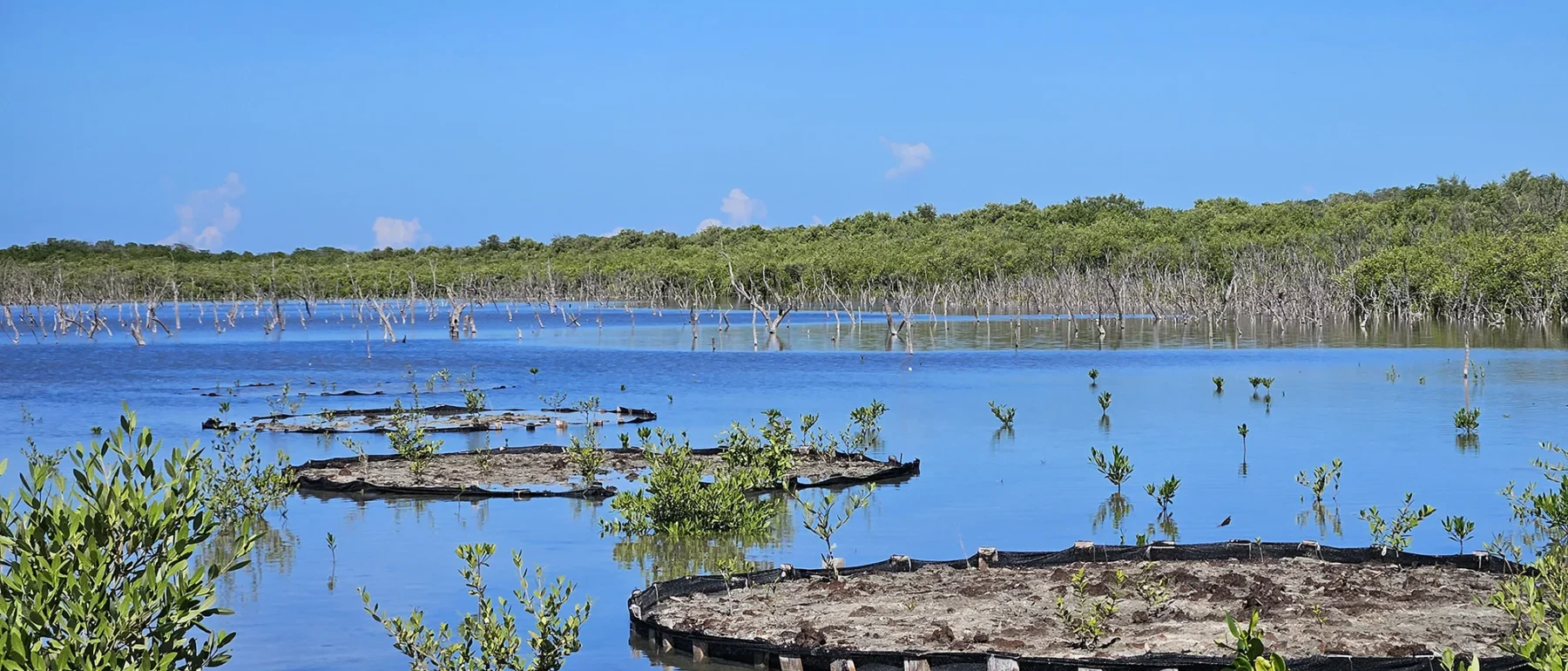
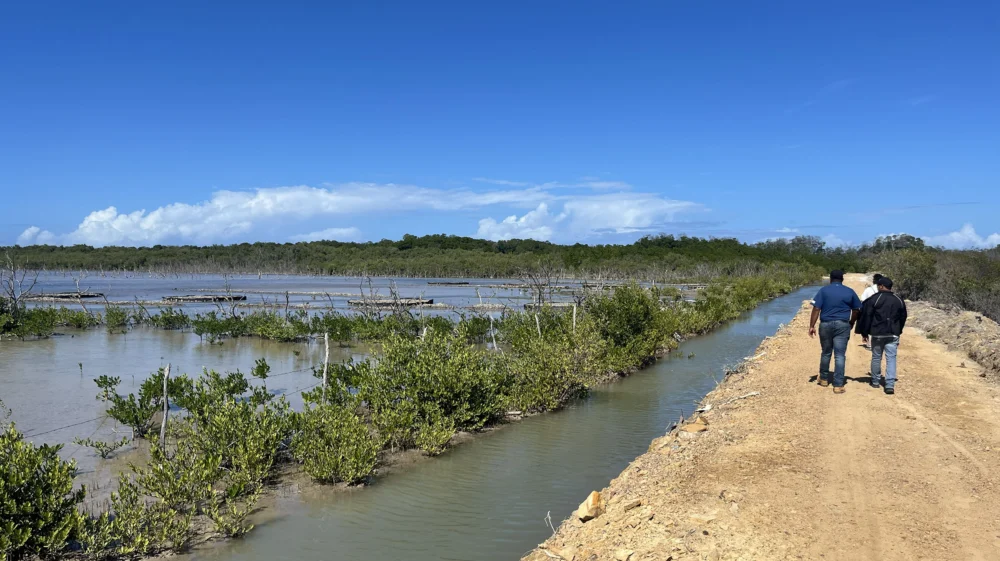
The living lab in Montecristi, Dominican Republic, is testing an ecological restoration approach that works with the natural recovery processes of the mangrove rather than relying on planting alone. The first step has been to restore water circulation by reopening primary and secondary channels and reducing the hypersaline conditions that contributed to mangrove die-off. In areas where flooding and local topography still make natural regeneration difficult, the team is also creating small, raised mounds to act as dispersal centres, where mangrove propagules can settle and establish more easily.
The approach draws on established practice for mangrove restoration, but has been adapted to Montecristi’s hydrology, landscape and available resources, with local community brigades directly involved in the work. To date, around 950 metres of canals have been opened or rehabilitated as part of the intervention.
Progress so far has been very encouraging, according to Daniela Duran, research associate at SEI’s Water, Coasts and Ocean team:
We are already seeing how the ecosystem in Montecristi responds as the hydrological conditions improve.
Daniela Duran
The results are not only ecological, Duran noted: “Local fishers, crabbers, salt workers, landowners, and other community members are directly involved in the restoration and monitoring, bringing knowledge of the landscape that technical assessments alone cannot provide. That combination of visible recovery and local stewardship is what gives the intervention a real chance of lasting beyond the project.”
The living lab is part of the project Resilient Coasts Caribbean Sea, funded by the Swedish Postcode Lottery Foundation and carried out together with the local community, the Instituto Dominicano de Desarrollo Integral (IDDI) and the local NGO Agrofrontera.
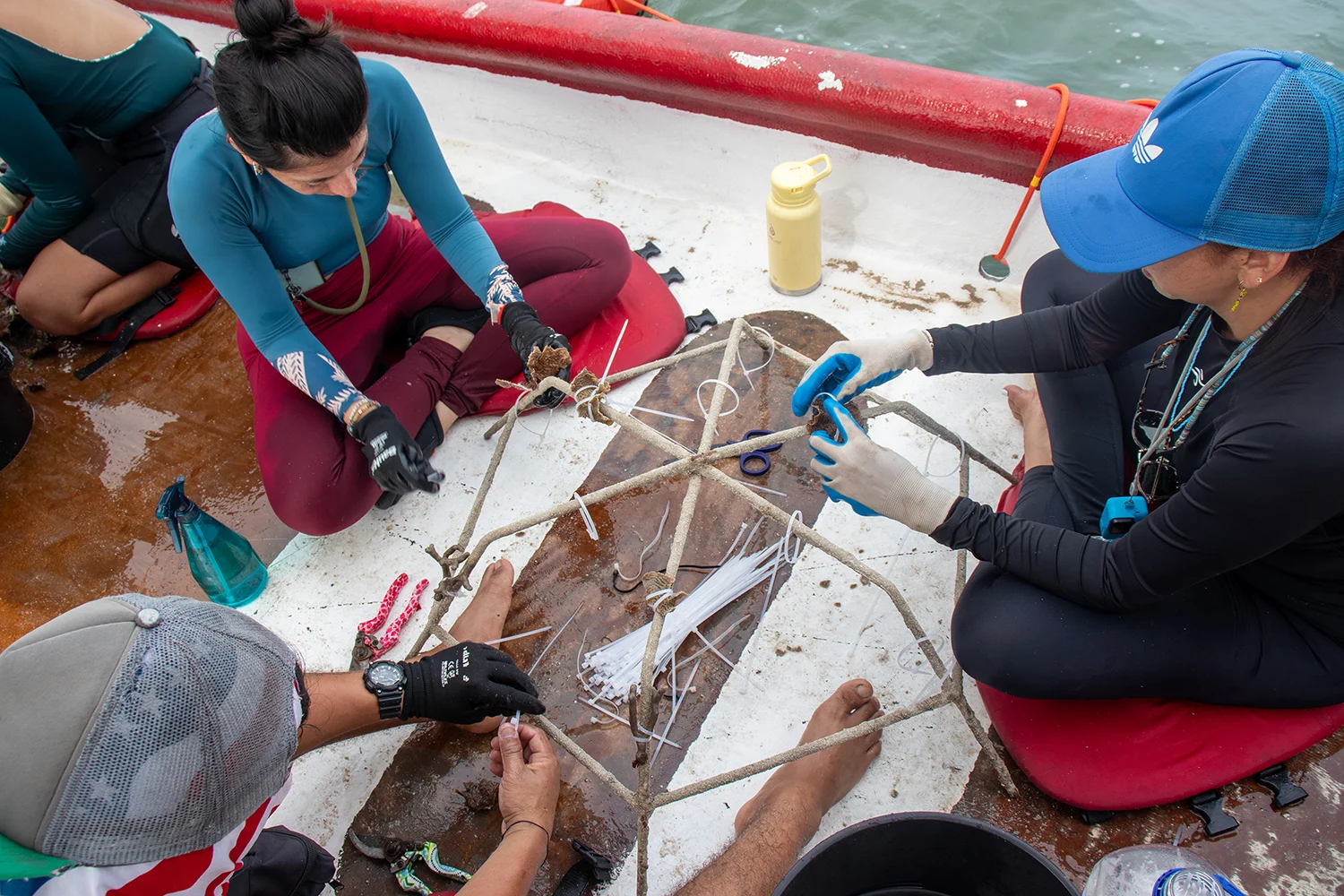
Preparing to deploy a coral reef star in Varadero, Colombia.
Photo: Camilo Martelo / SEI.
The living lab in Varadero, Colombia, is also part of the Resilient Coasts project. The lab is focused on restoring a coral reef in Cartagena Bay that has survived decades of contamination and destructive fishing practices. The initiative combines coral restoration techniques with capacity building, and results are promising.
A year into living lab efforts, the local partner Corales de Paz has deployed more than 300 “reef stars” – hexagonal, sand-coated steel frames – to stabilize coral gravel, support transplanted coral fragments and accelerate reef growth. So far, over 6000 coral fragments have been transplanted across 400 m², with survival rates close to 90% in this initial stage, despite a cold front that hit the Caribbean. Meanwhile, residents from the nearby island of Bocachica have been trained and certified as PADI Open Water Divers and Reef Check Eco-Divers. The training builds local capacity for participation in reef monitoring and sustainable tourism activities.
Lucia Licero, research associate with SEI Latin America’s water team, is pleased with the results:
What’s exciting about Varadero is that the reef is showing real signs of recovery.
Lucia Licero
The benefits are not only ecological, Licero explained: “Local folks from Bocachica are now certified Reef Check divers, children in the local school are learning why these reefs matter to their own future, and we’re building ecotourism routes that turn conservation into a livelihood, not just a project. That’s what makes this feel sustainable – the community isn’t watching the restoration happen; they’re leading it,” she said.
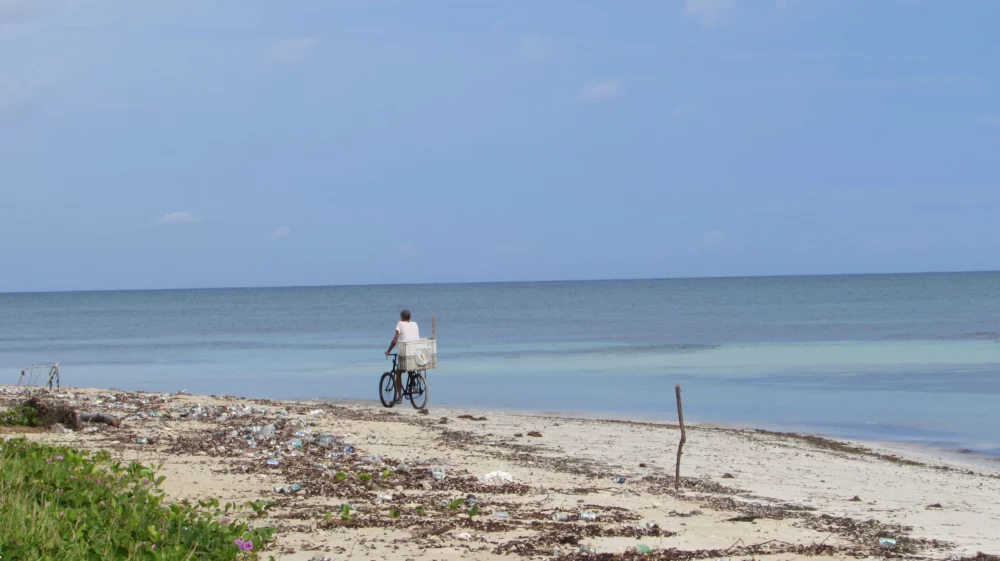
The easternmost living lab, in Rincón de Guanabo just outside Cuba’s capital Havana, seeks to revitalize a degraded coastal lagoon–mangrove system located within a historic heritage site. The site can be described as an ecosystem in transition: that is, an ecosystem that has been substantially altered by human and environmental pressures, but that still retains ecological functions and the potential for recovery. Past infrastructure projects altered the area’s hydrology and increased salinity, placing mangroves under stress, while climate change and urban expansion continue to intensify these pressures.
The priority intervention to restore the coastal lagoon’s ecological function is to reconnect it with upstream freshwater sources to rebalance salinity levels and support natural mangrove regeneration. The project’s second-year plan includes targeted field assessments, community co-design of nature-based solutions and exploration of circular blue bioeconomy pathways, including ecotourism and mangrove beekeeping, with the aim of creating new economic opportunities and diversifying local sources of income alongside ecosystem restoration.
The Guanabo living lab is part of the Innovacuba programme, funded by the Swedish International Development Cooperation Agency, Sida, with activities carried out by local partners Instituto de Geofísica y Astronomía (IGA), Instituto de Geografía Tropical (IGT) and Agencia de Medio Ambiente (AMA).
The aim of these living labs is to develop relevant local solutions and to generate a better understanding of community-led ecosystem rehabilitation. So far, five lessons stand out:
Insights from the living labs, and SEI’s general research on coastal resilience, are now shared with other actors across the Caribbean. This includes a series of country-specific training courses on funding and business development for nature-based solutions as well as training activities for technical staff managing coastal areas, co-organized together with ITACA Solutions. SEI is also contributing to the Caribbean network (CARICOAST), dedicated to sharing knowledge, testing ideas and building partnerships.
Interested in learning more? Explore the websites of Innovacuba and Resilient Coasts. More information about training activities can be found on the website of the SEI-led weADAPT network.
Anyone interested is also welcome to join the Caribbean Coastal Climate Resilience Network (CARICOAST). Launched in December 2025, this is an open, collaborative network uniting professionals across sectors and scales. The aim is to share knowledge, spotlight innovation and strengthen coastal adaptation and resilience in the Caribbean.
Project / The Resilient Coasts Caribbean Sea project operates "living labs" for coastal ecosystem management using nature-based solutions.
Program / The Innovacuba programme promotes innovation for climate change adaptation, bioeconomy and nature-based solutions in Cuba.
Feature / Mangroves are returning to Montecristi, where an SEI-led living lab is piloting a comprehensive restoration approach.
Past event / The SEI-hosted Adaptation Research Alliance, with support from SEI Africa, will host the workshop to connect adaptation research with policy and practice.
Feature / In Colombia's Tropical Andes, land once shaped by conflict is becoming a living laboratory for agroecological regeneration.