SEI and partners in the Resilient Planet Initiative are working with residents of an informal settlement of Nairobi to co-develop and test a smartphone app to bring them into a worldwide climate adaptation information-exchange network tailored to their needs. The app aims to help residents find measures that can address climate change impacts in their communities, and to give them a way to share their own insights with other vulnerable urban areas.
Kibera, believed to be one of the world’s largest slums, is home to an estimated 700,000 people struggling to live on low wages, in make-shift houses, and without basic infrastructure or land rights. Such informal settlements are home to more than half the population of Kenya and a growing population worldwide, including more than 1 billion people in fast-expanding urban areas of Africa and Asia.
The impacts of climate change are making life in informal settlements more difficult. In Kenya, for example, “turbo-charged” floods of 2024 led to a dam breach, landslides, the loss of dozens of lives, and the destruction of homes and livelihoods of tens of thousands of people.
Now, residents of Kibera are part of a global effort to help find ways to address the growing impacts of climate change on those living in informal settlements. They are testing new technologies that aim to empower and inform residents of informal settlements worldwide by establishing a global platform and collaborative online network dedicated specifically to addressing the problems they face as climate impacts increase and enhancing the resilience of these vulnerable communities.
Discover how the initiative is co-creating a mobile app with residents of information settlements to help them better address the impacts of climate change on their communities.
Video: Cynthia Wamukota, SEI, and Know Your City TV (KYCTV), a creative collective of young people organized by Slum Dwellers International. SEI gratefully acknowledges the work of KYCTV in making this video.
They are participating in the Resilient Planet Initiative, a project that is developing a mobile phone app that residents can use to find and share relevant information to help them better prepare for and cope with climate change impacts. This app is intended to serve as an exchange hub, giving users a way to find information on measures that do and do not work, and a forum to share insights and experiences from their own communities with people facing similar situations in other areas.
The app aims to give people access to two key sources of information: a data hub that brings together open and accessible sources of data on climate risks; and a solutions hub that showcases best practices and workable actions taken by communities, businesses, NGOs and governments to enhance climate resilience.
This spring, women leaders in informal settlements of Nairobi participated in a three-day workshop to co-design and test the app and its platform with representatives of the organizations working on the initiative.
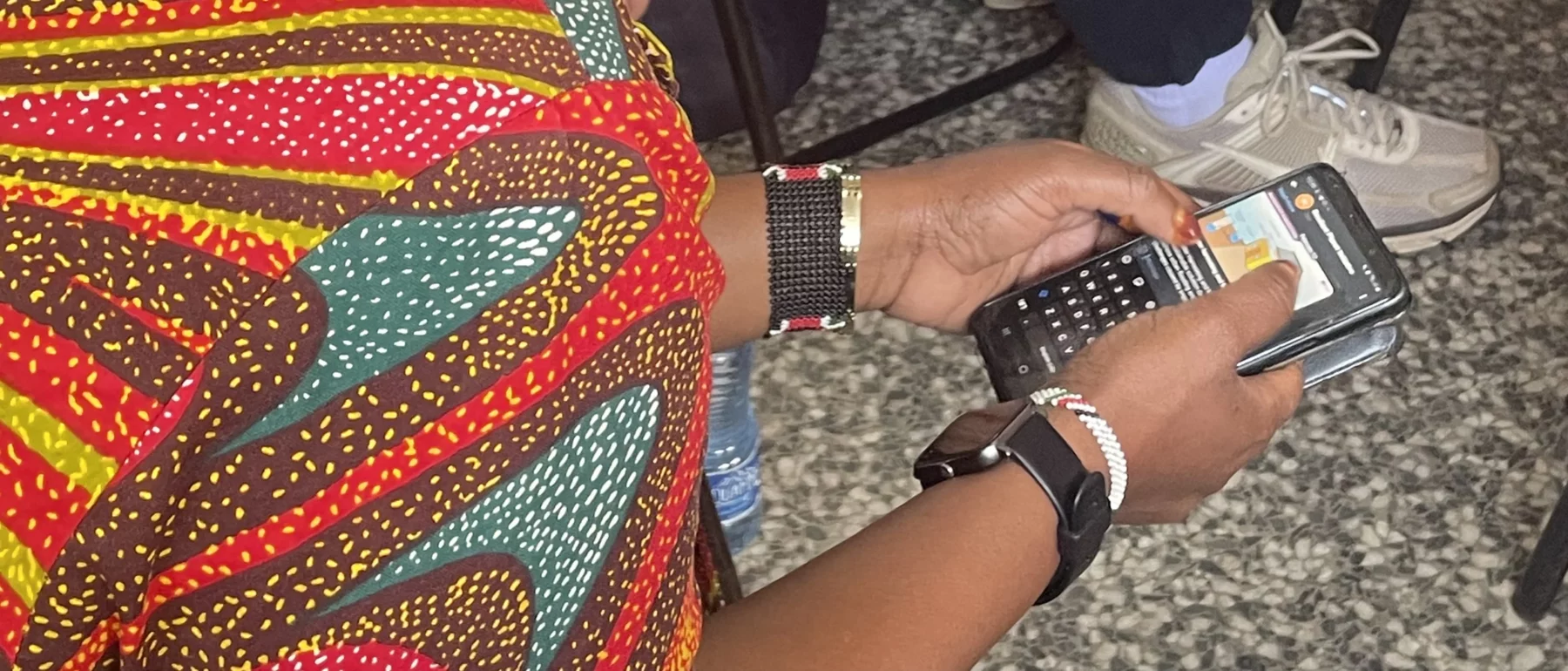
Residents at the workshop tested prototypes of the app.
Photo: Sukaina Bharwani / SEI.
The initiative is targeting women leaders in informal settlements – including climate champions in these communities – because women often find themselves on the frontlines in crises, and they have insights into community challenges, and efforts that hold promise or have not worked in the past.
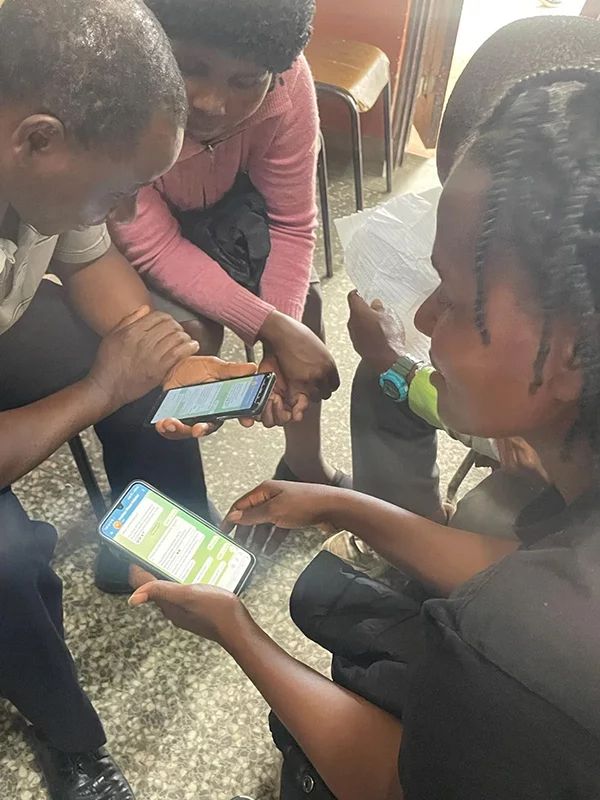
In workshops in Kibera and two other Nairobi informal settlements, Mukuru and Mathare, residents learned how to download and access the app. They tested the prototype, offered feedback, and gave their ideas for features to incorporate down the line to make it more user friendly and useful.
“It’s a great idea, but it must be detailed, localized and accessible to those without smartphones”, said Purity Atieno Onyango, a Kibera resident and climate change champion for the community. “It should involve everyone, from business owners to waste collectors, ensuring that information is truly community owned”, she said. “It should be tested by all residents before the launch so that they can also give feedback that we might have missed.”
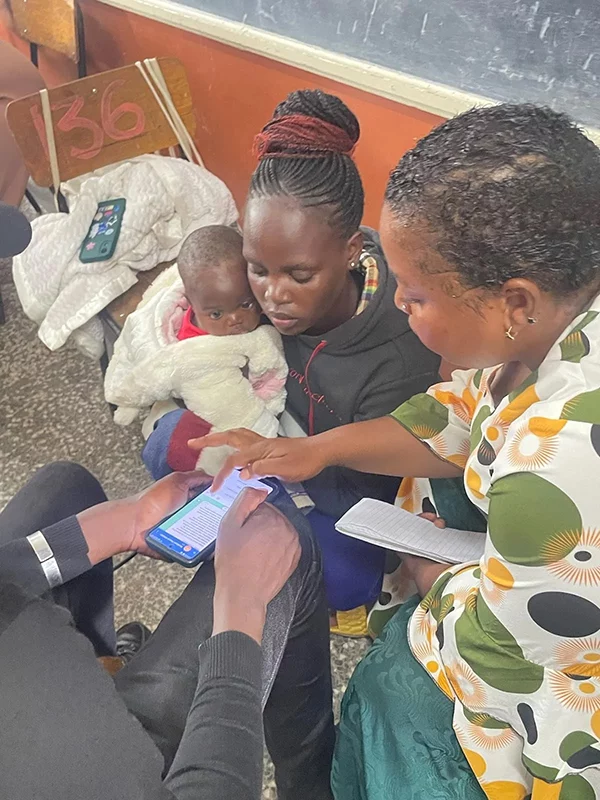
A workshop to test the app in Mathare. Photo: Sukaina Bharwani / SEI
Photo: Sukaina Bharwani / SEI.
Residents at the workshop suggested that the app should offer information in local languages (Swahili, Kikuyu and Luo); use voice recognition features to help those who cannot read or write; and provide offline functionality to deal with unreliable internet and avoid costs for use of data and messaging; (by using USSD codes, for example).
Having offline access to essential information would improve the app’s utility in emergencies. Residents want the app to incorporate emergency alerts and early warning systems prior to and during climate emergencies (like flash floods). They suggested that the app should send immediate offline push notifications or SMS alerts to help people prepare for and act in emergency situations. They also expressed an interest in having interactive tools that could help them design local climate adaptation strategies with templates for emergency plans, housing modifications, and community-wide resilience projects.
The app will initially focus on flooding, extreme heat and urban fires, but eventually developers hope that it will be able to address other critical environmental and climate issues, such as droughts, landslides, and diseases. Plans are to share the app with informal settlements in other areas of Africa and in other parts of the world, so that residents in these vulnerable areas can help one another.
The initiative, which plans to launch the app later this year, is funded by Google.org. It is a collaboration of the Global Resilience Partnership, Society for the Promotion of Area Resource Centers, Slum Dwellers International, Ona, the University of Oxford, the Center for Climate and Resilience Research (University of Chile), and SEI Oxford.
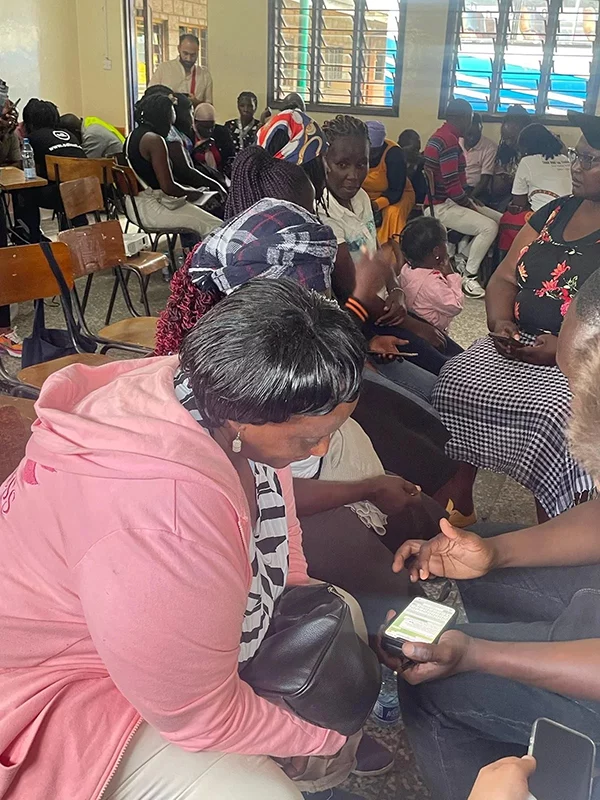
Residents made suggstions about how to improve the app. Photo: Sukaina Bharwani / SEI
Photo: Sukaina Bharwani / SEI.
 Cynthia Wamukota ([email protected]) worked with the Resilient Planet Initiative during her internship at SEI Oxford. With her internship ending, she is poised to work with the Intergovernmental Panel on Climate Change as a chapter scientist for its Special Report on Climate Change and Cities.
She is an urban planner with expertise in urban development, urban governance and public policy. She specializes in climate resilience, just transition, urban governance and inclusive climate action within cities.
She has a master’s degree in public policy from the University of Oxford, a master’s degree in sustainable urban development from the University of Nairobi, and a bachelor’s degree in urban and regional planning from the University of Nairobi.
Project / The Resilient Planet Initiative aims to help those living in informal settlements in Eastern Africa adapt to the growing challenges posed by climate change.
Perspective / Biochar looks simple, but its role is not.
Journal article / This study shows how climate adaptation planning for sanitation in Nairobi reinforces inequality by favouring sewer systems over equitable solutions.
Feature / The ARA, a global collaborative effort hosted by SEI and Chulalongkorn University, has been working to ensure research serves those on the climate frontline.