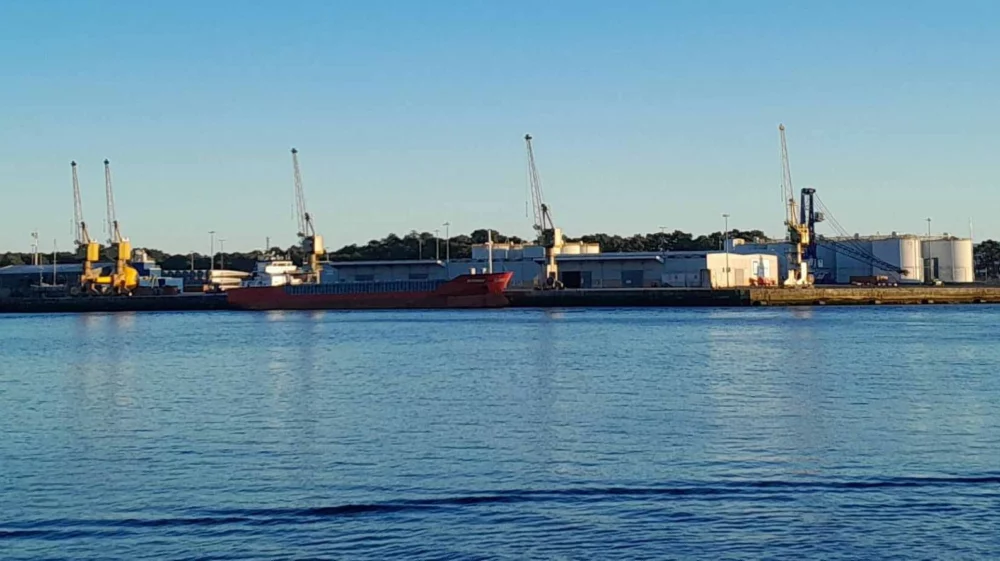
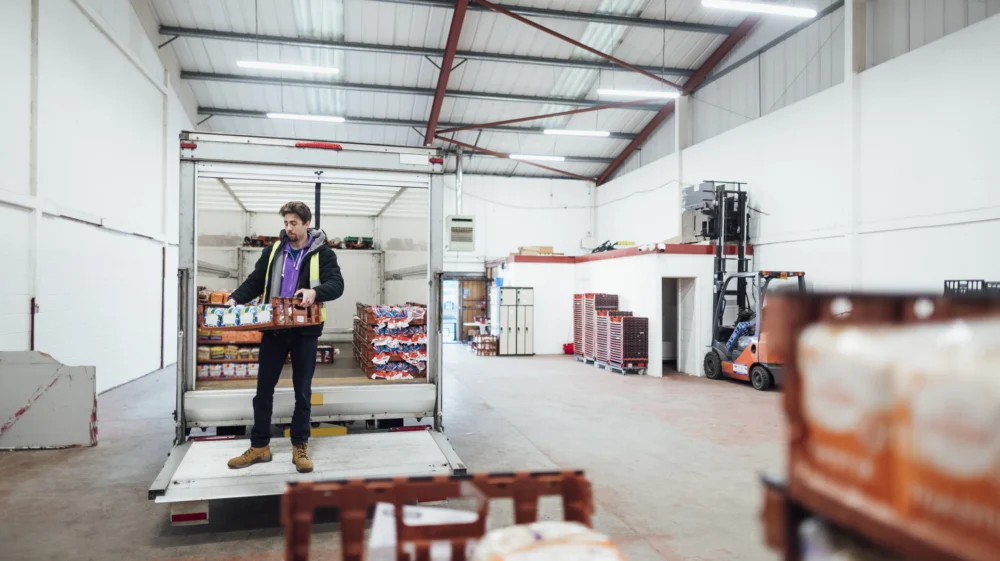
Without functioning ports, Sweden would come to a halt. But how ready are Swedish ports to cope with threats from climate change and growing geopolitical tensions?
With its long coastline, Sweden is unusually dependent on ports compared with many other countries – around 90% of the country’s imports and exports pass through a port. Exports are also the backbone of the Swedish economy, while the country has a relatively low level of self-sufficiency for example when it comes to food.
If a port is disrupted, it can quickly have significant consequences, not only for Sweden but also for neighbouring countries. Consequently, both the EU and NATO have set requirements for member countries to strengthen security around ports. Efforts are under way to understand the risks faced by Swedish ports and what is already being done to manage them, but there are also new initiatives to develop expertise and methods.
To examine the preparedness of Sweden’s ports, and to strengthen their resilience, the Swedish Transport Administration is funding the project Increased Preparedness for Swedish Port Regions, led by SEI. Over the course of three years, experts from various institutions will collaborate to develop knowledge and methods.
The project is led by SEI, in collaboration with experts from the Maritime Knowledge Centre in Malmö (MKC), Research Institutes of Sweden (RISE), the Swedish Maritime Administration (SjöV), and the Stockholm International Water Institute (SIWI). The project also includes stakeholders linked to port operations – Copenhagen Malmö Port (CMP), the Coast Guard, Malmö City, Region Gotland, the Swedish Sea Rescue Society (SSRS), and the Port of Trelleborg.
The project will develop a climate service to help port regions create climate adaptation plans and materials to support decision-making and investment. Furthermore, a mapping exercise will identify potential domino effects” that could affect critical infrastructure and essential services as a result of climate change impacts. With this knowledge, it will be easier for port regions to make decisions based on multiple objectives, including security, socio-economic conditions, and climate adaptation.
Karina Barquet, SEI Senior Researcher and project leader, emphasizes that climate adaptation requires taking a broader perspective than has so far been typical. It is not enough for individual sectors, such as the food industry or the transport sector, to analyse their own risks.
“It is not always sufficient to just consider the direct impact of a threat. We need to understand the cascading effects that could spread between different essential societal functions. With that knowledge, we can prioritize locations and infrastructure where disruptions could cause the most damage.”
With this perspective, it becomes easier to identify the most effective measures, according to Barquet.
“We won’t be able to adapt everywhere, and in some cases, adaptation isn’t the solution. Instead, we need tools that help us direct efforts to the areas where they will be most beneficial. The methods we develop – based on climate and risk research – can also be valuable for broader security and preparedness,” she says.
Barquet’s reasoning aligns closely with the conclusions of the recent Swedish government inquiry, Better Conditions for Climate Adaptation (SOU 2025:51), which pointed to the need for clearer responsibilities, new incentives, and more robust institutional tools for society to meet future climate and security challenges. Similar priorities are also raised internationally, including in the TT Club/ICHCA report Climate-Ready Supply Chain, which emphasizes that those responsible for ports, waterways, and logistics must act quickly to climate-proof supply chains and thereby the resilience of entire societies.
In its initial phase, researchers in the project are analyzing what is already being done, both in Sweden and internationally. Malin Lundberg Ingemarsson from SIWI has just completed a current situation analysis with a systematic review of climate adaptation efforts in the port regions of Copenhagen-Malmö, Trelleborg, and Visby.
Malin Lundberg Ingemarsson notes that adaptation involves responding to both the effects of climate change and variations in the hydrological cycle. This requires integrated approaches to strengthen the resilience of port regions.
“It’s clear that a lot of work is already being done, but to accelerate the pace of climate adaptation, port region stakeholders are calling for increased funding and economic incentives, improved legislation, and better access to data and forecasts. The study shows that stakeholders are seeking to collaborate and share knowledge to build capacity to meet these challenges,” says Malin Lundberg Ingemarsson.
The recent conference Future-proofing our Port Cities in Malmö is an example of how different ports are now trying to collaborate more and learn from each other. SEI participated, alongside other researchers and many representatives from ports, authorities, and businesses. The discussions mainly revolved around climate adaptation and the changing security situation.
“It’s clear that the role of ports is changing, from primarily being transport hubs to also becoming energy hubs and central nodes in national defence. The new security policy requirements underline the importance of ports for military operations, communication, situational awareness, civil defence, and supply, as well as for strengthening resilience and security. Our project can help ports meet the new demands placed upon them,” said Karina Barquet.
Project / This project addresses new and complex risks linked to the climate crisis and other societal changes.
Press release / Berget AI releases an open-source method for calculating carbon emissions of every individual AI request, developed with SEI, WattTime and Klimatkollen.
Journal article / Using a simulated Swedish food supply network, this research explores how agricultural losses caused by drought affect food distribution and consumer demand.
Past event / SEI joins the Climate Week in New York to highlight global leadership and finance solutions for accelerating the transition to net zero industry.