part of Change stories
Start readingThe Sustainable Mekong Research Network, SUMERNET, was founded in 2005 by SEI and 13 other organizations, with long-term funding from Sida, to strengthen the Mekong Region’s evidence-based policy for sustainable development.
With SEI as its Secretariat, SUMERNET has since grown over the past two decades into one of the longest lived and largest regional collaboration and knowledge exchange networks in the Mekong Region, with over 900 individual members from over 400 organizations working on sustainable development.
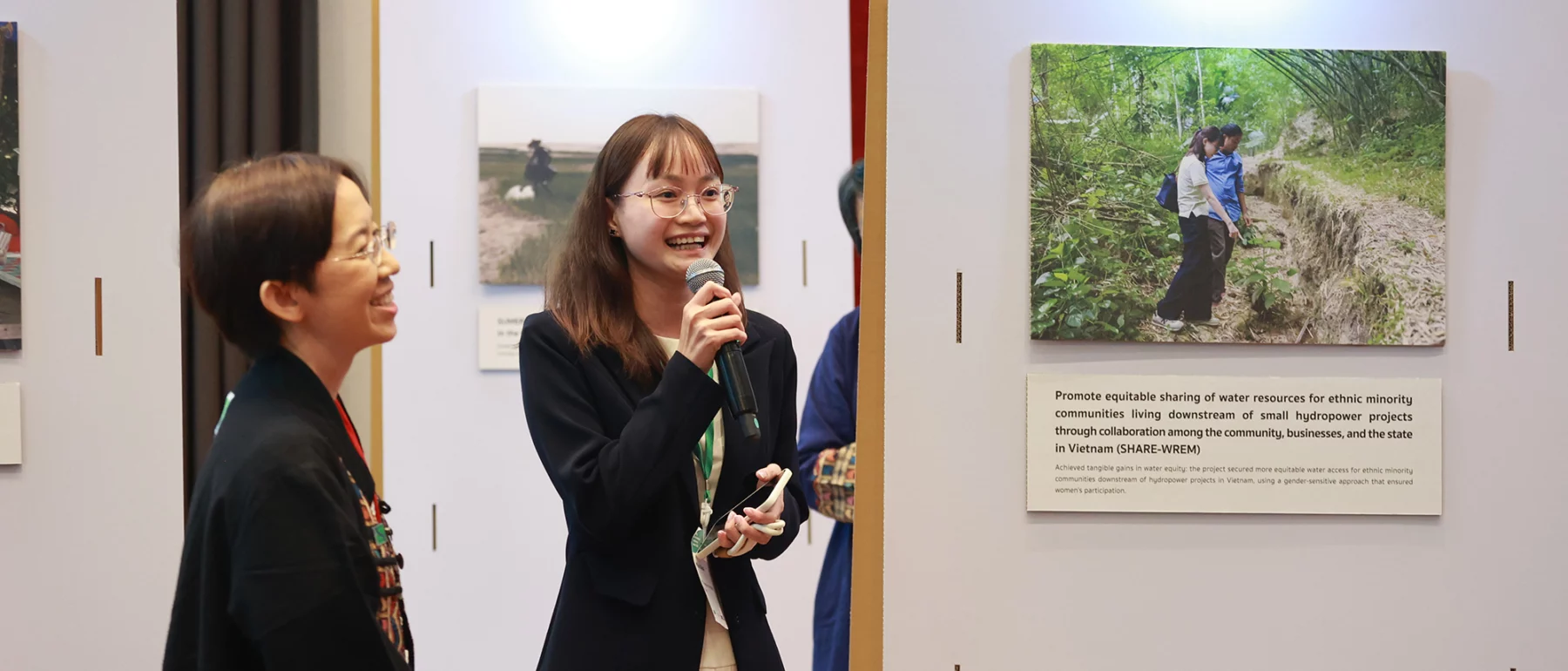
SUMERNET’s unique focus on multi-country, cross-border collaborative research has provided novel opportunities for researchers, policymakers, planners, youth, think tanks, and civil society from nations across the Mekong Region to work together on the ground to tackle shared issues and transboundary problems – in a region where transboundary cooperation is a must to address common environmental problems, but seldom easy or straightforward. Its deeply collaborative approach combines capacity development, policy engagement, competitive grants, and a safe convening space to build a community of researchers that can work together with peers in other countries and also in direct collaboration with relevant policy makers to build a more sustainable Mekong Region.
Here we share three examples illustrating the different ways SUMERNET has contributed to strengthening transboundary cooperation on environmental issues, including increased transparency and data sharing, developing an evidence base that responds to local needs, and enhanced research capacity in the region.
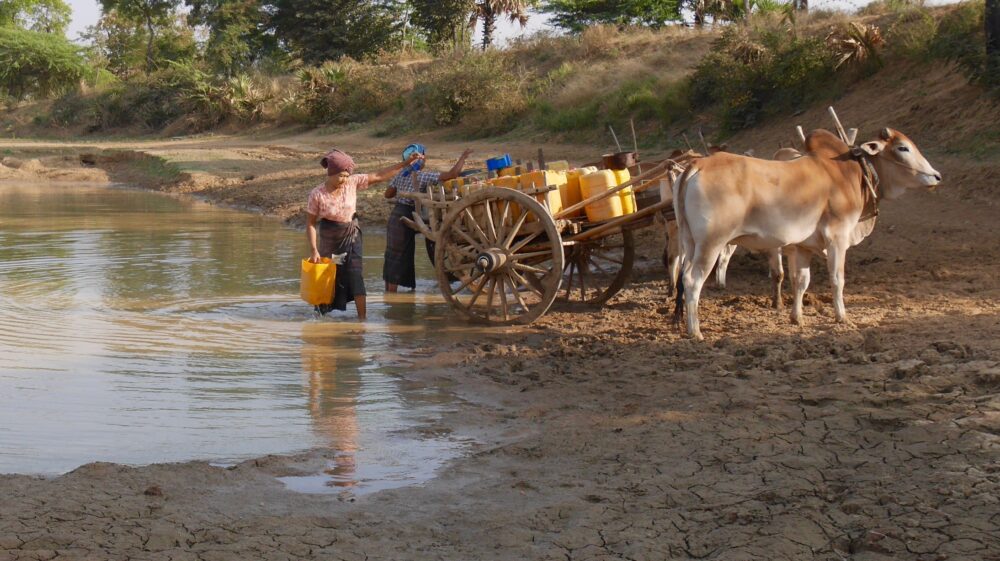
The development of hydropower in the Mekong Region to meet national energy demands and generate revenue has led to a cascade of large dams in the mainstream Mekong and many of its tributaries. Together with intensifying climate and other environmental impacts, these dams have fundamentally altered the basin’s hydrology and ecology. Limited access to upstream dam data has hindered the ability of the lower Mekong countries to manage the river’s altered flows.
SUMERNET has relied on trusted long-term partnerships with local governments and organizations to work on these complex issues of transboundary water governance. Between 2018 and 2019, SEI led the technical implementation of a Lancang-Mekong Cooperation (LMC) framework Special Fund project in partnership with Thailand’s Office of National Water Resources and the Mekong Institute. SUMERNET Steering Committee (SSC) members advised early on the study design to ensure regional relevance and credibility.
Following SUMERNET’s co-production principles, the project brought Chinese, Lao and Thai experts directly into the joint research team and engaged national experts from all six LMC countries to assess existing data-sharing mechanisms, challenges and opportunities. This created a joint analytical and diplomatic process in which experts from upstream and downstream countries cogenerated evidence and a shared approach, rather than debating it from separate positions.
Building on this cooperation, in 2020, China agreed to expand hydrological data sharing with the Mekong River Commission (MRC) and LMC Water Center. China began providing year-round data from two upstream stations, expanding the previous sharing of only flood season data. They simultaneously launched the Lancang-Mekong Water Information Sharing Platform to provide the first public data source for hydrological data, enhancing transparency and strengthening regional cooperation.
This enhanced data sharing is already supporting critical decision-making. During a keynote speech at the fourth Lancang-Mekong Water Resources Cooperation Forum held in Wuhan, China, on 24 September 2025, LMC Water Center Secretary General Zhou Zhiwei highlighted that China has so far released nearly 100 000 pieces of hydrological data through the platform. In August 2025, China promptly shared forecasts on typhoons Kajiki and Nongfa that enabled crucial decision support for coordinated disaster prevention in the basin.
Engagement with SUMERNET enabled our research team – comprising both senior and early career scholars – to move beyond country-based research toward meaningful transboundary collaboration. Through comparative studies conducted in Thailand and Laos, SUMERNET provided a vital platform for regional networking, shared learning and joint knowledge production. This collaboration strengthened our institutional research capacity and generated academic and policy-relevant insights that continue to inform sustainable development and environmental governance in the Mekong Region.
Maniemai Thongyou, Khon Kaen University, Thailand
In August 2019, unprecedented rainfall of 218.7 mm in a single day resulted in catastrophic flash floods washing through Ban Phai town in Khon Kaen province, Thailand, causing damage exceeding THB 1 billion. This disaster exposed critical failures in the existing top-down flood management system, and a post-flood evaluation concluded that a new, community-integrated approach was urgently needed.
SUMERNET funded researchers from Mahasarakham University to collaborate with the local government to pioneer a structured co-learning and co-production initiative. The team facilitated workshops with local residents to jointly map flood patterns, vulnerabilities and historical water flows. Communities drew their own flood risk maps that visualized high-risk zones and informed collective planning, empowering residents to be active co-creators of their own safety strategies.
The collaboratively developed flood management plan was formally adopted by Ban Phai Municipality, signifying a shift towards flood management as a strategic, planned policy priority. The project established the Ban Phai People’s Council (BPC), a permanent committee that will ensure ongoing community participation in disaster risk governance. Community priorities and the co-produced plan were also integrated into key municipal documents, notably the Local Development Plan and a local Disaster Risk Reduction and Management (DRRM) ordinance.
The Ban Phai project shows how collaborative approaches can bring communities together and lead to the development of democratic local governance and social-ecological resilience, demonstrating that co-produced knowledge offers a viable, replicable model for participatory flood risk management in the Mekong Region and beyond.
Since 2005, SUMERNET capacity development grants have supported more than 400 people – researchers and research advisers as well as practitioners, media and policy advocates – including many women and young people from marginalized communities. These grants have helped project teams to improve the quality and credibility of their research and how their findings are communicated. In parallel, SUMERNET workshops further build participants’ capacity to generate academic and policy outputs. Of the 137 peer-reviewed publications generated from SUMERNET projects and members, 88 were co-authored by researchers from several countries, a result of this approach.
SUMERNET uses this expertise to strengthen other networks in the region. For example, a close collaboration with the Mekong Thought Leadership and Think Tanks Network (MTT) has built the think tanks’ and knowledge-policy organizations’ capacities in inclusive knowledge coproduction and policy engagement on water, energy and climate challenges. SUMERNET is also empowering young people and early career researchers through SUMERNET Young Professionals (SYP), a youth-led network established in 2021. SYP provides a peer-led space to learn, exchange and collaborate across borders. The SSC provides mentoring, strategic advice and facilitation support to those young professionals leading the network. To date, the network has designed and delivered 17 knowledge exchange events, fostering cross-region learning and collaboration among peers on key topics, and has grown to 248 active young members. SUMERNET’s contribution to leadership and regional cooperation is also illustrated by the stories of individuals like Phan Thanh Thanh, whose engagement with SUMERNET has enabled them to go on to develop their own cross-border research projects to drive and scale change in the region.
I regularly exchange grant opportunities with colleagues and former research partners, especially those I met through SUMERNET. One of these partnerships recently led to a meaningful milestone. Together with partners from Thailand and Cambodia, I submitted a research proposal. We were awarded the 2024 Priority Social Science Research Grant by the Association of Asian Social Science Research Councils. For me, this grant is more than just financial support. I see this as a “small win” that reflects years of learning, networking and trying. I believe that my journey with SUMERNET has played a big role in making it possible.
Phan Thanh Thanh, SUMERNET alumni and researcher at the Institute for Human, Family and Gender Studies (IHFGS)
By combining long-term engagement, trust, co-production of knowledge, regional ownership, and cooperation with like-minded networks, SUMERNET has become more than a long-term program. It is a vibrant, sustaining knowledge community that continues to attract researchers, practitioners, policy actors, media and young professionals across the Mekong Region.
In its current phase running from 2025 to 2027, SUMERNET PLUS, the network focuses specifically on supporting a just and sustainable transition towards climate resilience, expanding partnerships to also include private sector actors, and strengthening local ownership of the network.
Long-term engagement and trust building are essential for structural, multi-country, multi-actor change. The most significant shifts – new policy thinking, cross-border cooperation and community empowerment – were possible only because SUMERNET maintained a continuous 20-year presence. In a region marked by political diversity, sensitivities around water governance, and historical tensions, trust cannot be built in a single project cycle. Over time, SUMERNET became a trusted knowledge partner enabling better connections between research, policy and practice in the Mekong Region by nurturing dialogue, cooperation, and meaningful participation of communities, including marginalized groups.
Regional ownership, shared governance, and a broad, flexible mandate strengthen resilience and sustainability. SUMERNET’s transition from SEI-led program to a regionally governed network – with an elected steering committee, the SUMERNET Young Professionals (SYP), and integration with Mekong Thought Leadership and Think Tanks (MTT) – shows the power of shared leadership.
As membership expanded to more than 900 individuals from over 400 organizations, regional partners increasingly shaped agendas, led dialogues, and championed research within local, national and regional systems. Some fellows moved from being young researchers to network leaders, while think tanks strengthened policy influence at local, national and regional levels.
This inclusive governance helped SUMERNET become a regionally owned knowledge community, capable of engaging in platforms such as the MRC, LMC and Mekong Institute with a credible voice.
Strong, diverse networks accelerate change and strengthen influence by combining technical expertise, political insight, community knowledge and intergenerational leadership. When nurtured over time, networks become engines of transformation. Prior to SUMERNET, crossborder collaboration was a rare opportunity for Mekong researchers, especially early career researchers. SUMERNET’s diverse network across countries, disciplines, institutions and generations enabled adaptive agenda shifts, a bottom-up approach with demand-driven and responsive capacity strengthening, improved decision-making with trusted evidence, and faster implementation.
These dynamics produced visible impacts, with policymakers integrating SUMERNET tools and products into national planning, universities embedding co-production into their teaching or curricula, and youth leaders, young professionals, and think tanks influencing regional debates.
Because SUMERNET is a community of practice, its members continue to collaborate beyond individual grants, generating sustained ripple effects in policy, research and practice.
The first phase focused on applied research, network development, fundraising, outreach and dissemination, and capacity building.
2006–08
Nine cross-country research clusters implemented on topics covering rubber plantations, integrated farming systems, fisheries and the Mekong Delta. These established the region’s first collaborative platform linking poverty reduction and natural resource governance.
SUMERNET Phase 2 launched in 2010 with additional funding from the Climate and Development Network to promote policy-relevant collaborative research among multi-country researchers.
SEI and with core SUMERNET partners used recommendations from an independent evaluation of Phase 1 in the design of Phase 2 to address weaknesses in policy engagement. SUMERNET researchers were introduced to various monitoring tools to assess changes in knowledge, attitudes and practices.
2010–13
10 cross-border research projects funded, focusing on ecosystem services, transboundary issues, poverty and livelihoods, urbanization, and energy and climate change.
The SUMERNET Steering Committee (SSC), Advisory Committee, and Secretariat were established for this phase, and by 2013, the network expanded to include 48 organizations.
SUMERNET Phase 3
SUMERNET Phase 3 began in 2014 with a stronger emphasis on knowledge co-production, boundary partner engagement and outcomes-based planning. In response to changing policy demands, Phase 3 focused on climate compatible development, ecosystem services, local development, and regional economic integration with environmental sustainability and social equity.
2014–18
Seven projects and one regional assessment were funded, including support for wetland protection in Thailand and floating-rice revival in Viet Nam, and decision-support tools that informed a major provincial investment in groundwater development in Thailand.
SUMERNET Phase 4 – SUMERNET 4 All (S4A)
SUMERNET 4 All launched in 2019 to reduce water insecurity for all, with a focus on addressing water scarcity, flood and transboundary water challenges.
2019–24
Over 30 research and engagement projects were funded through six different granting types, involving 230 grantees (44% women and 37% early career researchers). All targeted support for vulnerable communities and those most at risk, with a strong focus on gender equality, social inclusion and human rights–based approaches.
This phase produced more than 200 products including 70 peer-reviewed papers, over 40 of which are co-authored by researchers from two or more countries.
SUMERNET Phase 5 – SUMERNET PLUS
SUMERNET PLUS launched in 2025. It focuses on creating a long-term climate-resilient Mekong through just and sustainable transitions. The new phase emphasizes sustainability and co-ownership of the network. It aims to strengthen regional partnerships, deepen integration of youth and gender equality, disability and social inclusion (GEDSI), and expand work on climate, water, agriculture, energy, forestry, and just transitions.
SUMERNET operates based on the principle that cooperation adds value, avoids duplication, and strengthens regional knowledge ecosystems. This spirit of collaboration reflects a deeply held principle shared by network members: that the Mekong is our home and our future, and working together brings the greatest benefit to society. In the first 20 years, we have fostered deep partnerships between Mekong countries, civil society, academia and the policy sphere. In the coming years, we look forward to welcoming and working more actively with the private sector, as partnerships across the sector are vital for long-term sustainability in the region.
Chayanis Krittasudthacheewa, Deputy Director of SEI Asia
Program / SUMERNET brings together research and policy partners to engage with water insecurity in the Mekong Region.
SEI annual report / Across a changing global landscape, SEI delivers knowledge and solutions to drive sustainable development forward.
Feature / A roadmap being developed under SEI’s Green Agenda suggests clearer rules could strengthen science, protect local knowledge and ensure fairly shared benefits.
Feature / Key messages from the second Joint Steering Committee (JSC) meeting on water-related collaboration between ONWR and SEI Asia on 20 August 2026