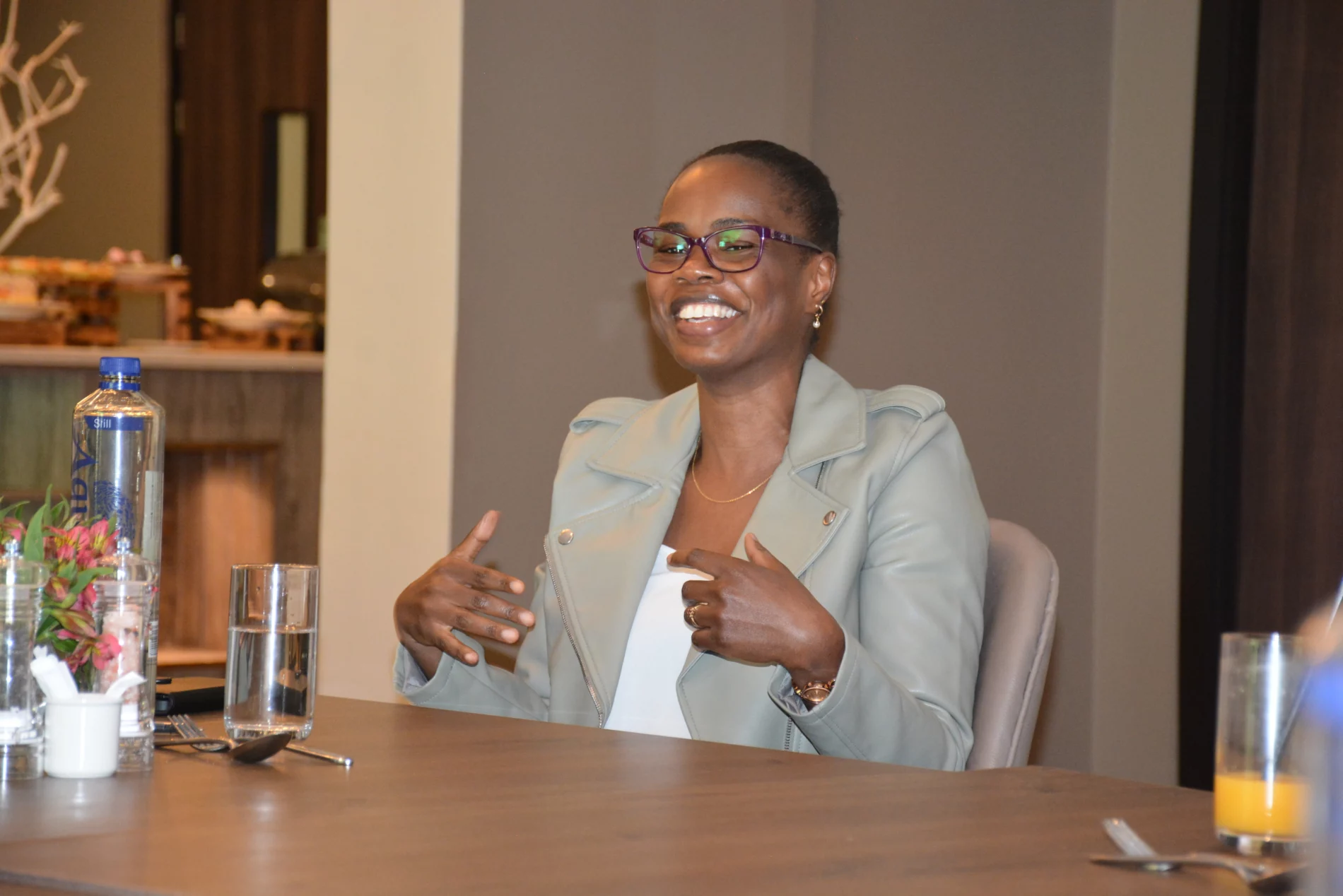
Cassilde Muhoza leads SEI Africa’s Inclusive Healthy and Sustainable Cities cluster, working across urban planning, governance and city health and wellbeing. We spoke with her about her research and her vision for Africa’s cities.
Can you tell us a bit about your background and your journey to SEI?
I have a background in geography and urban planning. I have over 10 years working in sustainable urban planning and governance on urban green infrastructure, inclusive and sustainable urban mobility, city health and well-being. I joined SEI in 2014 as an intern under the sustainable urbanization program, and then I was recruited as a research associate in 2015 under the same program. And then in 2020, I got promoted to research fellow under the same program again. And since January 2026, I was promoted to cluster lead, where I lead the Inclusive Healthy and Sustainable Cities cluster, formerly known as Sustainable Urbanization Program.
What are some of the key research areas in your cluster?
SEI Africa’s Inclusive Healthy and Sustainable Cities cluster aims to support more effective urban governance and urban planning to guide urban development that ensures health and well-being for all but also the environmental health of city systems.
The cluster has four priority research areas: urban green infrastructure; inclusive climate resilient urban mobility; equitable urban climate resilience planning; and urban waste management and circularity.
What are the main research goals you are pursuing within your cluster, and what kind of impact do you hope this work will have for cities and communities in Africa?
The priority area on urban and green infrastructure aims to support urban and green infrastructure planning, which involves developing and managing an interconnected network of green and blue spaces that provide multiple environmental, socioeconomic, and health benefits and therefore contributing urban sustainability but also to health and wellbeing within cities.
Our second priority area, looking at inclusive and climate resilient urban mobility, seeks to support low carbon public transport planning and provision. Under that theme, we are exploring pathways to transition to a more equitable low-carbon public transport system – for example, working with public transport operators and other urban governance actors to see how you can promote electric mobility within public transport and therefore reducing reliance on fossil fuel.
Photo: World Wildlife Fund (WWF).
How does the work within your cluster contribute to SEI’s broader impact areas, such as health and wellbeing and climate transitions?
The priority area on urban green infrastructure contributes to health and wellbeing by supporting the planning and management of an interconnected network of blue and green spaces that provide multiple environmental, socioeconomic, and health benefits.
Our work on inclusive and climate resilient urban mobility contributes to climate transitions by exploring pathways to transition to a more equitable low-carbon public transport system – for example, working with public transport operators to promote electric mobility within public transport and therefore reducing reliance on fossil fuel.
Can you share an example where research and partnerships have contributed to real policy change or practical impact?
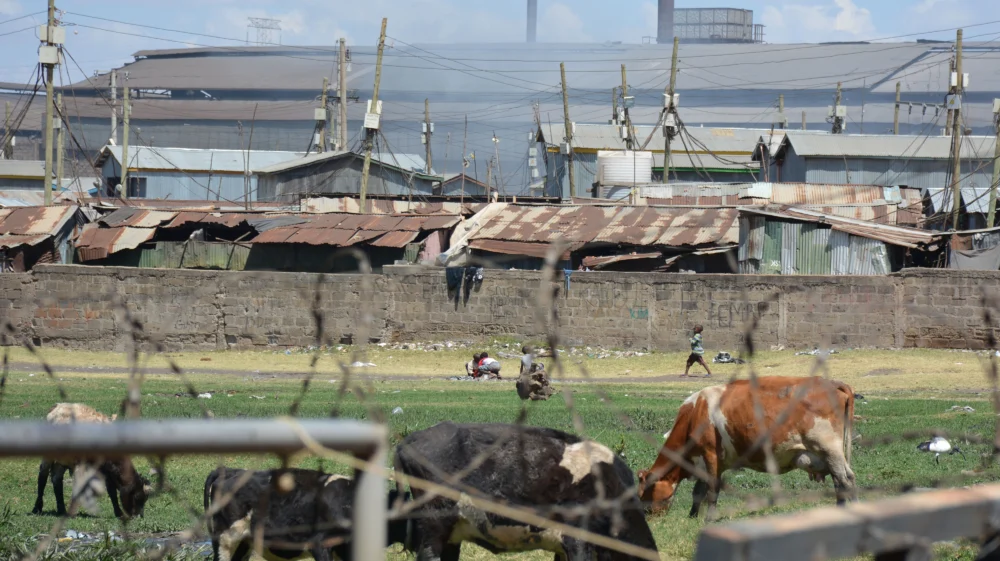
In 2015 SEI York and SEI Africa implemented an air pollution monitoring project using low cost sensors in an informal settlement, in Mukuru informal settlement. At the end of this project, at the dissemination workshop, we formed the Kenya Air Quality Network, which is a platform for engaging and sharing knowledge among the different actors working on air pollution but also for engaging the county.
Through the continuous engagement with the Nairobi City County and also these other stakeholders, it led to the city county prioritizing air pollution as a big issue in the city. And therefore, the city authority formulated the air quality regulations and also an air quality action plan. So through this continuous engagement and collaboration, we got to see a real impact on the ground.
How important is collaboration and interdisciplinary research in advancing the work of your cluster?
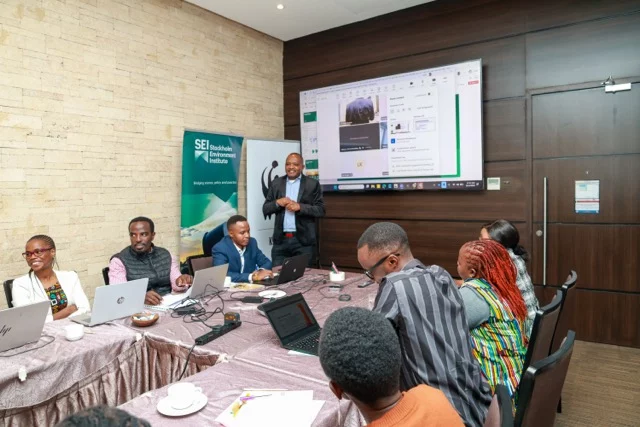
Collaboration and interdisciplinary research is very key for the work we do in our cluster because we are seeking to address very complex and multifaceted urban environmental issues, for example, air pollution, degradation of green spaces, declining quality of life. This requires knowledge and expertise from different disciplines and also different partners.
In all our projects and activities, we seek to work with different actors – different local communities, engineers, service providers, city authorities – to try and come up with solutions which are inclusive but also are promoting urban sustainability.
Photo: Charity Mutisya / SEI.
What gives you hope in your field right now?
There are several organisations undertaking innovative research and working with other stakeholders to come up with solutions that address urban sustainability issues. And there are also examples of city authorities which are investing in sustainable urban development.
For example, cities like Addis or Kigali, which are promoting urban green infrastructure, promoting low carbon mobility, promoting non-motorized transport in general. Seeing those examples in Africa gives me hope that our research is having an impact on the ground.
What are some of the key challenges you encounter when trying to generate evidence and translate research into action in the African context?
One of the key challenges we face when trying to generate knowledge is the lack or the limited funding for research. And then when it comes to translating our research into action, one of the challenges we face is poor urban governance in African cities, and this is reflected in two issues: one, lack of political will from city authorities, which leads to poor uptake of our research but also to poor prioritization of sustainable urban planning to guide more inclusive and sustainable urban development, leading to poor implementation. And then the other challenge is issues of politics and corruption, which leads to misuse of funding, and therefore you do not have sufficient funding to implement projects or policies.
In general, as much as you’re producing innovative research that could bring change on the ground, you’re not having any impact on the ground.
What do you think would be the consequences if the research you do did not take place and evidence-building didn’t happen?
Some of the main consequences include worsening environmental degradation, worsening socioeconomic and spatial inequalities under rapid and uncontrolled urbanization, but also increasing vulnerability to climate change risks.
What keeps you motivated in your work and leadership role?
What keeps me motivated is my desire to contribute to more effective urban governance and planning, to be able to contribute to the development of healthier cities, more sustainable cities, and more inclusive cities. And I would also like to see SEI Africa playing a key role in advancing urban sustainability and contributing to more sustainable cities in Africa.
Finally, what kind of future do you imagine for African cities and communities?
I envision a future for cities in Africa which are well-planned, with cities which are more inclusive, more sustainable, more healthy. I would like to see cities where irregardless of the socioeconomic status of residents, everyone has access to basic services, decent housing, access to green spaces, to more inclusive urban mobility services.
Project / A scientifically robust and policy-relevant framework to identify and assess priority measures that maximize the multiple-benefits for air quality and climate.
Project / Comparing two African LDCs that have invested in sugar cane-based modern bioenergy, 30 years apart
Project / This project will build scientific evidence and knowledge platforms for urban air quality and climate resilience.
Journal article / "Breathing well" is about more than air quality: cleanliness, population and building density and the presence of vegetation all make a difference.
Project / This project supports Madagascar’s leadership in advancing clean air action in the Indian Ocean Commission region
Feature / A three-day workshop in Mogadishu, supported by SEI Africa, ended with a new multisectoral working group to guide Somalia's air quality policy.