Explore this SEI Current in a podcast episode inspired by the themes covered in this perspective. It is part of SEI’s Currents in sustainability series, where we examine the forces shaping our global path towards a sustainable future. Find it on Spotify, Apple Podcasts, YouTube and Amazon Music and Audible.
In 2024, more than 70 countries representing about half the global population underwent national elections, bringing a new set of administrations and leaders to the fore just as nationally determined contributions are due to the UNFCCC.
And that’s just the beginning of the geopolitical changes in store for 2025.
The year ahead carries great weight for the prospects of international climate cooperation, not only with new nationally determined contributions (NDCs) due, but also a critical juncture for the future of COP negotiations, following the insufficient COP29 deal the Climate Action Network called a “betrayal”. Next year’s COP30 – taking place in Brazil, home to 60% of the rapidly diminishing Amazon rainforest – promises to cast a spotlight on nature and grapple with how to fulfil the climate finance pledge made at COP29.
But geopolitical roiling persists, which will both directly and indirectly shape the success of these negotiations.
The 2024 election supercycle climaxed with a victory in the US for Donald Trump, who ran on mass deportation of immigrants, steep tariffs and drastic deregulation, namely in environmental laws. He issued an order initiating the US’s exit from the Paris Agreement – again – upon his swearing-in. But, while he takes a friendly Congress and Supreme Court with him into his administration – with pledges to leave NATO, the International Monetary Fund, the World Bank and the UNFCCC all in play – it remains unclear what promises he can follow through on.
More broadly, political incumbency is losing its power, even in countries where reigning leaders have, on paper, come out on top. This phenomenon reflects the public’s eroding trust in the leaders expected to both spearhead domestic green transitions and form multilateral climate agreements. In the US, India, South Africa, France and the UK, reigning parties lost, under-performed or ceded ground to fringe ideologues gaining footholds in representative bodies. Political turmoil only accelerated as the calendar year turned over: South Korea’s president is impeached and arrested, Germany’s newly dissolved parliament prompts a February snap election, and Canada’s leadership is now up in the air in the wake of Justin Trudeau’s resignation, coming as Trump retakes the White House next door. Isolationism and cost-of-living crises fuel the abandonment of entrenched political parties at a time when global cooperation and investment are required to boost the ambition of 2025 NDCs so that global plans can help limit global heating to 1.5°C, down from the current track of 2.5–2.9°C.
However, while green diplomacy is largely stalled, green trade wars ratchet up. The green arms race among countries stokes economic competition and protectionism, and serves as just one front on which adversaries throw their weight around, box others out of progress, and intensify dependencies.
This dynamic promises to come to a head in China, whose massive investment in electric vehicles (EVs) and batteries made the country responsible for nearly 70% of global EV production in 2023. From 2017 to 2023, China’s EV exports surged 13 300%, in which time it surpassed Japan as the world’s largest overall vehicle exporter. Such dominance can pose existential crises for major car-making countries like Japan, US and Germany, and may only serve to propel more trade barriers, increasing the price of the green transition.
Furthermore, China promised countries in Africa USD $50 billion during the next three years, which could boost the continent’s infrastructure and green tech capacity, but also increase Africa’s economic dependence on China by saddling countries with even more debt.
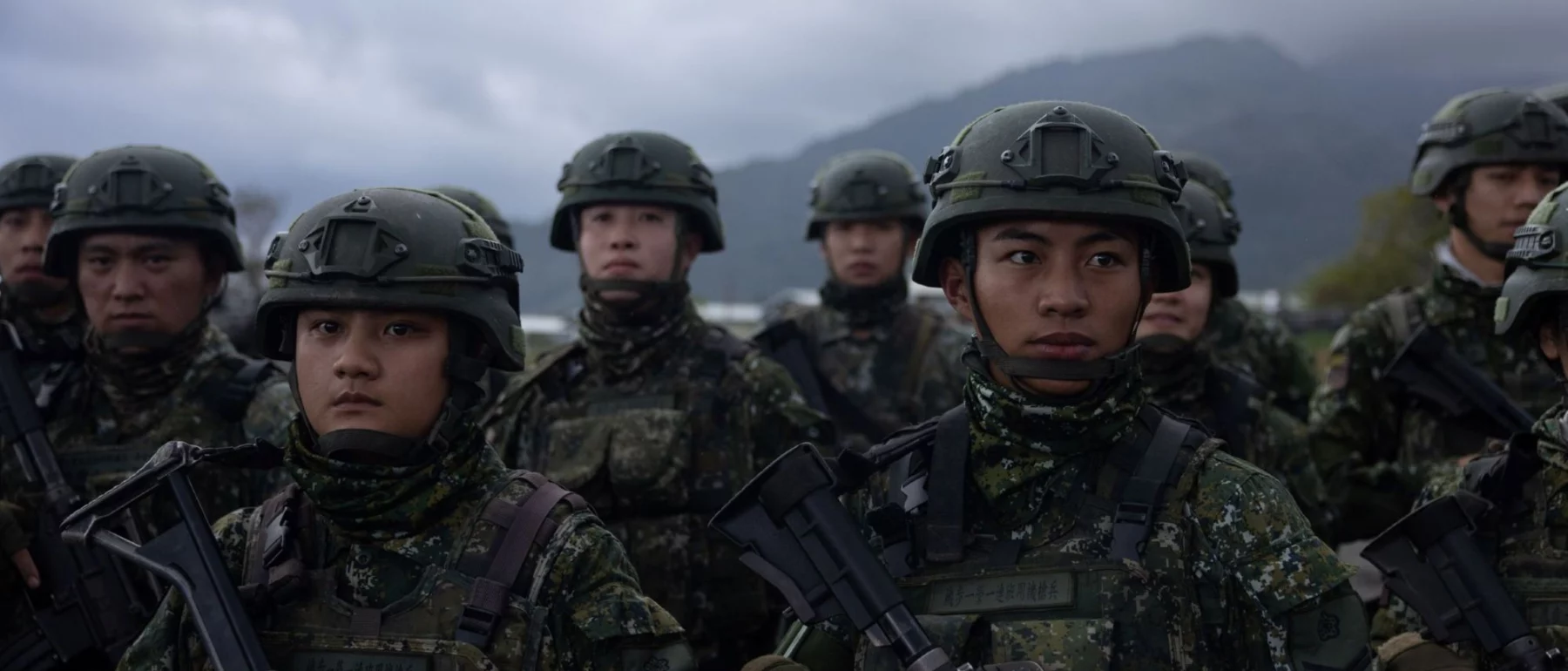
But the green arms race may be ultimately supplanted by a literal arms race. Tensions between China and its neighbors, rabid pursuit of AI technologies, new advances in drone weaponry, exploding conflict in the Middle East, and US aid for Ukraine, Taiwan and Israel have fuelled a surge in global military spending and defense industry profits. Combined with climate-linked instability and resource scarcity, security shoots to the top of the agendas of countries, the private sector, and the global order. According to the Stockholm International Peace Research Institute (SIPRI), defense spending went up in each of the five SIPRI-designated world regions for the first time since 2009.
Furthermore, border conflict, civil war and battles against organized crime have accounted for some of the world’s greatest jumps in defense spending in countries such as the Dominican Republic, Democratic Republic of Congo and South Sudan.
Despite the looming deadline for more ambitious national climate plans, countries have not abandoned their pursuits of fossil fuel supremacy or independence, and hydrocarbons continue to dominate international commerce and relations. Venezuela still claims a major portion of neighboring Guyana that contains some of the world’s largest oil reserves. Middle East tensions could lead to some near-term disruptions to exports from the region. And the International Energy Agency estimates that, in the wake of Russia’s invasion of Ukraine and the subsequent scramble to find non-Russian liquefied natural gas (LNG), the world will see an almost 50% boost in LNG capacity by 2030, perpetuating the financial incentive for fossil fuel dependence. Furthermore, Europe’s shift to Algerian gas exports has funnelled massive profits to the North African country, much of which it plunged into – yes – its military.
Internal and international conflict are also driving migration. The December 2024 Syrian coup will represent one of the most prominent illustrations of modern migration issues, as thousands of refugees plot a return home from within and outside the country’s borders. The UN estimates that more than 115 000 people already returned to Syria from other countries in less than four weeks after the fall of the Assad regime. Many more continue to weigh their options in the face of economic and political uncertainty in their home country – to say nothing of the Middle East broadly.
Climate change and even surges in green jobs also pull economically driven movement, as noted in the recent ASEAN Migration Outlook. Those more likely to be swept up in the effects of migration are those with a lack of resources – namely women and girls – to escape dangers such as natural disasters and war, making those vulnerable populations even more susceptible to poverty, food security and human trafficking. Similarly, marginalized communities also stand to be the first affected in ongoing wars, as well as in Trump’s nativist vision to deport millions who came to the US for its economic and social promise.
This is all baggage countries will surely tote with them to the Financing for Development summit, COP30, G20 meetings, NDCs, and all the forums in which countries, civil society, and the private sector must ask themselves: Who are we looking out for?
COP30 and NDC submission – COP30 will serve as a telling inflection point for NDCs, revealing whether these updated goals will allow the world to course-correct back down to a 1.5°C or 2°C warming track when 1.5°C already appears breached, at least for now. It will also provide another opportunity for countries to show whether they are serious about ratcheting down fossil fuel production and use, and whether they can implement adequate climate change adaptation financing for the most vulnerable countries.
G20 meetings – The first African country to host the G20 summit, South Africa, will face a series of issues very much interlinked with climate action and geopolitics: How do we tackle runaway debt in developing countries and reform global financial architecture? How can we boost lower-income countries’ participation in COP and other critical climate forums? How will countries provide food for all while responding to evolving climate changes that attack agriculture? South Africa, which has undertaken a massive just transition effort as it plans for life after coal, will highlight a unique intersection of development challenges and solutions that can serve as lessons for the rest of the G20.
China Africa Forum – 2025 is the first year in which we will see how China’s Xi Jinping follows through on his $50 billion pledge to African countries in the next three years. How soon will it happen, and what will it look like? Will the investment foster self-determination in Africa’s development, or will the continent become more reliant on China’s chequebook? Will China allow debt-saddled countries to restructure their loans so they can climb out of debt, or will this outward act of goodwill throw African economies into further turmoil, further delaying their climate and green tech ambitions?
Financing for Development Forum – As an ongoing dialogue between countries on their progress toward the Sustainable Development Goals (SDGs) and the 2030 Agenda, the current Financing for Development Forum ends in June 2025. A 2024 UN Financing for Sustainable Development report warned that financing challenges are pushing the world off-track to meet the SDGs by 2030 and take adequate climate action. At a time when countries struggle to meet minimum standards for climate finance, the report says $4 trillion more is needed annually to support developing countries’ sustainable development needs.
BRICS summit – The 2024 BRICS summit in Russia highlighted the US’s inability to marginalize Putin on the international stage and the expanding group of countries continues to make moves toward de-dollarization, which would erode US dominance over global markets and allow countries more freedom in their own economic policies. BRICS nations also resist entrenched international forums like the UN, World Bank and International Monetary Fund as means of economic and political coercion against non-Western nations. As Brazil takes on the 2025 BRICS presidency, will an ascent of BRICS nations intensify East-West rivalries? How will they reshape the global order? And will western nations respond punitively to this changing dynamic, possibly further driving more nations into the BRICS fold, or consent to a more multi-polar dynamic?
Climate change at the International Court of Justice (ICJ) – More than 100 countries, led by Vanuatu, closed 2024 with two weeks of hearings before the ICJ in The Hague, arguing for legal liability for countries who contribute the most to climate change. The decision, expected in 2025, can bring historic consequences for future climate litigation. If the court finds that countries face legal consequences for actions that harm the environment, it may open another avenue for climate action outside ineffectual COP summits.
Perspective: a call for climate mobility justice after COP29
Why countries stand to win, not lose, with ambitious next-generation national climate plans
External power dynamics and international climate governance in a crises-constrained world
A conceptual framework for responding to cross-border climate change impacts
Five lessons for protecting critical infrastructure in times of crisis
Russia’s attack against Ukraine has already caused irreparable damage to the environment
Exploring the environment-conflict-migration nexus in Asia
Conflict sensitivity and renewable energy: a case study from Kenya’s Kakuma Refugee Camp
Three Steps to Including Conflict Considerations in the Design of Climate Change Adaptation Projects
Solutions for managing food security risks in a rapidly changing geopolitical landscape
Global leadership, trade and conflict are evolving at a breakneck pace. What does it all mean for climate and security? In this episode, three experts dig into how changes in the world order ripple through climate negotiations, social movements, the energy sector and the global economy, reflecting on their hopes and fears for the coming year. Featuring: Leo Horn-Phathanothai, an author, strategist and non-profit leader, SEI Africa Centre Director Philip Osano, and SEI Research Fellow Katie Browne.
This episode is part of SEI’s Currents in sustainability series, a podcast by Stockholm Environment Institute, where we examine the forces shaping our global path towards a sustainable future.
Drawing on insights across SEI’s HQ and seven research centres, we explore our key foresights on issues underpinning transformative change.
Listen and subscribe to the series on Spotify, Apple Podcasts, YouTube and Amazon Music and Audible.
Perspective / This piece, one of three SEI Currents for 2025, explores the role of new technologies in addressing intertwined climate, environment and development crises.
Collection / Get insights, discussions and perspectives on the key challenges shaping our world in 2025.
Perspective / This piece, one of three SEI Currents for 2025, examines the growing role of land in addressing climate, environment and sustainable development issues.