Skip navigation
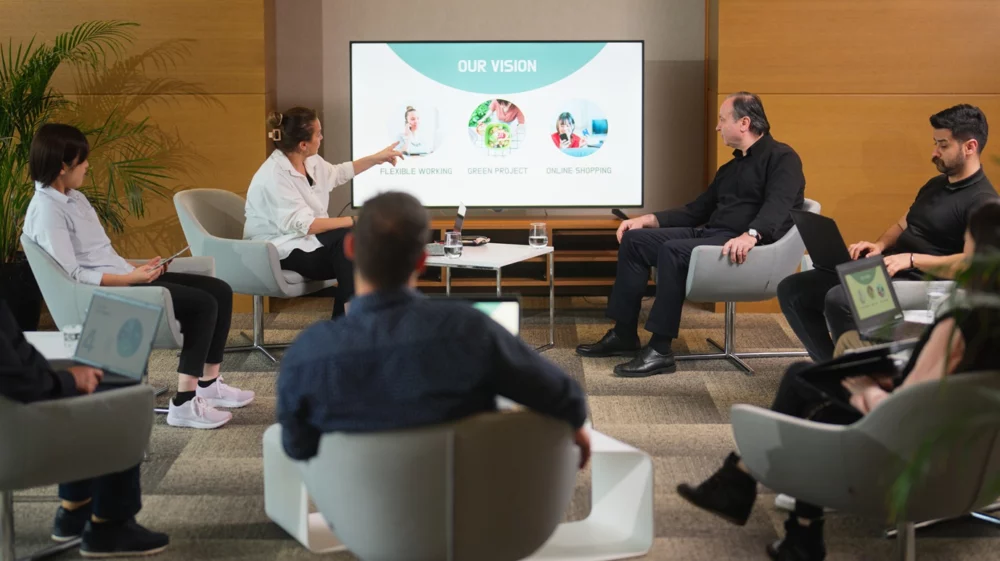
A group of adults in a meeting room looking at a board with information about environmental and social responsibility plans.
Project

Supporting the Alliance for Clean Air

Tackling air pollution, a critical global health and environmental challenge, requires active engagement from the corporate world. The Alliance for Clean Air, launched at COP26, is the first private sector alliance of multinational corporations committed to measuring and reducing their air pollution emissions. We support the Alliance secretariat and provide corporate members with in-depth technical support on value chain emissions reductions and target setting guidance.

Inactive project

2023–2025

The private sector’s impact on air quality

Air pollution, one of the largest global environmental health risks, impacts human health, ecosystems and biodiversity. The private sector, with its diverse operations, plays a significant role in contributing to air pollution. This includes activities across various industries such as fossil fuel and biomass burning in energy, transport and buildings, industrial processes in chemical and mining, agriculture and waste management.

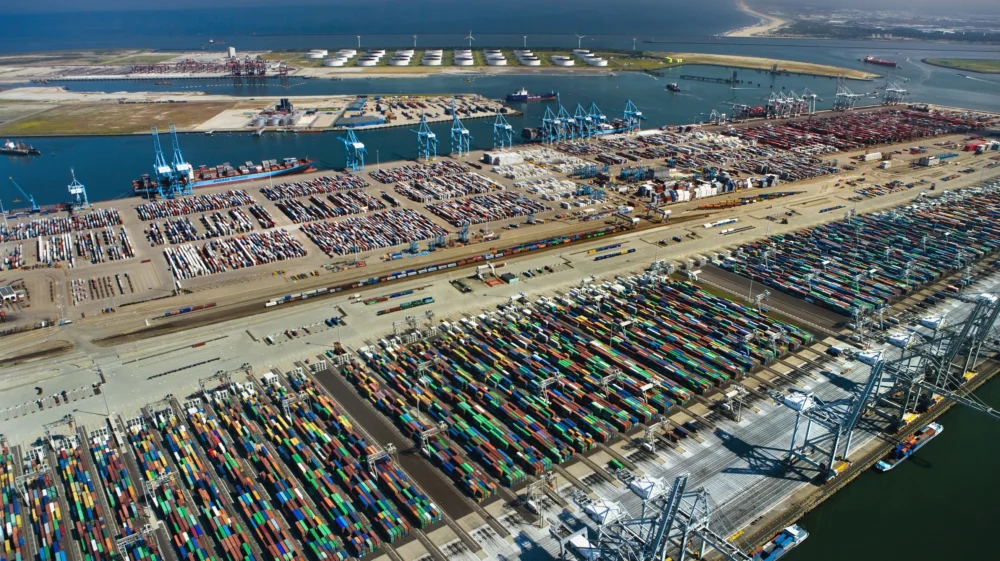
For instance, global ocean shipping alone accounts for approximately 2.8% of global greenhouse gas (GHG) emissions and a substantial portion of air pollution, as it handles over 80% of international goods transport.

The variety of activities by these industries releases different pollutants: nitrogen oxides from high-temperature combustion and fertilizers, sulphur dioxide from fossil fuel use, volatile organic compounds from solvents like paint, PM2.5 particles from incomplete combustion and vehicle dust, and ammonia from agriculture and wastewater.

These emissions significantly degrade air quality, leading to increasing calls for sustainable industry practices. In response, over 5000 businesses have committed to reducing GHG emissions by 2050, pursuing pathways to meet net-zero targets.

Developing solutions through collaboration

In 2021, we partnered with IKEA and the Climate and Clean Air Coalition (CCAC) to develop a first-of-its-kind guide for companies to quantify air pollutant emissions across their value chains: The Practical Guide For Business: Air Pollutant Emission Assessment, which was adopted by the World Economic Forum’s newly formed Alliance for Clean Air at COP27 in 2022. This built on our earlier work with the Clean Air Fund on corporate value chain emissions reduction and target setting.

The collaboration between SEI, the Alliance for Clean Air and companies like IKEA exemplifies the power of collective effort in addressing environmental challenges. In 2023, IKEA, as a co-chair of the Alliance for Clean Air, became one of the first alliance members to publish its emissions in their annual sustainability report. Five more companies have since published their emissions using the Guide, indicating a growing trend in corporate responsibility and transparency.

The Alliance for Clean Air, initiated by The World Economic Forum in partnership with the Clean Air Fund at COP26, is the first private sector alliance committed to measuring and reducing their air pollution emissions. Members include leading companies like Accenture, Biogen, Bloomberg, Google, GSK, IKEA, MAERSK, Mitsubishi Electric, Moderna, ORACLE and SIEMENS.

SEI supports the Alliance by providing its members with technical support and strategic guidance in relation to the quantification of their air pollutant emissions, the inclusion of these emissions as part of their ESG/Sustainability (or other) reports, the development of scenarios (business as usual and mitigation), and the development of expected reductions and/or targets for air pollutant emissions.

Work to date

We have developed:

Current work

Our current (2024-25) work is in response to feedback from existing and prospective Alliance members who have identified a series of challenges preventing them from either from quantifying their air pollutant emissions and/or publishing their air pollutant emissions or from developing  scenarios and expected reductions and/or targets. We are:

  • working with the members and the Secretariat team to support members to complete and publish their inventories (including scenarios and targets);
  • developing tools and materials to enable companies to report, set mitigation scenarios and reduction targets; moving towards a model where companies (both Alliance members and prospective members) can report independently using their own resources and capacity;
  • supporting companies to build internal capacity and knowledge on reporting on air quality, by developing materials and convening events/communities of practice which provide opportunities for knowledge exchange between members;
  • helping the Secretariat team grow the Alliance by recruiting new members.

Expected outcomes

  1. Increased number of Alliance member companies having completed and published air pollutant emissions inventories as part of sustainability reports
  2. Increased number of Alliance member companies with mitigation scenarios and expected reductions of air pollutant emissions associated with these scenarios.
  3. Increased number of materials developed to support current and new Alliance members to comply with incoming regulation on air pollution
  4. Increased number of companies joining the Alliance and/or engaged with the air pollution work
Eleni Michalopoulou

SEI Affiliated Researcher

SEI York

Johan C. I. Kuylenstierna

Professor

SEI York

Kate O’Reilly

Project Manager

SEI York