Tackling air pollution, a critical global health and environmental challenge, requires active engagement from the corporate world. Key to this effort is accurately tracking emissions across company operations.
Through an innovative guide co-developed with IKEA and the Climate and Clean Air Coalition, SEI is collaborating with companies to identify and measure these emissions effectively, paving the way for impactful reduction strategies.
Air pollution, one of the largest global environmental health risks, impacts human health, ecosystems and biodiversity. The private sector, with its diverse operations, plays a significant role in contributing to air pollution. This includes activities across various industries such as fossil fuel and biomass burning in energy, transport and buildings, industrial processes in chemical and mining, agriculture and waste management.
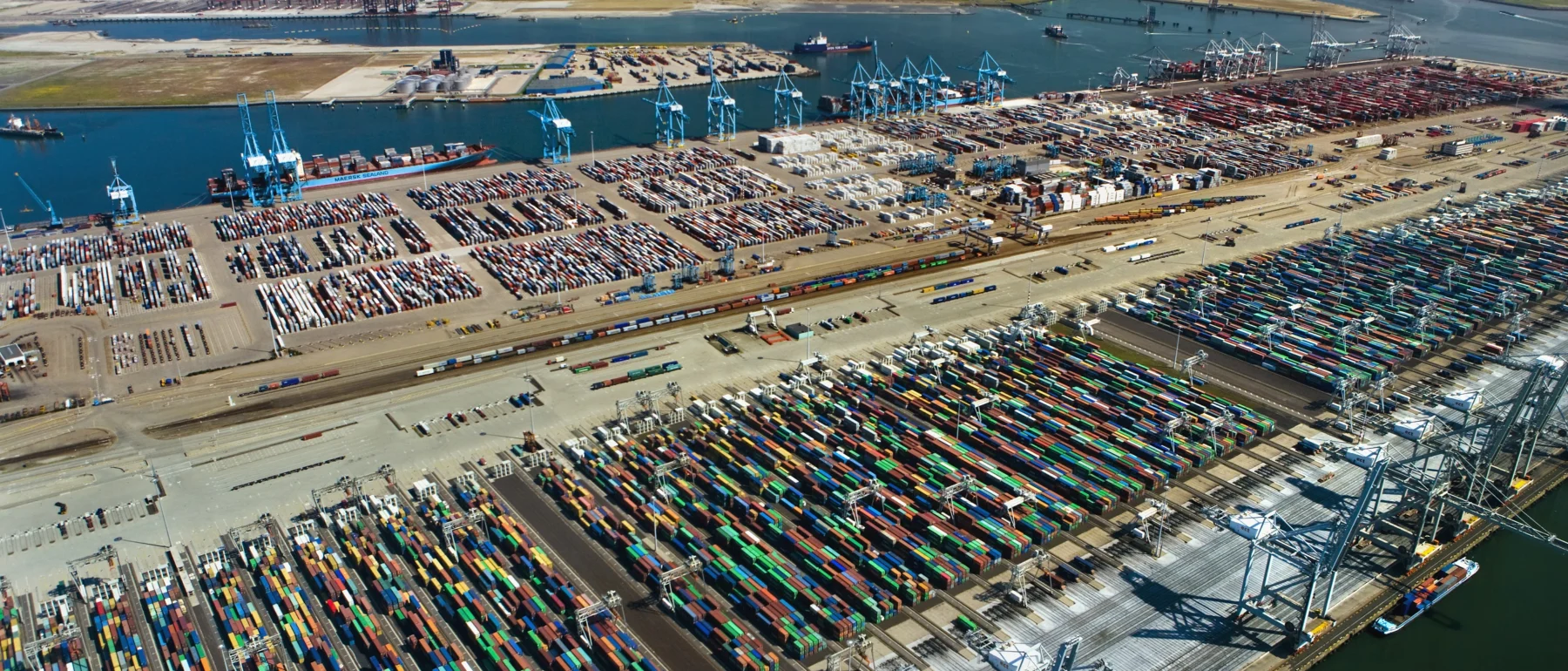
For instance, global ocean shipping, alone accounts for approximately 2.8% of global greenhouse gas (GHG) emissions and a substantial portion of air pollution, as it handles over 80% of international goods transport.
The variety of activities by these industries releases different pollutants: nitrogen oxides from high-temperature combustion and fertilizers, sulphur dioxide from fossil fuel use, volatile organic compounds from solvents like paint, PM2.5 particles from incomplete combustion and vehicle dust, and ammonia from agriculture and wastewater.
These emissions significantly degrade air quality, leading to increasing calls for sustainable industry practices. In response, over 5000 businesses have committed to reducing GHG emissions by 2050, pursuing pathways to meet net-zero targets.
In 2021, IKEA partnered with SEI and the Climate and Clean Air Coalition (CCAC) to develop a first-of-its-kind guide for companies to quantify air pollutant emissions across their value chains. The Practical Guide For Business: Air Pollutant Emission Assessment, which was adopted by the World Economic Forum’s Alliance for Clean Air in 2022.
The guide comprehensively examines pollution sources, emissions and methodologies for quantifying emissions across six critical stages of the value chain. These stages include raw material extraction, processing and assembly, transportation, retailing and end-of-life management. At each value chain stage, the guide pinpoints specific pollution sources, guiding the user to relevant sections.
This collaboration and the development of the Guide were timely, coinciding with the World Economic Forum and Clean Air Fund’s development of the Alliance for Clean Air. Additionally, it aligns with the EU Commission’s announcement of the Corporate Sustainability Reporting Directive (CSRD), which requires mandatory emissions reporting. The air pollutants listed in the CSRD European Sustainability Reporting Standards (ESRS) under the pollution section (E2) are included in the Guide, facilitating compliance with mandatory reporting.
The collaboration between SEI, the Alliance for Clean Air and companies like IKEA exemplifies the power of collective effort in addressing environmental challenges. In 2023, IKEA, as a co-chair of the Alliance for Clean Air, became one of the first alliance members to publish its emissions in their annual sustainability report. Following IKEA, five more companies have published their emissions using the Guide, indicating a growing trend in corporate responsibility and transparency.
The global challenge of air pollution, which contributes to over 6.5 million premature deaths annually, necessitates proactive involvement from all sectors. The private sector, as a major source of pollution, must be at the forefront of this challenge. The Alliance for Clean Air’s initiative in quantifying value-chain emissions is a critical first step. The next phase involves devising emission reduction strategies, a key focus of the Alliance’s ongoing efforts.
The Alliance for Clean Air, initiated by The World Economic Forum in partnership with the Clean Air Fund at COP26, is the first private sector alliance comprising 16 multinational corporations committed to measuring and reducing their air pollution emissions. Members include leading companies like Accenture, Biogen, Bloomberg, EY, GEA, Google, Goto, GSK, HALEON, IKEA, MAERSK, MAHINDRA, Moderna, ORACLE, SIEMENS and WIPRO. The Practical Guide For Business: Air Pollutant Emission Assessment was officially adopted and launched by the Alliance at COP 27.
Read more about our ongoing work to support the Alliance for Clean Air.
Project / We provide in-depth technical support to the Alliance secretariat and corporate members on value chain air pollution emissions reductions and target setting.
Project / A scientifically robust and policy-relevant framework to identify and assess priority measures that maximize the multiple-benefits for air quality and climate.
Tool / The Low Emissions Analysis Platform (LEAP) is a powerful, versatile system for energy planning and climate change mitigation assessment.
Initiative / This initiative enables integrated national planning for Nationally Determined Contributions and Sustainable Development Goals.
SEI brief / SEI and partners are producing a first-of-its-kind guide for businesses to develop air pollutant emission inventories to track and reduce such emissions.
Other publication / This publication provides businesses with practical guidance that will enable them to quantify air pollutant emissions down their value chains.
Press release / A sustainability and climate report by global retailer IKEA used a landmark guide which was developed by researchers from the Stockholm Environment Institute.