Skip navigation
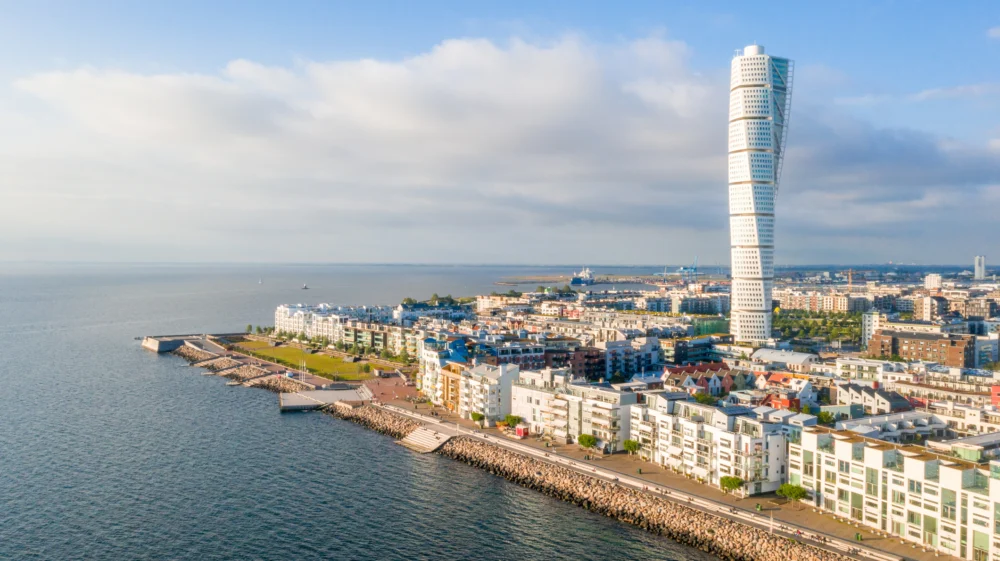
Malmö, Sweden - July 20, 2024: Adults, children and seniors enjoy sea bathing on a sunny summer day at the pier 6 of the Ribersborg beach, with a view over the Turning Torso tower.
Project

HeatSafe: Mitigating vulnerabilities to heatwaves in Malmö

The HeatSafe project seeks to strengthen municipal planning and heat risk management through close science-policy partnership, knowledge co-production, and tool development. Its goal is to help Malmö and other cities become more equitable and resilient in the face of increasingly frequent and intense heatwaves.

Olrat / Getty

Active project

2025–2027

Heatwaves are the deadliest type of extreme weather event in Sweden. Despite calls in the EU and Swedish adaptation strategies, heat-related social vulnerability is just about being considered in the practical work of local governments and municipal administrations.

Responding to the urge to improve heat risk management, HeatSafe further develops and validates a Social Vulnerability Index (SoVI) and integrates collaborative approaches to improve municipal planning for adaptation to heatwaves in Malmö and beyond.

The specific objectives are to:

  1. Update the SoVI with indoor temperature data and other indicators for increased accuracy.
  2. Improve knowledge on how increased frequency and intensity of heatwaves affect vulnerable groups by monitoring their use of public outdoor spaces.
  3. Facilitate collaboration across municipal departments and property owners by embedding tools and approaches into the municipal administration.
  4. Strengthen international, national, regional and local capacities and engagement around heat-related social vulnerability.

By identifying who endures exposure to extreme temperatures, where, and when, HeatSafe supports the city administration as well as property owners when prioritizing adaptation measures and when designing outdoor environment and activities. Key stakeholders and citizen groups will be engaged in a knowledge co-production process to foster innovative ways for collaboration, mutual learning and joint solutions.

The project is led by the Stockholm Environment Institute (SEI) and implemented in partnership with the City of Malmö, and the Centre for Climate Science and Policy Research (CSPR) at Linköping University (LiU). Basque Centre for Climate Change (BC3) contributes through the ongoing research project IMAGINE Adaptation which engages SEI and City of Malmö.

Project team

Åsa Gerger Swartling

Head of Division - Societies, Climate and Policy Support

SEI Headquarters

Mathilda Englund
Mathilda Englund

Research Associate

SEI Headquarters

Karin André
Karin André

Team Leader: Cities, Communities and Consumption; Senior Research Fellow

SEI Headquarters

Ylva Rylander
Ylva Rylander

Communications and Impact Officer

Communications

SEI Headquarters