Skip navigation
Project

Raising Adaptation Impact and Ambition (RAIA)

Raising Adaptation Impact and Ambition (RAIA) project aims to establish a research and capacity-strengthening framework focused on developing country-level economic analysis in Africa to inform inclusive, evidence-based national planning and budgeting for climate adaptation.

Active project

2026–2027

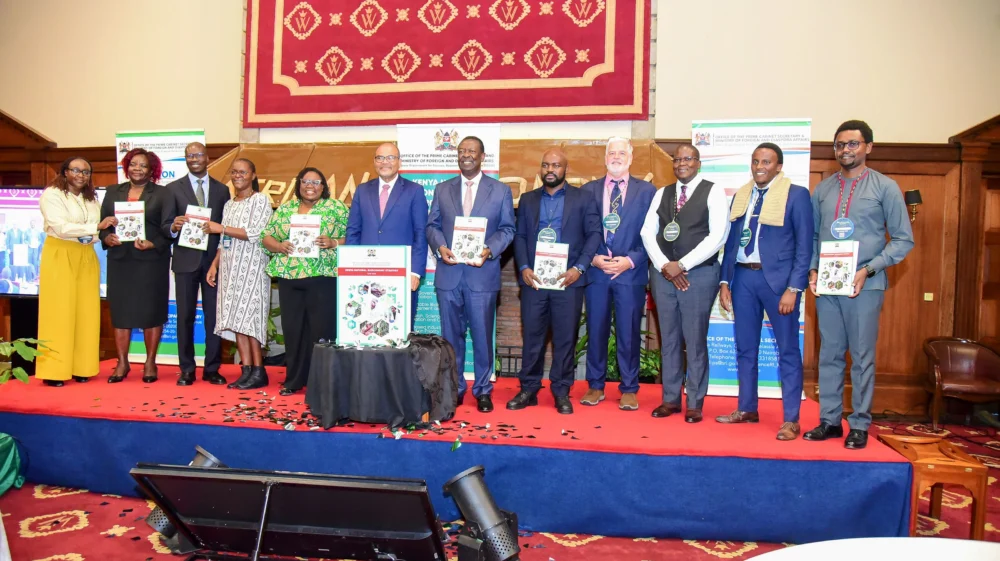
Jessica Troni, Head of Adaptation at UNEP speaking at the launch of RAIA project on January 28, 2026 in Nairobi.

Photo: Pauline Macharia / SEI.

Climate change is imposing severe costs in developing countries. The 2025 Adaptation Gap Report estimates the costs of adaptation finance needed in developing countries at USD 310-365 billion per year in 2035. At the same time, the evidence base in developing countries on what to invest in, given climate change impacts now and in the future, the costs and benefits of doing so, and how to transition economies so that domestic finance is enabled for adaptation in a way that protects livelihoods and ensures equitable growth for all, is still greatly lacking.

RAIA addresses these persistent gaps in economic evidence, research capacity, and policy tools needed to promote effective climate change adaptation in developing countries. By addressing specific barriers identified by Ministries of Finance and sector ministries, the project seeks to integrate climate adaptation into national financial flows and decision-making processes. It also serves as a professional development platform where principal investigators mentor early-career researchers to build long-term regional expertise in the economics of climate adaptation.

RAIA is centered on a grant approach aimed at climate, economic, and policy researchers, designed to support addressing a range of questions around the economics of climate change adaptation, including how climate risks and adaptation costs and benefits are distributed across sectors and population groups. It will engage researchers and experts across African countries and aims to fund 10-12 climate economics policy-research projects.

  1. Developing financial quantification of the costs of climate impacts in the economy, considering different emissions trajectories, negative feedback loops on vulnerabilities to climate change, earth biophysical tipping points, and transboundary risk transmission, while assessing distributional, gender, and social equity dimensions of climate risks and adaptation responses;
  2. Assessing the differentiated economic and fiscal impacts of climate change and the distribution of costs and net benefits of adaptation action across population groups;
  3. Identifying and assessing financial, economic, regulatory, and market-based instruments required to finance and deliver ambitious climate actions with attention to how financing mechanisms are designed and accessed across population groups. This includes innovative inclusive financing solutions for adaptation of a public goods nature, such nature-based solutions; insurance, taxing, fiscal transfers, debt sustainability strategies; blended finance solutions; social safety nets; and 
  4. Analyzing how adaptation finance is allocated across sectors and population groups through tracking within budgets such as public expenditure reviews, asset-level analysis, and debt sustainability analysis, such as climate budget tagging and tracking (CBT) and disaster budget tagging and tracking (DBT).


Niall O’Connor

Centre Director

SEI Africa

Anderson Kehbila

Senior Research Fellow/Research Director for Africa

SEI Africa

Lutta Alphayo
Alphayo Lutta

Research Fellow

SEI Africa

Henry Nerious Dieto

Communications Specialist

Communications

SEI Africa

Profile picture
Andreea Raluca Torre

Senior Research Fellow

SEI Africa

Jacinta Wangai Muruanjama

Programme and MEL Coordinator

SEI Africa