This systematic map protocol explores evidence on how management and leadership are defined in the context of capacity development within Africa’s agrifood systems. It aims to examine how these definitions influence interventions for women and relate to broader paradigms and power dynamics.
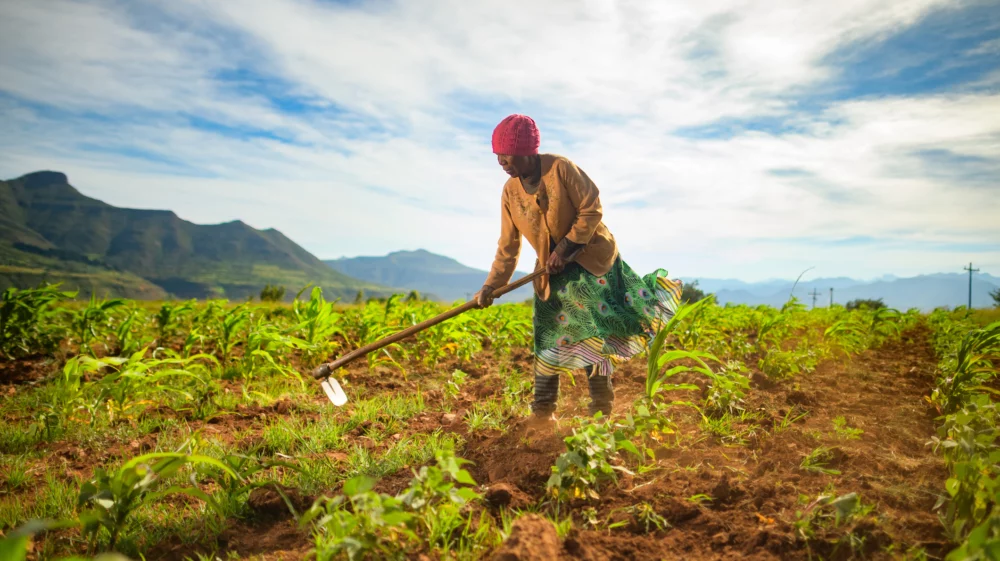
African woman planting rice on field in Malawi.
Photo: golero / Getty Images
Gender gaps in management and leadership within agrifood systems remain pervasive, with women and other historically marginalised groups significantly underrepresented in decisionmaking roles despite their substantial contributions to agriculture and food security. Structural and institutional gender norms and barriers restrict women’s leadership opportunities, undermining the inclusivity and effectiveness of agrifood governance. These inequalities are deeply embedded in colonial and racial hierarchies that have long shaped agricultural research and development, influencing both management and leadership structures. Addressing these intersecting issues through a feminist and decolonial lens is essential to developing leadership and management programs that are equitable, contextually relevant, and capable of fostering transformative change. There is therefore a need to understand how leadership and management are defined in the context of capacity-development in Africa’s agrifood sector.
This systematic map will examine the range of definitions linked to the terms “management” and “leadership” in the published literature around agrifood systems in Africa, and trace how these have come to bear on capacity-development interventions for women in this context. The authors will search a suite of bibliographic databases and grey literature sources using a tried-and-tested search strategy. Records published in English and French will be screened against predefined eligibility criteria, ensuring consistency in application prior to use. Relevant records will proceed to meta-data extraction and coding, followed by visual and narrative synthesis to identify knowledge gaps and clusters. The analysis will map definitions to broader paradigms, including functionalist, social constructivist, critical, decolonial, postcolonial, and Afrocentric frameworks, to assess patterns and power dynamics shaping definition of leadership and management in agrifood systems.
The systematic map will provide a comprehensive overview of how leadership and management are defined within capacity-development in Africa’s agrifood sector. Findings will contribute to a deeper understanding of the structural and epistemic barriers shaping leadership and management development, informing more effective and equitable agrifood systems.
Past event / Join us at the Agri4D conference on 24 September to learn more about transformative approaches to build sustainable and resilient food systems.
Past event / Join this webinar on 24 April to hear insights from Southern Africa and Southeast Asia-based experts and practitioners who collaborated on the research.
Feature / Read how SEI-supported training is enhancing Ugandan women’s dairy skills, fostering economic and community growth.