Using a securitization lens, this article explores the climate adaptation discourse and its impact on the making and implementation of adaptation strategies in Sweden.
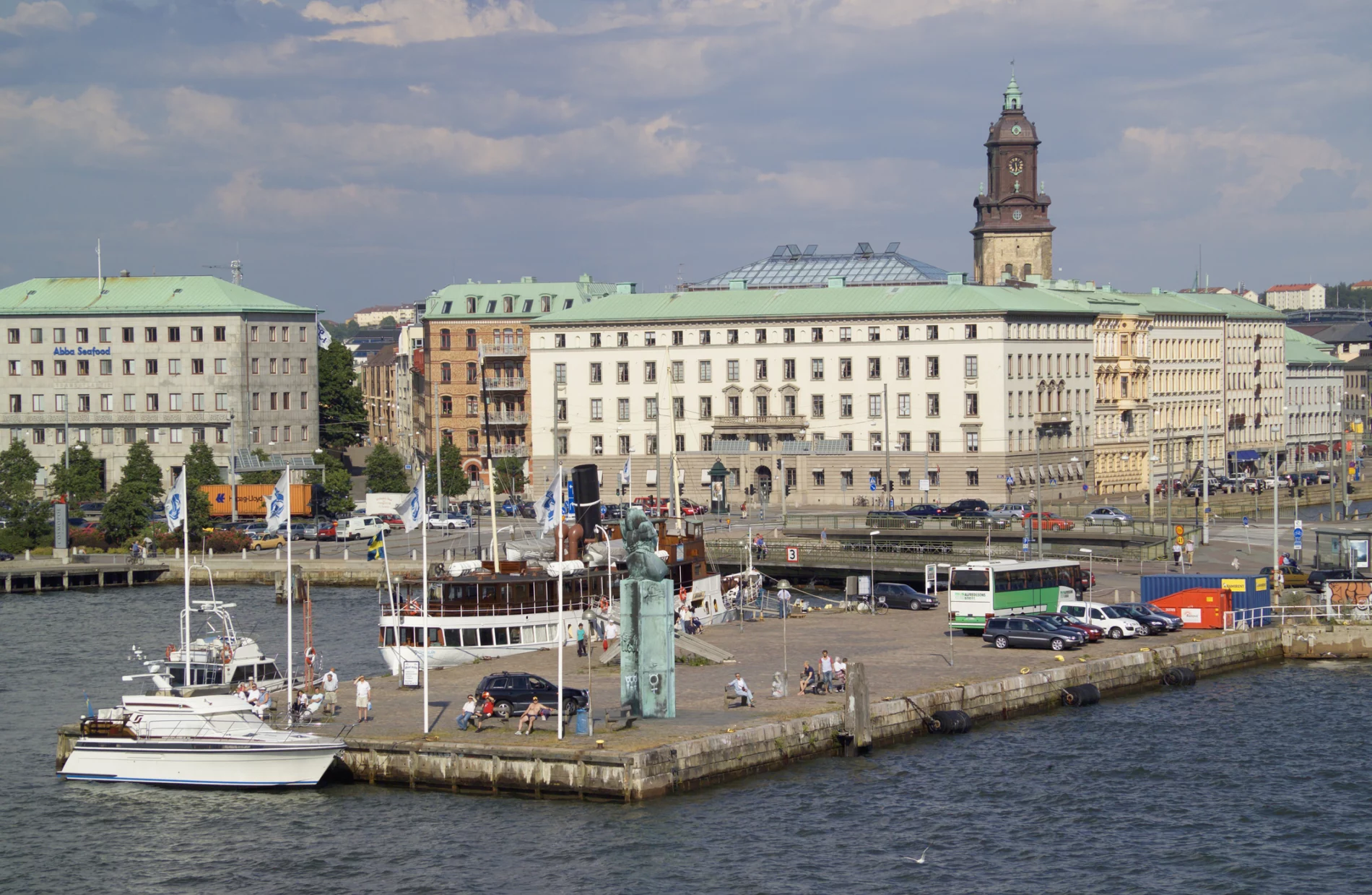
Commercial Buildings and Quayside, Gota River, Gothenburg, Sweden
Using a securitization lens, this article explores the climate adaptation discourse and its impact on the making and implementation of adaptation strategies in Sweden. The main goal is to discern whether climate change is understood and addressed as a security issue within Swedish climate adaptation policy, examining its practical implications from national to local levels. The discourses utilized in framing climate adaptation are examined to assess their alignment with threatification, riskification, or normal politics. The actors and tools involved in creating this framing are explored.
Findings reveal instances of threat- and risk-oriented securitizations of climate adaptation strategy, but most evidence highlights discourses and practices associated with normal politics across governance levels. Nationally, climate adaptation is managed akin to any other policy domain. Prioritization of adaptation goals takes place through centralized decision-making, then monitored through accountability mechanisms spanning national, subregional, and local levels.
The national government maintains financial and monitoring control throughout this chain. Municipalities possess significant autonomy in determining the means and methods to achieve adaptation objectives. This indicates that some securitization, but mainly normal policymaking, describes climate change adaption in Sweden – an outcome strongly influenced by organizational fragmentation, scarce resources, and a pronounced role for experts.

Project / The RISKSEC 2.0 project studies local climate change adaptation – from risk governance to securitization strategies.
Other publication / The 2024 IPBES Transformative Change Assessment details the causes of biodiversity loss and offers principles for the needed transformations to reverse course.
Past event / SEI joins the Climate Week in New York to highlight global leadership and finance solutions for accelerating the transition to net zero industry.
Press release / One of the world’s oldest construction materials, clay, could help deliver lower-carbon cement, according to a new report from LeadIT.