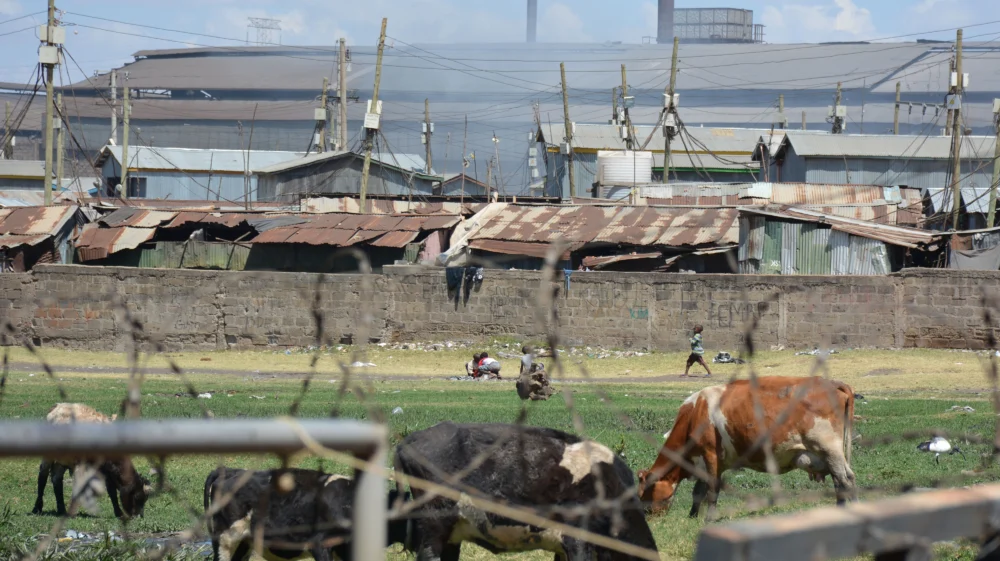
This study assessed household energy use, cooking time, and emissions of carbon monoxide (CO), carbon dioxide (CO2), and fine particulate matter (PM2.5) from cooking with charcoal, kerosene, liquefied petroleum gas (LPG), and electricity, and explored implications for health and climate policy in Kibera informal settlements in Nairobi.
Household air pollution from cooking remains a major public health and climate challenge in low-income urban areas. In Kibera informal settlement in Nairobi, Kenya high population density living in poorly ventilated houses, surrounded with poor waste management and use of charcoal in inefficient stoves and kerosene expose people to harmful emissions.
Participatory cooking tests of breakfast and dinner were conducted in three households that used all four fuel types identified in a household survey. Real-time measurements of CO, CO2 and PM2.5 were taken before, during, and after cooking.
Cooking with any fuel resulted into some household air pollution and charcoal and kerosene produced the highest concentrations of the studied gases and particles. LPG and electricity produced low concentrations and there was no significance difference between the two. The household ambient PM2.5 was 213 μg/m3, implying that people are living in houses with this pollutant being 14.2 times above the 24-h threshold of 15 μg/m3 by World Health Organization guidelines.
Project / Improving understanding about early life origins, burden, determinants, and prognostic significance of non-communicable lung disease in Kenya.
Journal article / "Breathing well" is about more than air quality: cleanliness, population and building density and the presence of vegetation all make a difference.
Feature / Discover how air quality research since the 1990s has shaped policy and highlighted the health, economic and social benefits of addressing air pollution.