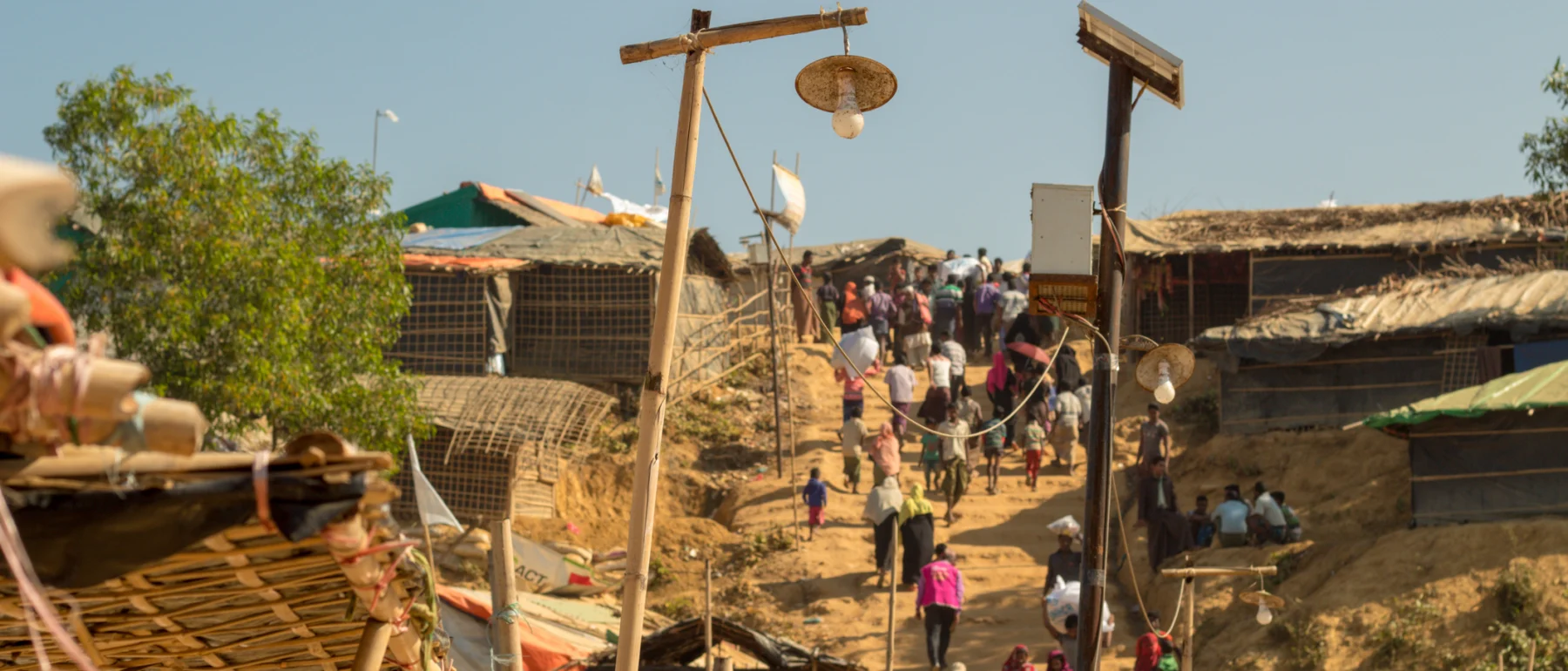
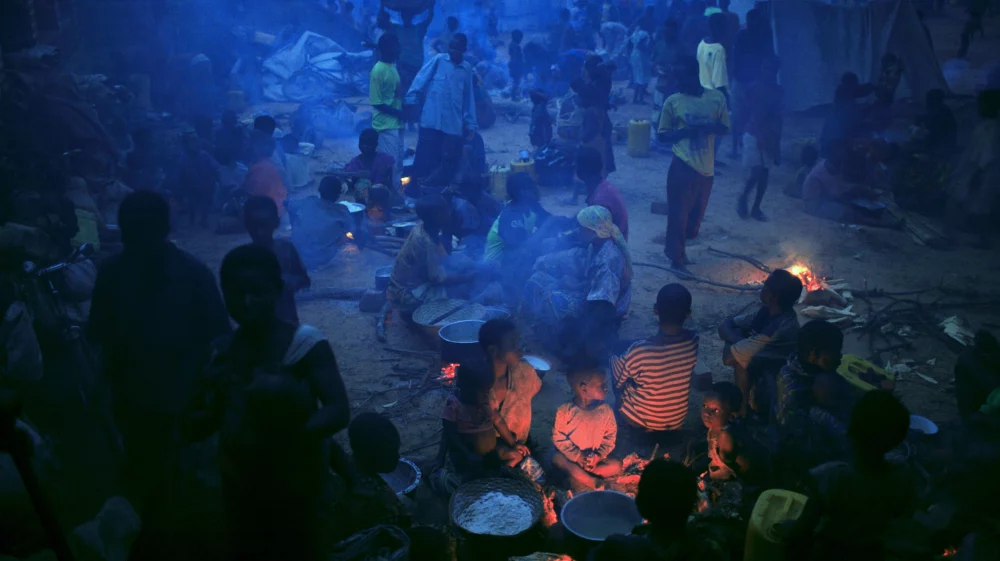
This SEI working paper analyses the role that financial guarantees can play in incentivizing private investment into renewable energy in humanitarian settings, where both access and provision of energy are lacking.
Sarah Rosenberg-Jansen, Maximilian Bruder, Fiona Lambe, Maja Otterstedt / Published on 22 September 2026
Rosenberg-Jansen, S., Bruder, M., Lambe, F., Otterstedt, M. (2026). Financial guarantees for humanitarian energy: examples, incentives and disincentives. SEI working paper. Stockholm Environment Institute. https://doi.org/10.51414/sei2026.034
Access to and provision of energy in humanitarian settings requires complete transformation. Access is severely inadequate, and the limited sources available are carbon intensive. Most forcibly displaced people lack access to modern and clean energy sources. Humanitarian operations rely heavily on diesel, creating high costs, emissions, and operational inefficiencies.
Though private-sector finance is essential for such transformation, investors are put off by high perceived risks in humanitarian settings. Refugee contexts are seen as impermanent, and refugees are viewed as having low-credit worthiness – despite the long-term nature of many refugee communities, their clear and growing demand for energy, and the strong evidence of very high repayment rates.
Some evidence suggests that financial guarantees can work effectively for humanitarian organizations. However, the viability for refugee households and businesses remains a question because of a lack of studies. Financial sustainability is a challenge, and the full economy of guaranteed investments is still unclear.
Enhancing understanding the potential impacts of financial guarantees for humanitarian energy requires targeted research. Analysis should examine the commercial viability of such mechanisms and how the finance system for refugee energy may become self-sustaining. Most mechanisms remain donor dependent. Guarantees are typically packaged with subsidized fees and grant-financed technical assistance, so the full cost of market-building must be accounted for alongside the guarantee itself.
Read the working paper / PDF / 1 MB
One-SEI program / Our mission is to help accelerate the allocation of capital to sustainable economic activities.
2022 - 2031 / About Finance, Renewables and Sustainable Development Goals
Feature / This Q&A outlines why SEI is taking on research to address clean energy access and climate change-related concerns in humanitarian settings.
8 September 2025 / About Energy access, Household energy and Renewables
Feature / SEI's "Humanitarian Energy and Climate Transitions" research agenda aims to address renewable energy and climate-related issues in humanitarian settings.
26 August 2025 / About Energy access and Household energy
Other publication / This report explores business models and finance options that can help accelerate the use of clean-cooking technologies in last mile communities.

18 June 2025 / About Finance