part of Citizen Science
Research involving nearly 200 Hong Kong students aged 11-19 indicates that participation in environmental citizen science activities can positively impact the range and frequency of an individual’s pro-environmental behaviours. The authors explored the influence of different environmental behaviour psychology factors and share practical implications for those seeking to adopt citizen science approaches in environmental education programs.
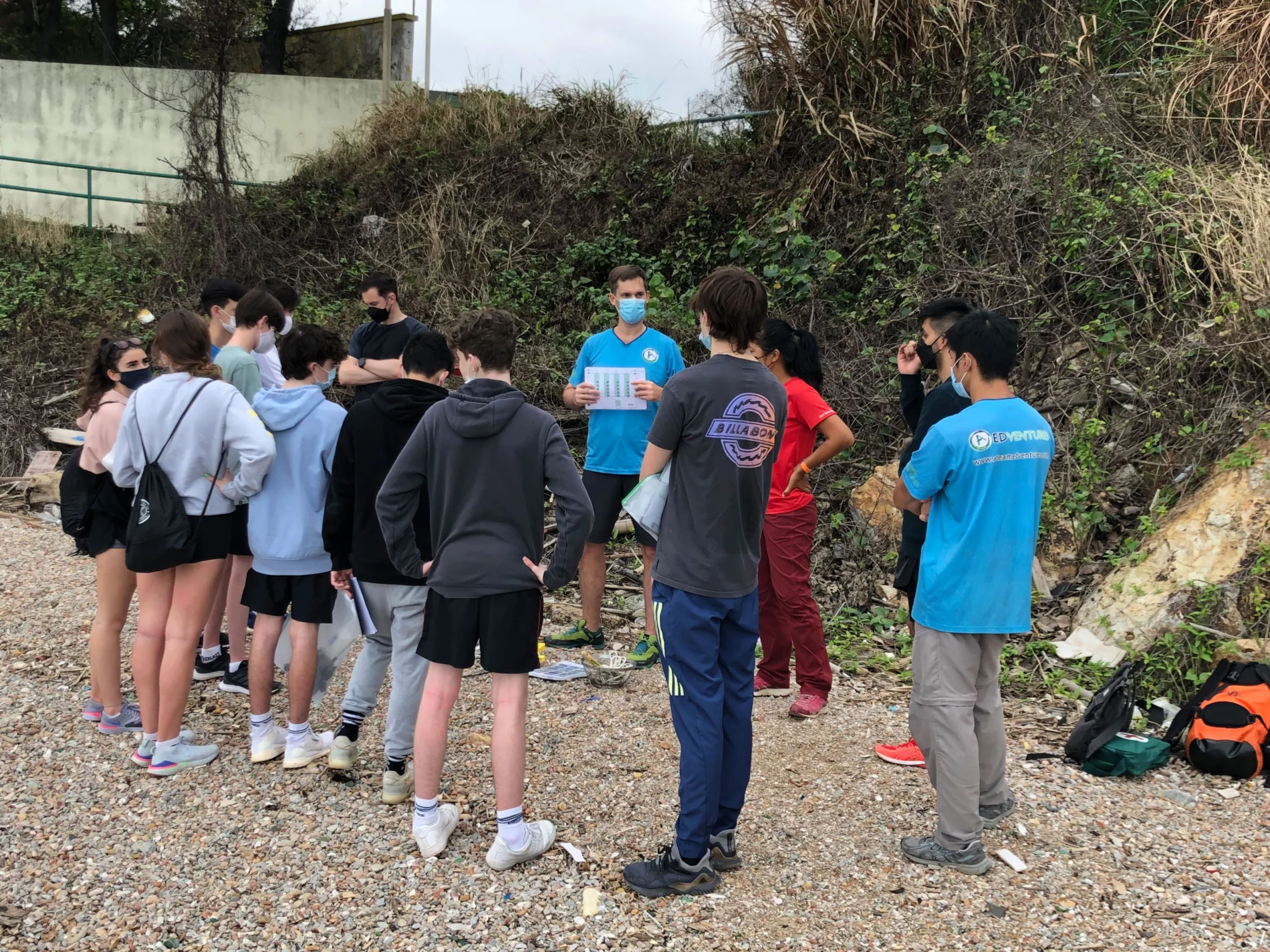
Students in action on a citizen science project.
Photo: Smriti Safaya / SEI
Citizen science (CS) approaches bridge science and society, involving the public in research activities. Their participatory nature indicate the potential of CS as a pedagogical approach for experiential environmental education for young people.
In this paper, the authors share results of a study which explored the effects of environmental CS activities on young people. The authors worked with students and teachers in eight local and international schools in Hong Kong. These schools were involved in contributory or co-created CS projects as part of either formal or informal curricula.
Researchers worked with an adapted behaviour psychology framework to construct surveys for participants, which were completed before and after a specific CS activity. Using the results of these surveys, the authors examined how environmental CS activities influenced student values, attitudes, knowledge and behaviours.
While the authors found that, overall, participation in educational environmental CS activities had a positive impact on young peoples’ pro-environmental behaviours, there were some negative impacts too: students appeared to perceive their actions were insufficient for the scale of a particular environmental issue; the results also suggested that there was a slight decline in confidence in one’s self efficacy skills, especially for female students. The most influential predictor of self-reported pro-environmental behaviour after a CS project was the length of time spent in nature.
The findings indicate the value for educators of building nature-based experiences into sessions, and suggest that CS can be useful for creating more equitable learning opportunities. Contributory CS could enable the development of a more engaged co-creation research process, encourage deeper engagement in environmental issues, and influence greater pro-environmental behaviours.
Project / Investigating if and how hands-on experiences with nature impact values, attitudes and pro-environmental behaviour amongst secondary school students.
SEI brief / Wetland ecosystems within the lower Songkhram River basin are under threat; the authors identify critical drivers of change and policy gaps.
Other publication / Cities provide critical venues to advance climate resiliency and decarbonize. We examine six economies and propose how cities can lead on climate action.
Journal article / What are the risks associated with decarbonisation pathways? This article identifies and describes risk in 12 countries.