Planting and managing riverside vegetation is crucial in river engineering and preserving wetland ecosystems. SEI scientist Romina Díaz-Gómez, in collaboration with other researchers from University of California, Davis, evaluated the use of different modelling approaches in predicting cottonwood recruitment in this publication, and the implications for river ecology and conservation.
River ecosystems have been declining in regions of western North America due to prioritizing human water needs and infrastructural development. Coupled with the effects of worsening climate change and environmental disturbances, these river ecosystems are expected to further decline with time.
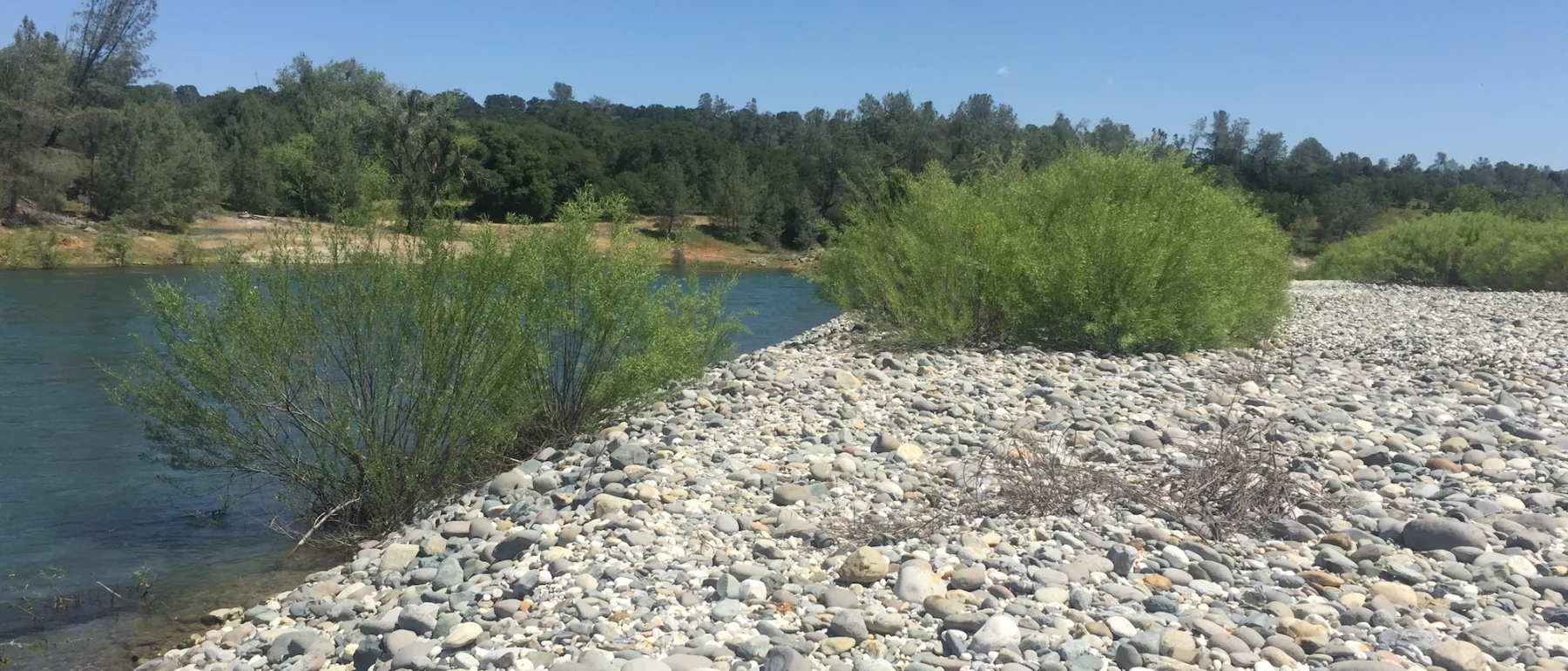
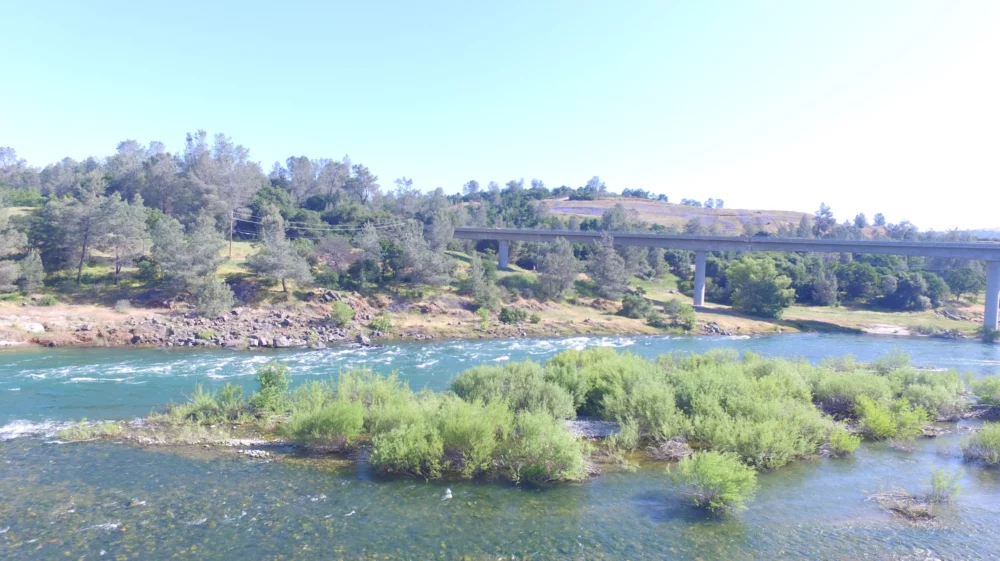
Cottonwood (Populus) is the most common riverside plant in western North America and are crucial to the health of river ecosystems. SEI and University of California, Davis researchers investigated the use of predictive modelling approaches to predict the growth of cottonwood around the Yuba River in the state of California. To do so, the team tested two different approaches: a deterministic and statistical approach. The deterministic approach was a spatial distribution algorithm using expert-estimated values for cottonwood growth, mirroring common practices in managing replanting efforts. On the other hand, the statistical approach was a random forest machine learning algorithm trained on observations of cottonwood distribution in 2022.
While the deterministic approach was informative but ultimately inaccurate, the statistical approach was 87% accurate in predicting cottonwood growth. The model also found that the most important variables for cottonwood growth were local variations in elevation and proximity to water channels. Generally, topological variables were much more significant in predicting cottonwood growth than hydrophysical variables. To maximize cost efficiency and project success, the team recommends using both deterministic and statistical models to plan revegetation efforts in river conservation.
Tool / The Water Evaluation and Adaptation Planning tool (WEAP) provides a comprehensive and user-friendly framework for policy analysis in water resources planning.
Journal article / This article studies the use of machine learning on predicting the growth and health of vegetation around riverbanks.
Project / SEI uses its flagship water modelling software, WEAP, to update the California Water Plan.
Project / This project uses geospatial analysis and public engagement to determine how data centre siting in California affects vulnerable communities' water security.