Skip navigation
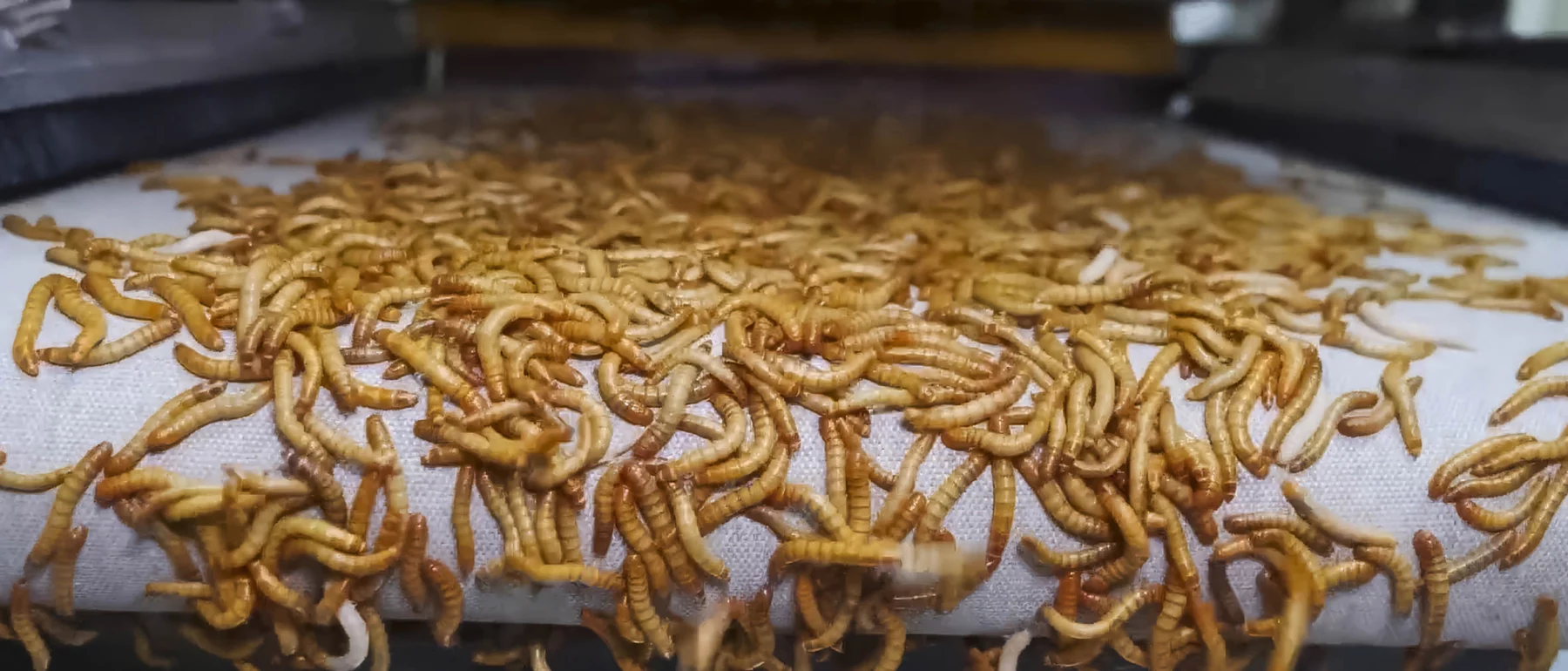
Dried larvae of insects in a factory
SEI report

Rethinking insects as alternative protein: emerging environmental and animal welfare considerations

Start reading
SEI report

Rethinking insects as alternative protein: emerging environmental and animal welfare considerations

Insect farming is often presented as a sustainable alternative to traditional animal protein production, but this review – focused on commercial insect farming in high-income countries in the northern hemisphere, where such production has attracted increased attention and investment – finds that the industry frequently falls short of its theoretical promise.

Cleo Verkuijl, Camilo Garzón, Zoha Shawoo, Laura Scherer , Gladys Le Goff / Published on 27 May 2026

Download  Read the report / PDF / 2 MB
Citation

Verkuijl, C., Garzón, C., Shawoo, Z., Scherer, L., & Le Goff, G. (2026). Rethinking insects as alternative protein: emerging environmental and animal welfare considerations. SEI report. Stockholm Environment Institute. https://doi.org/10.51414/sei2026.010

Key messages

  • Insect farming often falls short of its environmental promise. Greenhouse gas emissions generated per kilogram of protein from insect production in temperate climates vary, but they can approach those of chicken and pork, and exceed those of soymeal and fishmeal.

  • Favourable environmental results depend on conditions rarely met in practice. Low-emission insect farming requires organic waste as feed, minimal heating and renewable energy – a combination seldom achieved in temperate countries.

  • Insect farming reinforces conventional animal agriculture rather than replacing it. A substantial proportion of insects are farmed for feed for farmed animals and aquaculture, not to substitute for meat in human diets.

  • The sector poses underexamined risks. Insect farming introduces potential biodiversity threats from accidental releases and emerging animal welfare concerns, given growing evidence that at least some insect species may be capable of suffering.

  • Investment in insect farming carries opportunity costs. To date, major companies, accounting for more than a third of total investment, have failed or have entered restructuring. Resources directed towards insect protein may divert funding, policy attention, and public goodwill from plant-based, fermentation-derived, and cultivated proteins: alternatives that may offer clearer sustainability benefits, with fewer drawbacks.

Download

Read the report / PDF / 2 MB

SEI authors

Cleo Verkuijl
Cleo Verkuijl

Senior Scientist

SEI US

Camilo Garzón

Research Associate

SEI Latin America

Topics and subtopics
Health : Food and agriculture
Related centres
SEI US, SEI Latin America