The brief first outlines how the two projects assessed and operationalized policy coherence between the Paris Agreement and Agenda 2030 and its Sustainable Development Goals. It then outlines the challenges that countries face in coherently balancing their global commitments with their domestic priorities. It also highlights the work done to connect the research to decision-making, sets out overarching findings, and provides a bibliography of key publications produced by the projects.
The empirical part of the research effort included studies in nine countries with different geographies, political economies, levels of development, and levels of fossil fuel dependence. In each case a local research team applied the framework to a politically charged issue, including:
- The transition from coal to renewables in Germany
- A just energy transition in South Africa
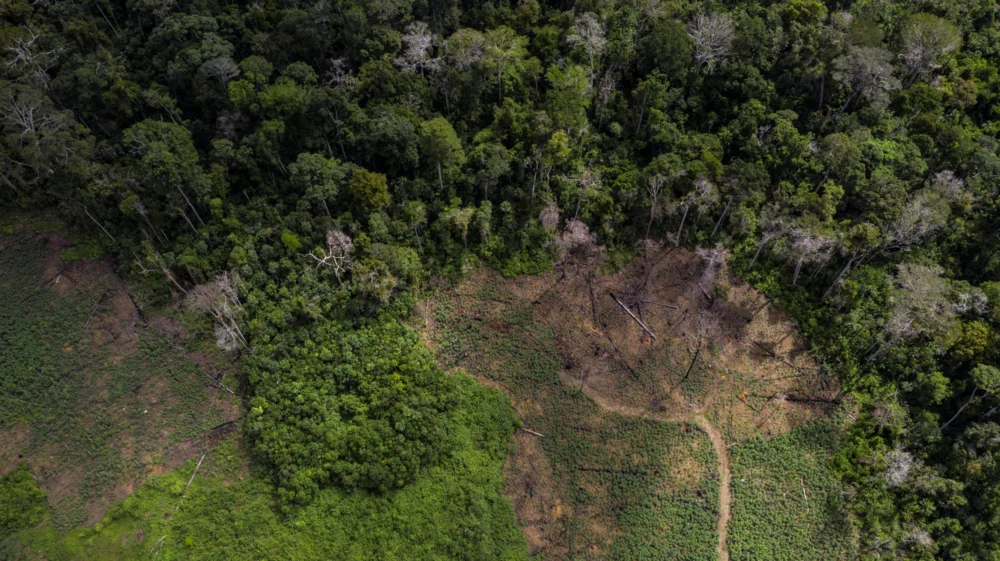
- Deforestation strategy in Colombia
- Agriculture policy shifts in Sri Lanka
- Green growth and labour in Philippine agriculture
- The impact of renewable energy zones on the equitable and just scale-out of
renewable energy in Australia
- Interaction between agriculture and tourism in Fiji
- A just energy transition in Kenya
- Sweden’s regional mobility policy debate.
Summary of main findings
- Policy objectives are overwhelmingly synergistic in every context studied, yet incoherence persists, exposing that the problem lies not in what policies say but in how coherence is understood and pursued.
- Coherence encompasses both the process through which policies are formulated and implemented, and the outcomes they produce for different groups.
- Coherence should account for both political and institutional drivers and consequences.
- Coherence does not fail primarily because of poor coordination – it does so because dominant discourses, vested interests, and power asymmetries shape what counts as coherent in the first place.
- Fossil-fuel interests drive incoherence in every country case studied, with significant fossil-fuel dependence, though the channels of influence differ by context.
- Ideas frame what is even debatable, and the prioritization of economic growth over environmental and social objectives is the single largest driver of incoherence across all income levels.
- Political inequality is a distinct driver of procedural injustice, and participation deficits cascade from upstream policy design into downstream distributional harm.
- Coherence is not a neutral good. Colombia’s Operation Artemis is the cautionary case: highly coordinated anti-deforestation policy that militarized enforcement against Indigenous and rural Amazonian communities.
- Coherence is six times more likely to be associated with benefits; incoherence is nine times more likely to be associated with burdens.
- Vulnerable groups bear the burdens of incoherence; elites capture the benefits of failed coherence.
- Temporality is a missing dimension of coherence assessments – static assessments hide temporal mismatches between policies operating on different timescales.
On the global architecture: what role for NDCs?
- Updated NDCs are moving in the right direction, slowly, but the framing remains technocratic.
- NDCs are partial development plans: implementation of climate pledges will directly shape SDG progress and vice versa, making institutional silos indefensible.
- Climate ODA broadly matches NDC priorities at the SDG level, but not at the target level, and alignment did not improve after Paris. There is agreement on where to spend resources, but not how.
On the post-2030 Agenda: what role for coherence?
- A successor framework must move from the politically comfortable language of synergies to transparent engagement with distributional consequences, making explicit whose priorities count, which trade-offs are acceptable, and who bears the costs when coherence fails or is captured by dominant interests.
- Coherence gains are only as durable as the government that adopts them. A post- 2030 architecture needs ratchet mechanisms, legally anchored commitments, and crisis-proof review processes that lock in progress across political cycles.
- The current framework addresses coherence within countries but not between them. A post-2030 architecture must build in accountability for cross-border spillovers so that the costs of incoherence in one jurisdiction are not externalized onto the most vulnerable elsewhere.
Funders and partners
The ClimEQ and Climate-SDGs projects were funded by Formas and jointly implemented by SEI (HQ, Africa, Latin America), the German Institute of Development and Sustainability (IDOS), Linköping University, Utrecht University, University of Fiji, University of Canberra, Centre for Poverty Analysis (Sri Lanka), University of Philippines and WWF South Africa.