This article explores how interpersonal trust between stakeholders and public trust in government interrelate in participatory water management. Drawing on four international cases, it identifies key dynamics shaping trust in environmental governance.
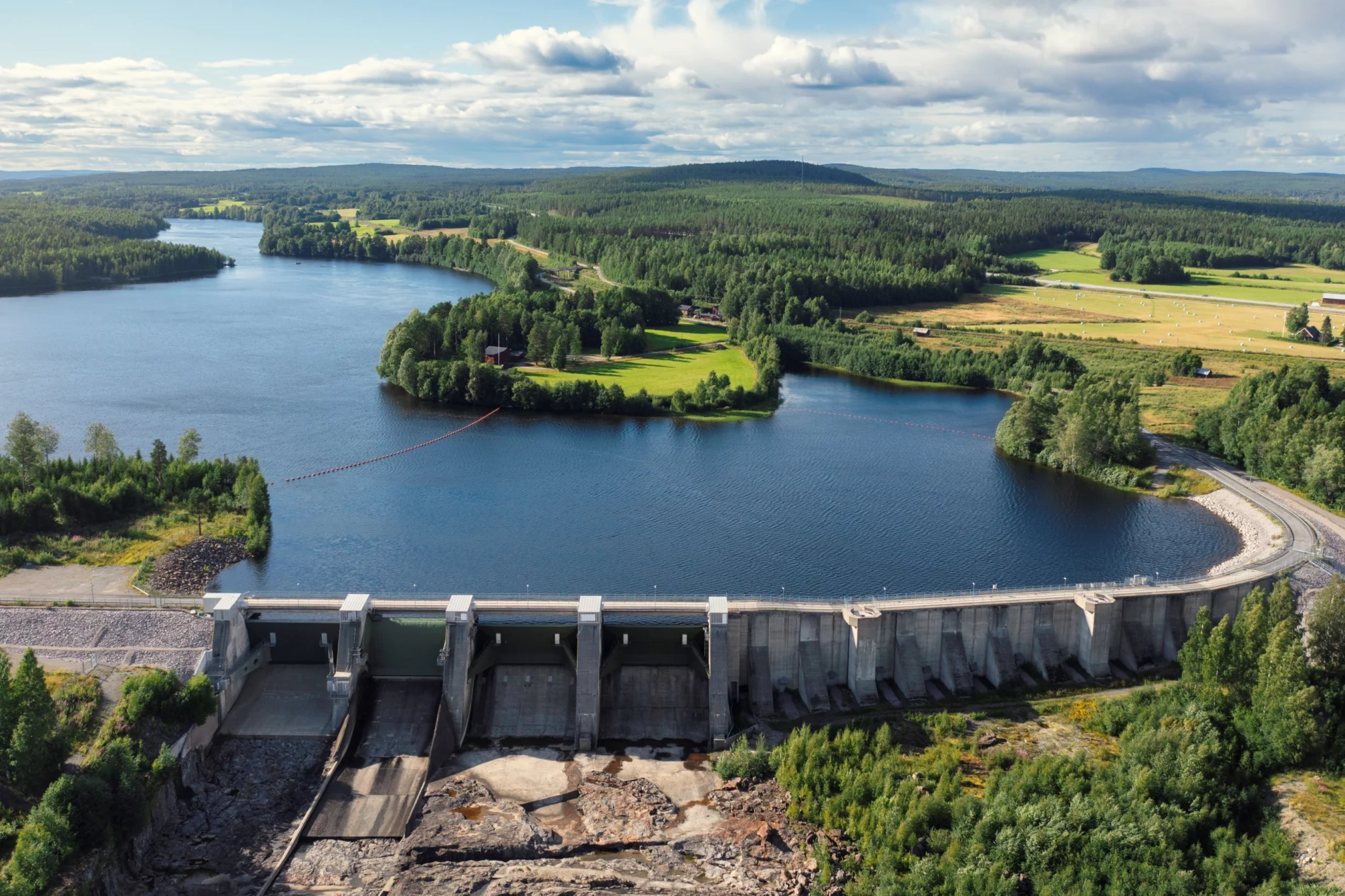
River dam of a hydroelectric power plant at the Ume river in the Västerbotten province of Sweden.
Trust in government and trust between stakeholders are important in the context of environmental governance. Trust fosters collaboration and helps in dealing with challenges that stakeholders face. The interplay between these two different types of trust has received little attention. This paper explores four different cases of collaborative water management to unravel the relationships between interpersonal and public trust. The analysis identified three important aspects that impact the interrelation between interpersonal trust and trust in government: (1) relations between different groups and how stories travel from groups to participatory contexts and back, (2) the embedding of participatory and interactive processes in a wider governance context and how actions in different related governance contexts impact trust, and (3) trust discourses in the wider society. Although these aspects result in dynamics that are sometimes difficult to control or influence, they find their way to participatory processes in forms of stories told. As such it is especially key how to respond and deal with these stories for the development of trust. Based on this empirical exploration, the paper concludes with a conceptual framework and some first insights for enhancing public trust in government agencies responsible for water management.
Project / The project's aim is to explore how stakeholder processes affect social relations between actors involved in water governance.
Journal article / This research examines how the Folke Bernadotte Academy navigates competing demands for accountability and adaptive partner-oriented practices in peacebuilding.
Journal article / The authors set out four key leverage points for change, and show where citizen science can strengthen plural valuation at each stage.
Press release / One of the world’s oldest construction materials, clay, could help deliver lower-carbon cement, according to a new report from LeadIT.