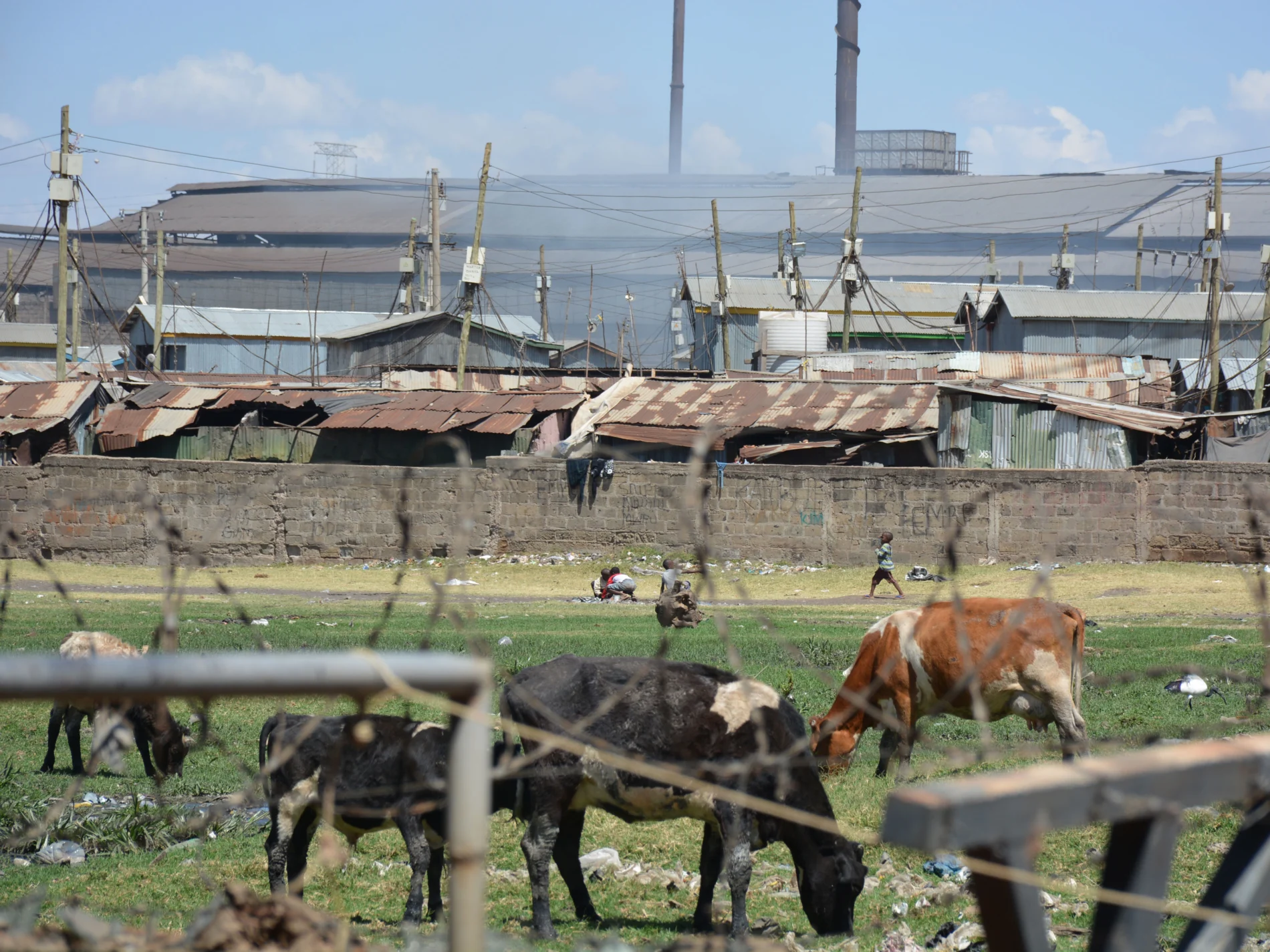
In this paper, authors discuss the results of a study which explored adolescents’ lived experiences of breathing, lung health and air pollution in Nairobi, Kenya. “Breathing well”, they found, is far more than a question of air quality.
A view in Mukuru, one of the two neighbourhoods involved in the study.
Photo: William Apondo
Air pollution contributes to poor respiratory health and can cause particular problems for children and adolescents as their lungs develop. As part of the TUPUMUE project, which explored the lung health of young people in Nairobi, researchers investigated how adolescents experienced breathing and air pollution in two areas of the city: Mukuru, an informal settlement, and Buruburu, a more affluent residential area.
In each neighbourhood, participants did walking interviews with the research team. These walking interviews were video-recorded, the routes (defined by the interviewees) were tracked via GPS, and particulate pollution (PM2.5) measurements were taken along the route. During the walks, researchers asked participants about their experiences of their community, lung health and air pollution. Interviews were conversational, with specific questions asked depending on what was seen, heard, or smelled on the journey.
The research revealed four key findings:
Though participants took individual measure to limit their exposure, the authors emphasize that top-down, policy-driven action would also contribute to improving people’s breathing and their health and wellbeing, as well as reducing overall air pollution exposure.
Project / Improving understanding about early life origins, burden, determinants, and prognostic significance of non-communicable lung disease in Kenya.
Media coverage / Climate experts and development partners have called for a unified national approach to methane reduction
Other publication / This report examines key weather events during the year and puts them in the context of 1991–2020 climatology.
Journal article / Household cooking contributes significantly to greenhouse gas emissions and short-lived climate pollutants, especially where charcoal, kerosene are widely used.