part of Indoor air quality
This project generated new scientific knowledge about the early life course origins, burden, determinants, and prognostic significance of non-communicable lung disease in Kenya by studying the lung health of children and adolescents from two very different communities.
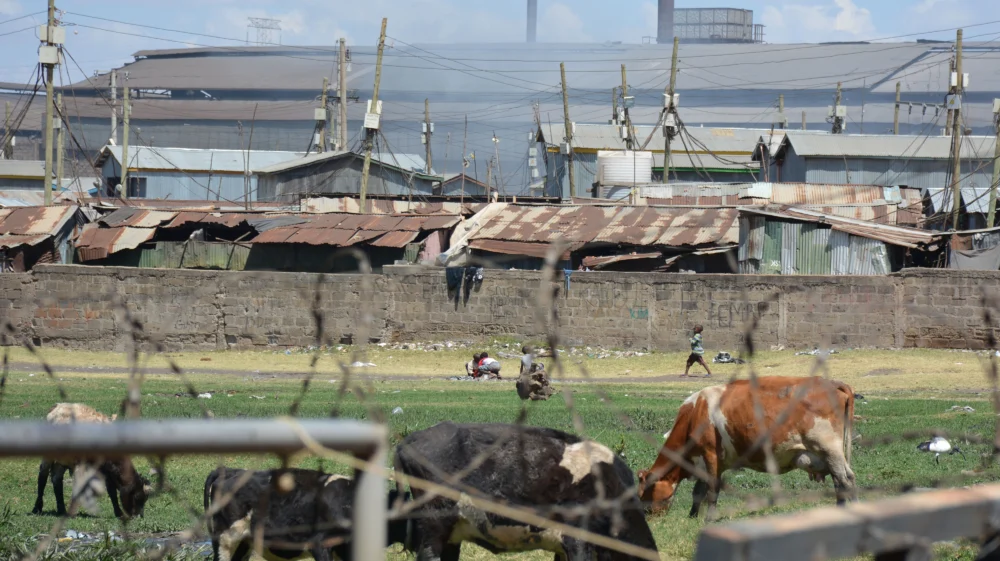
TUPUMUE will use participatory theatre to engage with Mukuru residents about health issues. Photo: theteam25 / Wikimedia Commons.
Photo: theteam25 / Wikimedia Commons.
TUPUMUE, or “let’s breathe” in Swahili, was a partnership between Liverpool School of Tropical Medicine (LSTM) and the Kenya Medical Research Institute (KEMRI) and was jointly funded by the National Research Foundation (NRF) of Kenya and the Medical Research Council (MRC) of the UK.
The project, which lasted 3 years, generated new scientific knowledge about the early life course origins, burden, determinants, and prognostic significance of non-communicable lung disease in Kenya by studying the lung health of children and adolescents from two very different communities.
The project focused on children and young adults aged 5 to 18, the age at which lungs are developing and ill effects at this time of life can impact future health. We worked in two locations: an informal settlement (Mukuru) and a wealthier area (Buruburu). These two areas are geographically very close but very different in terms of their socioeconomic make up.
The study also used participatory theatre to help explore community knowledge about what damages lungs, and the lived experience of air pollution and lung health. The results of the study were fed back to the two communities, also via the medium of theatre, as well as other creative outlets such as comics and murals.
Journal article / "Breathing well" is about more than air quality: cleanliness, population and building density and the presence of vegetation all make a difference.
The objective of the UK-Kenya Joint Partnership on Non-communicable Diseases (NCDs) is to deliver research funding that will underpin progress towards achieving the objectives laid out in the Kenyan NCD strategy beyond 2020, and to enable the pursuit of shared research interests. The funders are also encouraging projects that incorporate elements of capacity building within them.
Journal article / Household cooking contributes significantly to greenhouse gas emissions and short-lived climate pollutants, especially where charcoal, kerosene are widely used.
Initiative / This initiative investigates how rapidly growing cities affect residents' wellbeing and how this interacts with the overall health of city systems.
Journal article / This article presents the first global assessment of the association between preterm births and exposure to ambient particulate matter (PM2.5) air pollution.