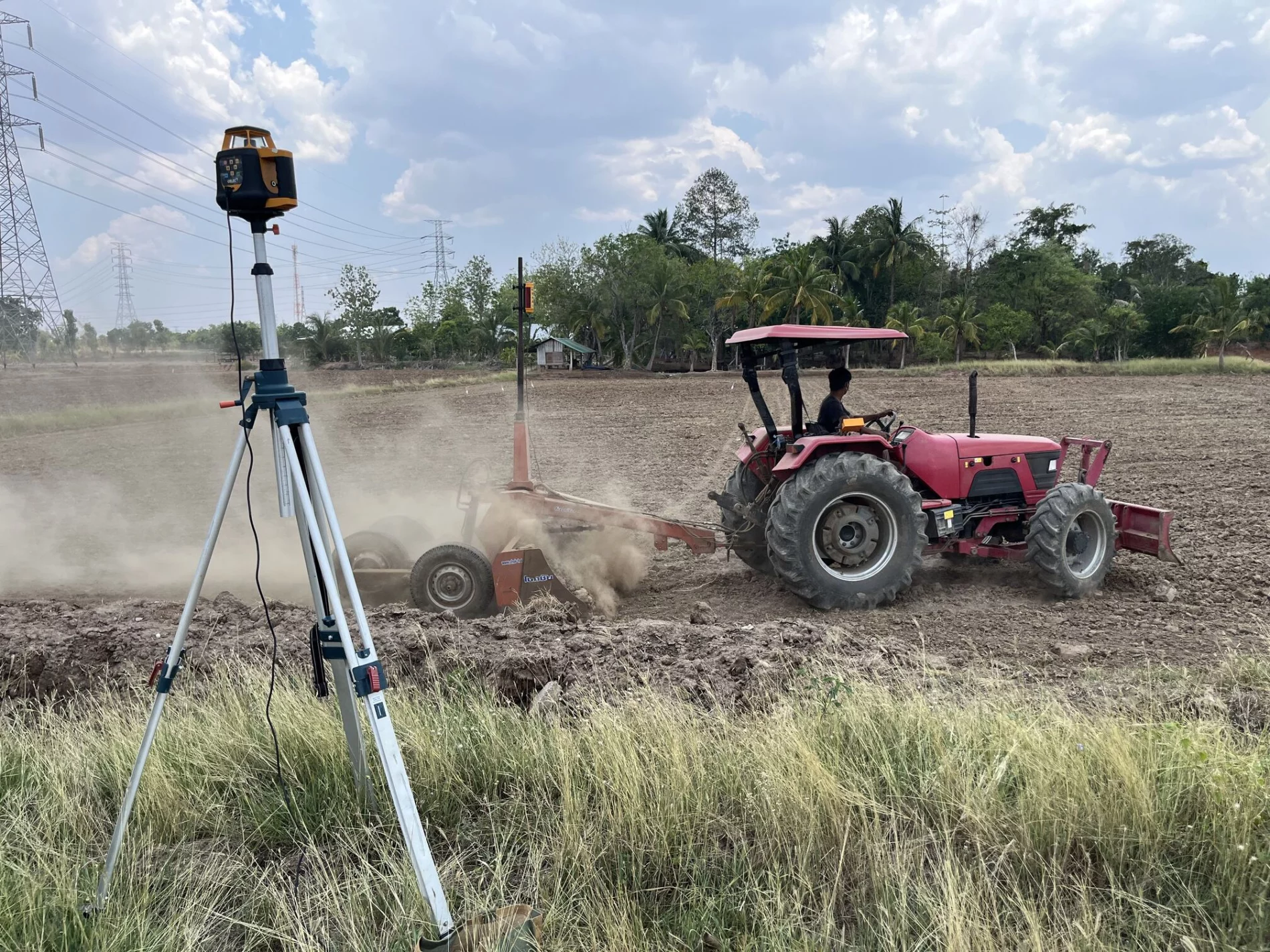
In a significant step towards implementing climate-smart technologies, SEI organized a field visit and training workshop on laser-controlled land leveling from 26-28 April 2024 in Nakhon Ratchasima, Thailand.
Laser-controlled land leveling. Photo: Satish Prasad / SEI Asia.
Nakhon Ratchasima emerges as a pivotal hub for climate-smart technologies, driven by alarming projections from the Intergovernmental Panel on Climate Change (IPCC) that designate the region as highly vulnerable to drought. Two pilot sites in Nakhon Ratchasima province were selected to recognize the vulnerability following a survey, discussions on the needs of farmer groups, and an assessment of current climate risks and irrigation challenges. This selection of the pilot sites involved discussions among experts from the Office of National Water Resources (ONWR), Rajamangala University of Technology Isan (RMUTI), and the Stockholm Environment Institute (SEI), also leading to the identification of climate-smart technologies that are well-suited to address the specific requirements of the region’s farmers.
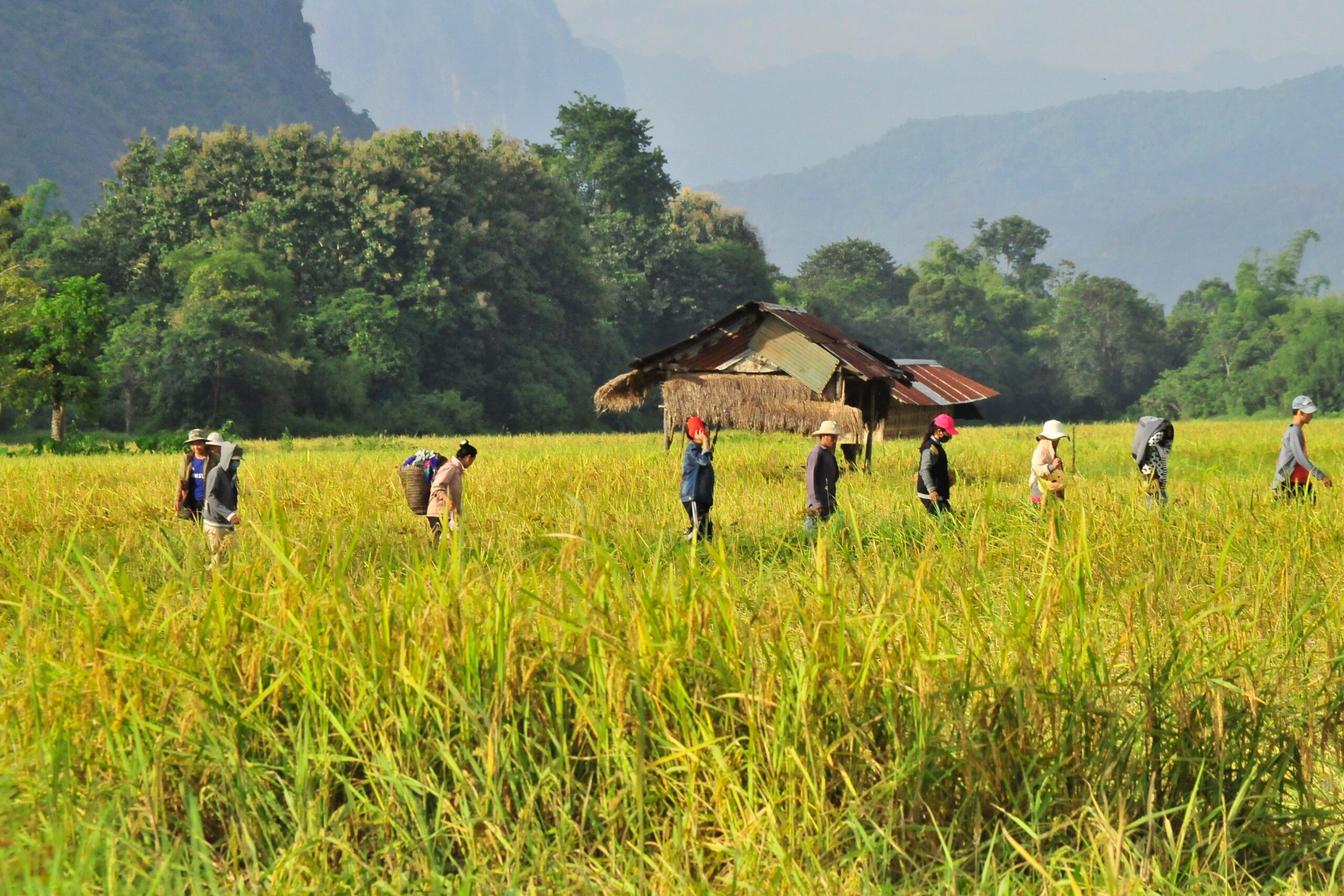
The project vision is to build climate-resilient water resources and rice farming systems in the Mekong-Lancang Region.
The primary objective of this visit was to introduce laser-controlled land leveling to the farmers, provide training on its use, and facilitate communication with the laser-controlled land leveling company. The pilot sites were chosen to evaluate the effectiveness of implementing climate-smart technologies (a) Phimai District and (b) Sung Noen District. Sung Noen District has access to irrigation, while the Phimai District relies entirely on precipitation for its water supply. This approach allows for a comprehensive assessment of the technologies under varying water availability conditions.
Project / This project aims to build climate-resilient water resources and rice farming systems in the Lancang-Mekong Region.
Feature / At the Bangkok Climate Action Week 2026, SEI Asia will showcase research and build pathways for climate action through science, dialogue, and engagement.
Feature / Key messages from the second Joint Steering Committee (JSC) meeting on water-related collaboration between ONWR and SEI Asia on 20 August 2026
Past event / SEI joins the Climate Week in New York to highlight global leadership and finance solutions for accelerating the transition to net zero industry.