Despite improvement in access to drinking water, water utilities continue to face significant challenges in how to provide water in a sustainable way. This study examines Decentralized Drinking Water Services (DWS), through the lens of business model innovation. By using a mixed-methods approach the study addresses a gap in current literature, offering new insights into DWS potential for long-term adoption and scalability.
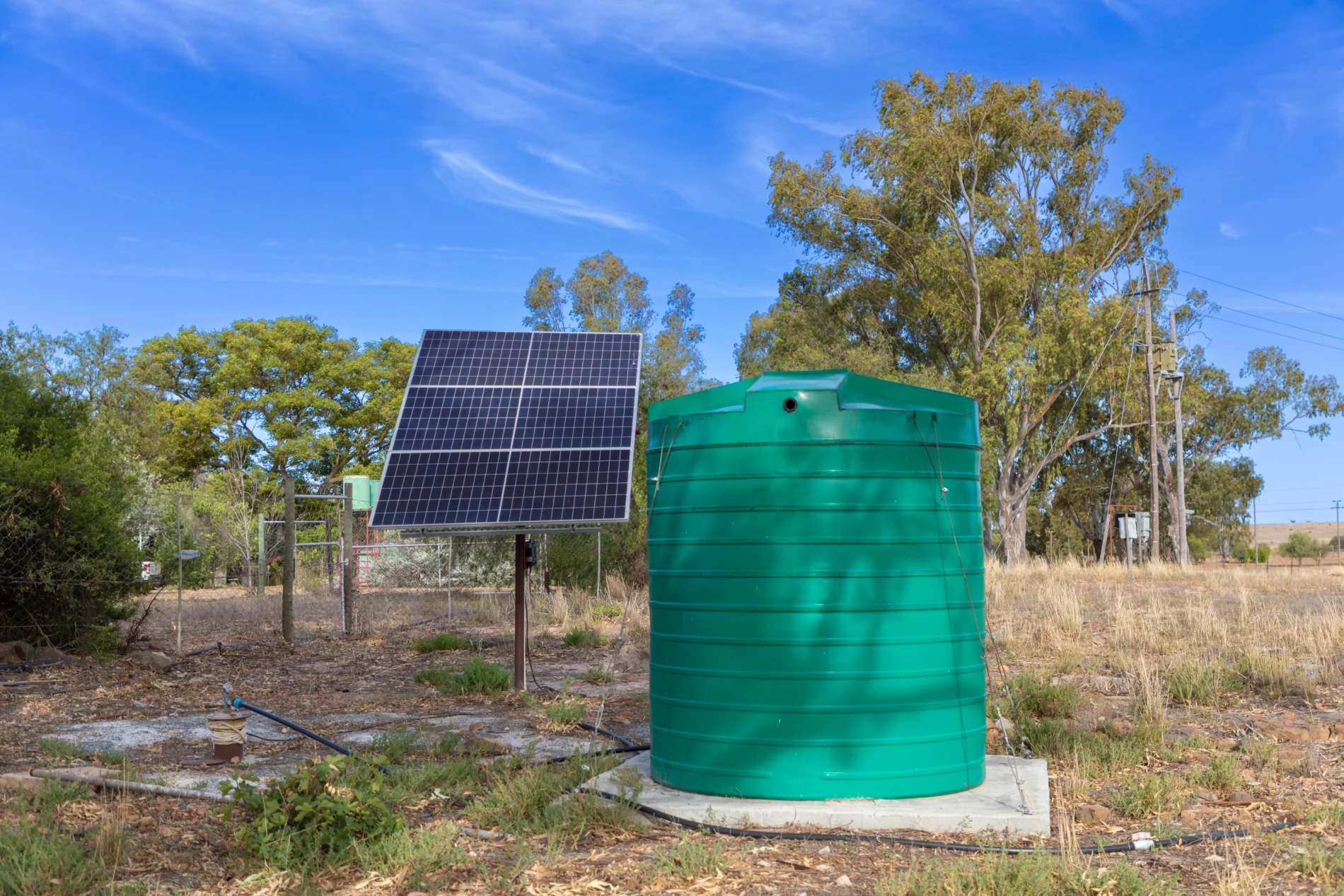
Borehole water pumped with solar power. Concept for extracting groundwater in locations where pumped water and electricity is not available.
Access to safe and sustainable drinking water services remains a significant challenge, particularly in rapidly urbanizing and climate-impacted urban and peri-urban areas. Traditional utilities, often operating under public-private partnerships, are frequently constrained by underinvestment, fragmented governance, and weak accountability, resulting in service gaps. Decentralized Drinking Water Services (DWS) offer adaptable, user-centered alternatives through locally tailored technologies and alternative water sources. However, their adoption is constrained by financial barriers, regulatory uncertainty, and limited community engagement.
While previous studies have emphasized the technical and operational aspects of DWS, this study addresses a gap by examining how business model innovation can enable long-term adoption and scalability. Using a mixed-methods approach, combining a systematic literature review with interviews of private-sector providers, this research identifies Product-Service Systems, Social Enterprises, and Community-Based Management as key business models.
Findings reveal that hybrid approaches, which bridge formal/informal, centralized/decentralized, and public/private boundaries, are central to navigating heterogeneous infrastructure configurations in diverse contexts. Providers must balance financial viability with equitable access, adapt to varying institutional capacities, and respond to evolving policy landscapes. The analysis shows that regions with advanced water infrastructure industries often shape service models in markets with more constrained resources, underscoring the need to adapt these transfers to local socio-political and cultural contexts. Scalable DWS delivery depends not only on technological innovation but also on coherent regulatory frameworks, inclusive governance, and financing strategies aligned with community affordability. Finally, the study calls for future policy efforts that prioritize coherent regulatory frameworks, including clear quality standards, permitting procedures for alternative water sources, mechanisms for public oversight, and community engagement to ensure long-term functionality and local ownership.
Initiative / The Gridless Solutions Initiative explores alternative technologies for the delivery of critical services like energy, sanitation and freshwater.
Press release / Development is underway for a digital version of the Nature Tool, designed to assess nature-related risks and opportunities across agricultural sourcing.
Journal article / This systematic review and meta-analysis evaluates time use and time-savings related to WASH interventions in low- and middle-income countries.
Feature / Global sanitation experts met in Stockholm to share innovations, strengthen partnerships and plan the future of sustainable sanitation.