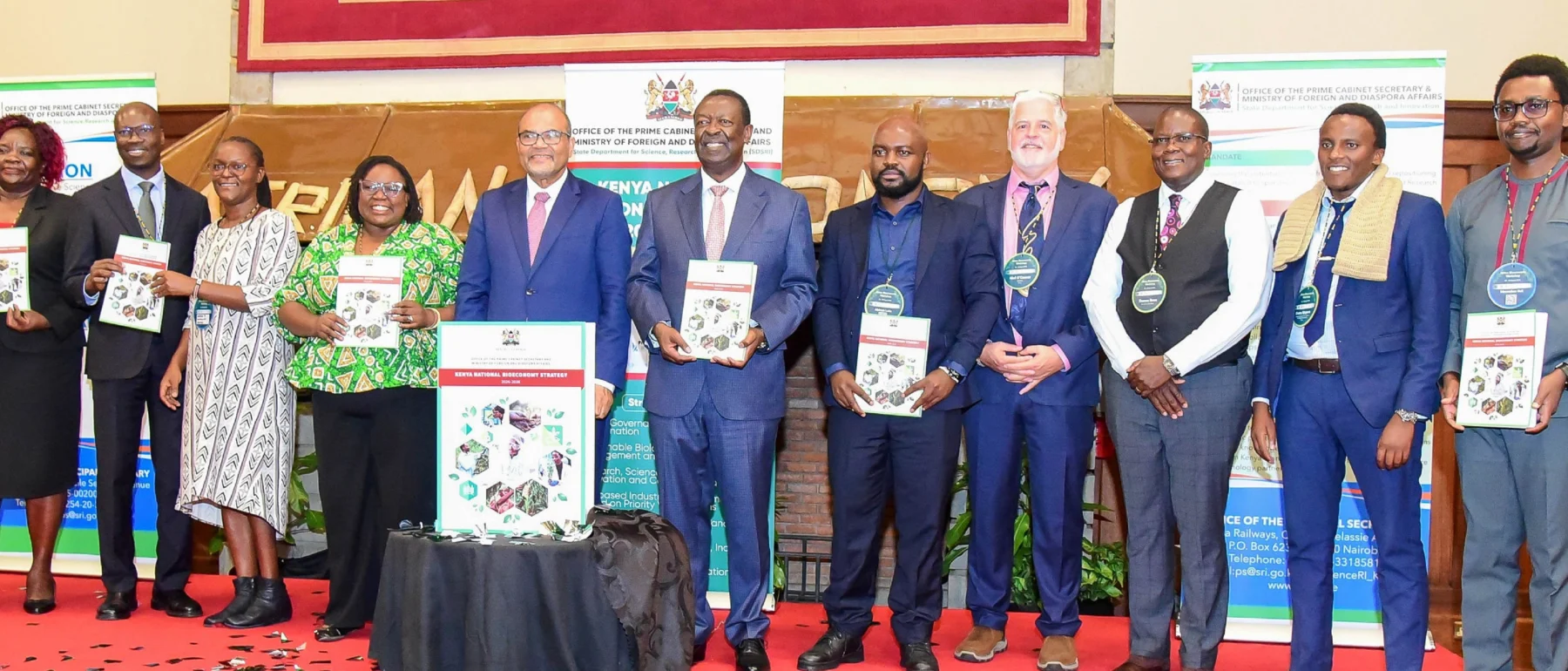
Kenya has launched its first National Bioeconomy Strategy, becoming one of a small number of African countries with a dedicated national bioeconomy strategies.
Kenya launched its first National Bioeconomy Strategy on 25 August 2026 at the Africa Bioeconomy Workshop in Nairobi. The two-day Workshop was co-organized by SEI Africa, BioInnovate Africa/ International Centre of Insect Physiology and Ecology (ICIPE), AKADEMIYA2063, the State Department for Science, Research and Innovation and the East African Community. Stakeholders from across Africa gathered under the theme, “Towards a shared vision for enhancing resilience and competitiveness of the African Bioeconomy.”
Although the strategy is new, the idea of a bioeconomy in Kenya is not. Kenya is well-placed to build a strong bioeconomy because of its rich biodiversity, large areas of farmland, forests, rangelands, marine and freshwater resources and microbial diversity. The 10-year strategy offers a plan to use these resources along with science and innovation to create new technologies, products, businesses and industries.
Even with its many biological resources, Kenya has not yet reached its full economic, environmental or social potential. Many resources are still underused or bring little value. Challenges such as fragmented policies, limited funding, inadequate use of research, innovation and skills shortages continue to slow down the growth of the bioeconomy.
The strategy plans to close these gaps by improving coordination, increasing funding and investment opportunities and building stronger links between research, innovation, industry and markets.
The question is no longer whether we have the resources to build a bioeconomy, but whether we have the vision and determination to turn those resources into greater prosperity for our people.
Musalia Mudavadi, Kenya’s Prime Cabinet Secretary
Kenya has a growing research and innovation ecosystem, universities and research institutions, an entrepreneurial private sector and a young population. However, infrastructure and financing are needed to take promising ideas beyond the pilot stage. Kenya’s Principal Secretary for the State Department for Science, Research and Innovation, Prof. Shaukat Abdulrazak, stressed the need to bridge the divide between research outputs and market-ready solutions, particularly through improved technology transfer and commercialization.
At the workshop, experts repeatedly called for stronger university–industry partnerships, patient and blended finance, reliable biomass supply chains, shared processing facilities, quality assurance systems and access to larger markets.
The strategy plans to close these gaps by improving coordination, increasing funding and investment opportunities and building stronger links between research, innovation, industry and markets. Building this ecosystem cannot be the responsibility of government alone, Abdulrazak said.
This highlights why the strategy focuses on investment. Kenya plans to raise approximately USD$ 773 million for bioeconomy investment by 2036. The proposed Bioeconomy Investment and Financing Roadmap will help entrepreneurs, researchers and other stakeholders find the right sources of funding and finance.
We need researchers to generate solutions. We need entrepreneurs to scale them. We need financial institutions to invest. We need industry to create markets.
Prof. Shaukat Abdulrazak, Kenya's Principal Secretary for Science, Research and Innovation under the Office of the Prime Cabinet Secretary
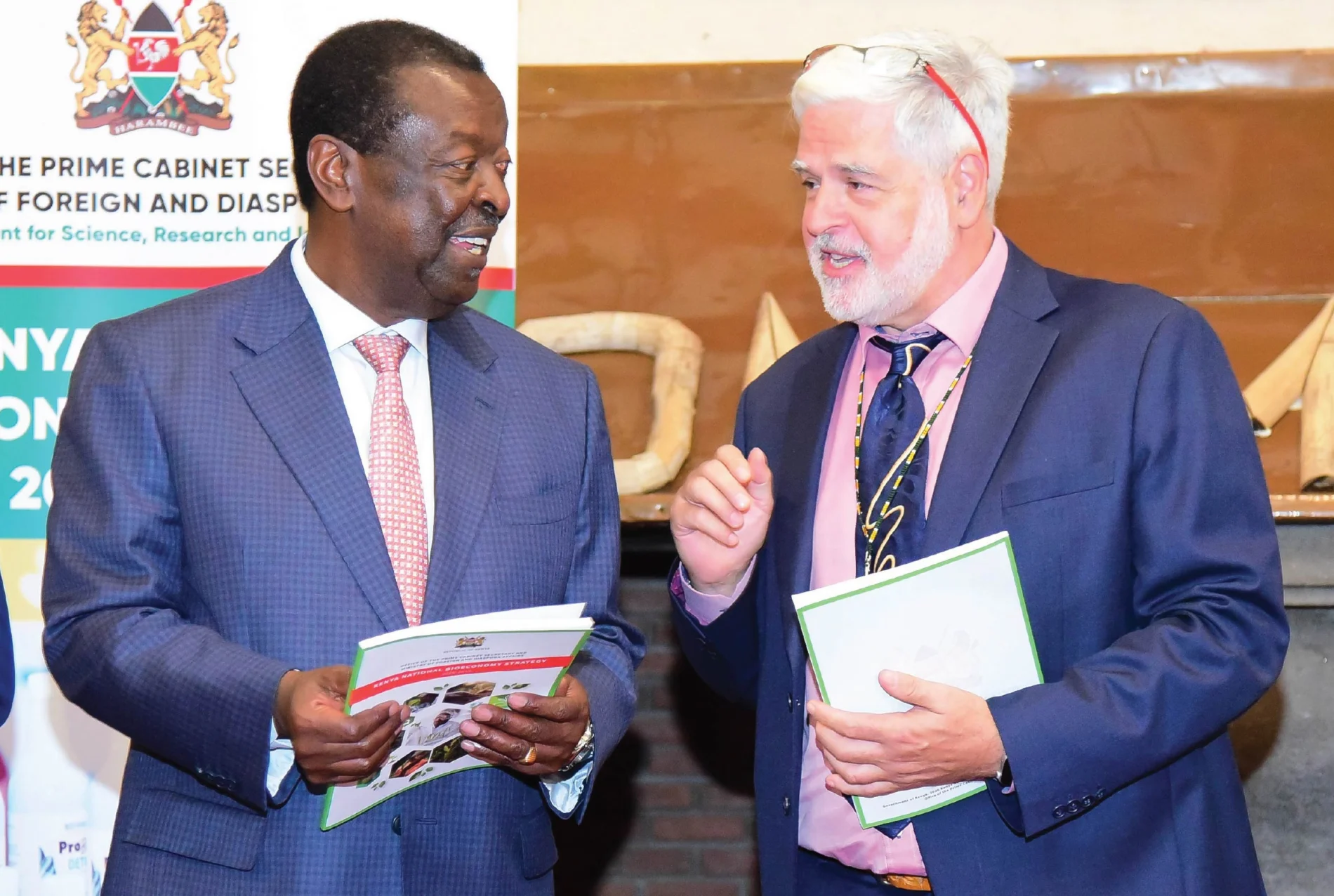
Kenya's Prime Cabinet Secretary Musalia Mudavadi and SEI Africa Centre Director Niall O'Connor
Photo: BioInnovate Africa
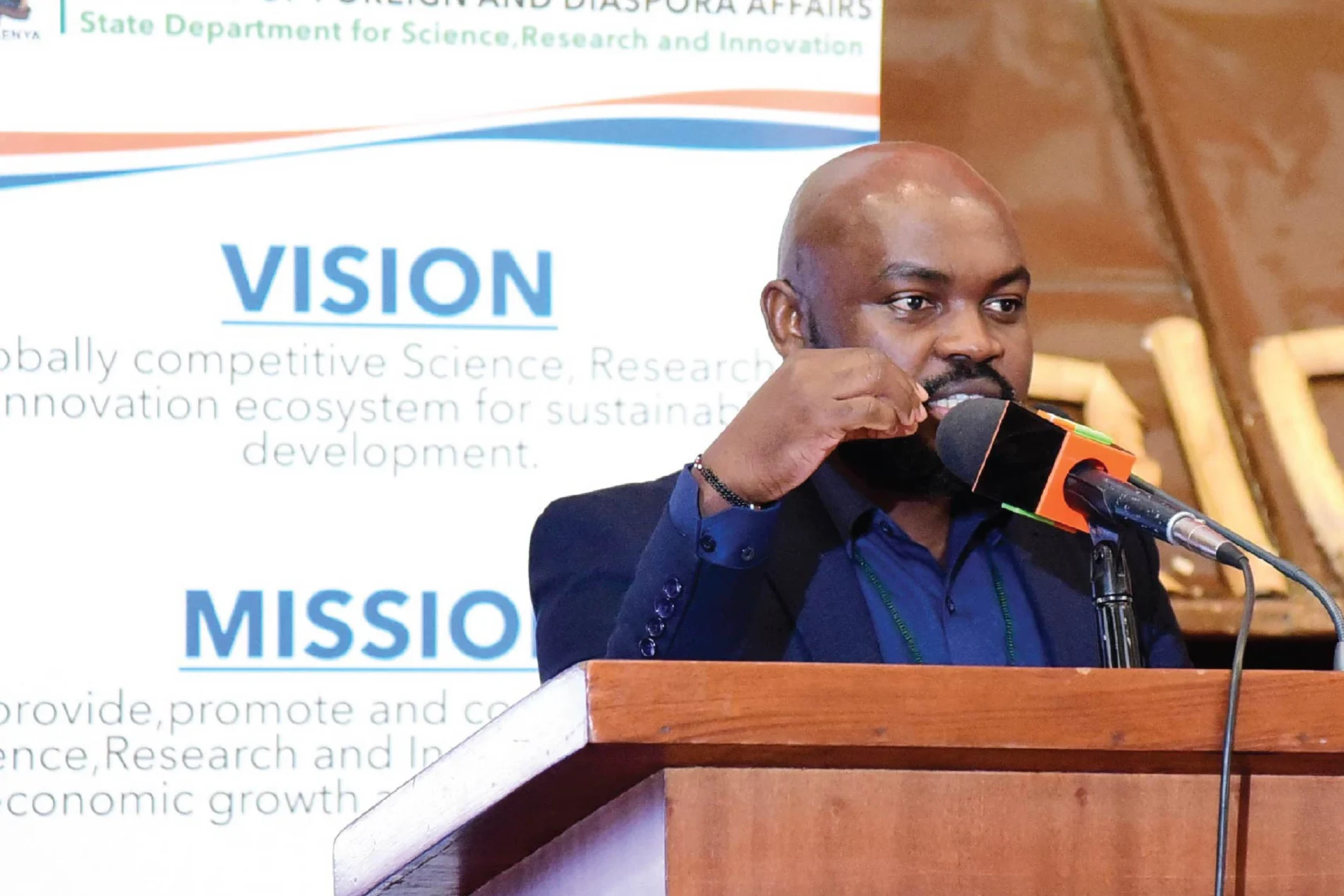
SEI Africa's Cluster Lead for Natural Resources, Alphayo Lutta
Photo: BioInnovate Africa
SEI’s Advancing Bioeconomy Development in Kenya (ABDK) project offers a working example of such an ecosystem. The project mapped more than 70 micro, small and medium-sized businesses, supported business partnerships and connected entrepreneurs with Kenyan and Swedish stakeholders through the Kenya–Sweden Bioeconomy Business and Innovation Fair.
This experience showed that growing a business takes more than just good technology. Technology providers need feedstock suppliers, processors need steady markets, entrepreneurs need funding, buyers need quality and standards and researchers need ways to work with industry. Bringing all these groups together can turn individual innovations into working value chains.
“The question is whether we can create the conditions for these solutions to grow responsibly, sustainably and at scale,” said Niall O’Connor, SEI Africa Centre Director, during the launch.
The workshop also saw the launch of The State of the Bioeconomy in Eastern Africa: 2026, the third report in a biennial series. SEI Africa contributed to the report alongside the East African Science and Technology Commission (EASTECO), ICIPE, through BioInnovate Africa and Landscape Alliance (formerly CIFOR & ICRAF).
The report examines what Eastern Africa must do to turn its biological resources into sustainable industries, decent jobs and greater resilience. This work builds on SEI’s previous contribution to the region’s bioeconomy agenda. In 2020 and 2021, SEI worked with EASTECO, BioInnovate Africa and other partners across the region to support the development of the East African Community (EAC) Bioeconomy Strategy, which became Africa’s first comprehensive regional bioeconomy strategy. Since then, Ethiopia has created its own national bioeconomy strategy, and Uganda, Rwanda, Tanzania and Burundi have started their own planning.
“Africa possesses significant biological resources, biodiversity, indigenous knowledge, growing base of scientific and entrepreneurial capabilities. But the critical question is how can we convert these assets into higher-value products, competitive enterprises, decent employment and modern energy systems while safeguarding our natural resource base? The status report addresses these questions by looking at biobased industrial development and sustainable energy.” Said Alphayo Lutta, SEI Africa’s Cluster Lead for Natural Resources.
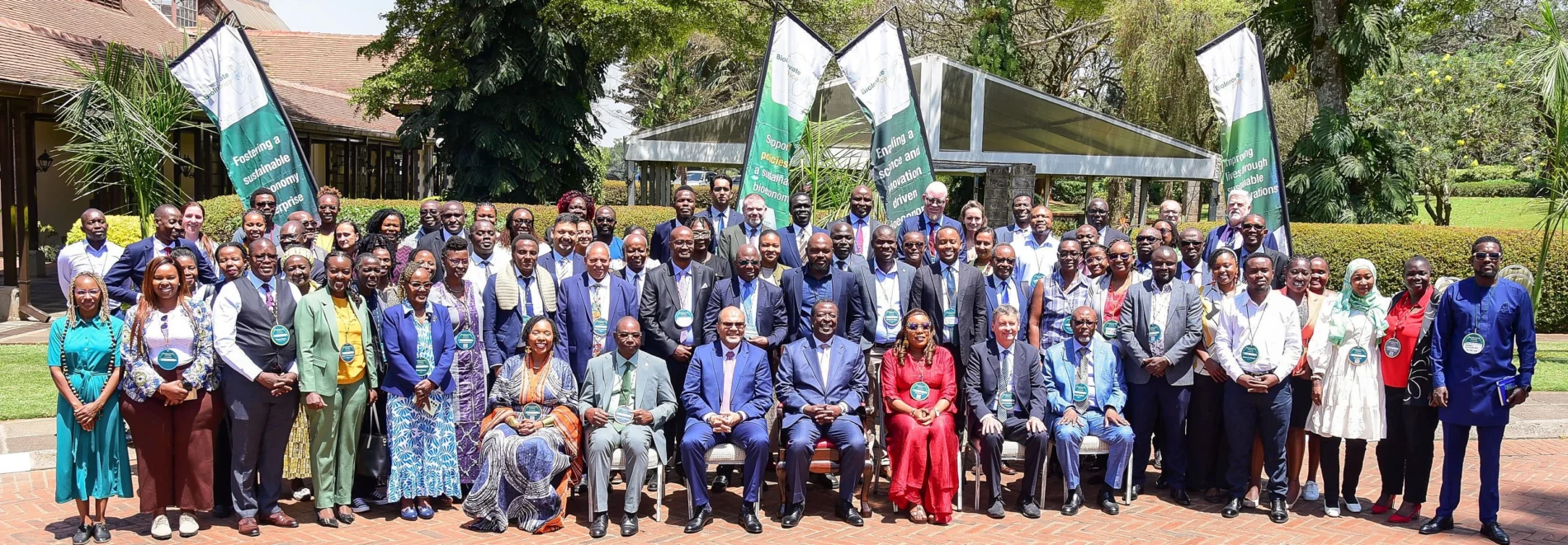
Stakeholders at the Africa Bioeconomy Workshop
Photo: BioInnovate Africa
The report also points out two major hurdles that many bio-based businesses face: moving from research and proof of concept to a pilot that can attract investment and then from a successful pilot to full commercial scale. At these points, businesses need the same enabling conditions raised at the workshop. Without them, promising ideas remain dependent on grants and small pilots.
These challenges show the need for a more coordinated system. The status report recommends clear policies, common regional standards and better access to bigger regional markets. It also suggests creating innovation hubs with clear goals, local biorefineries and cluster-based development as practical ways to turn ideas into successful value chains.
As O’Connor noted at the workshop, regional cooperation is particularly important. While national strategies provide direction, an integrated regional market can make smaller markets more attractive to investors and create the scale needed for bio-based industries to grow. The East African experience could also offer a model that other African regions can adapt. The Nairobi workshop is also expected to inform preparations for the Global Bioeconomy Summit in Dublin on 20–21 October 2026.
For Kenya, launching the National Bioeconomy Strategy is a key step in building this ecosystem. But the real test will be whether it leads to working value chains, successful businesses and real benefits for communities. The strategy recognizes that ambition must go further than just making policies. The overarching goal is for Kenya to have a “sustainable, innovative and globally competitive bioeconomy” by 2036 that supports inclusive economic growth, environmental sustainability and better livelihoods.
Ultimately, the strategy’s success will be judged by real results, not just the document. Success would mean turning agricultural residues into new products, using research to build real businesses, helping small businesses get the funding and markets they need and keeping more value from Kenya’s biological resources within the country.
These pillars point to a shift from viewing biological resources primarily as commodities, towards seeing them as inputs into higher-value economic activity:
Project / This project aimed to promote partnerships between Kenya and Sweden bioeconomy private sectors.
Media coverage / SEI’s Alphayo Lutta emphasizes that one way Kenya can reduce its vulnerability to global oil disruptions is to give greater attention to its bioeconomy.
SEI working paper / The authors distil useful insights regarding sustainable use of bioresources and their transformation into bio-based products in this working paper.