The authors distil useful insights regarding sustainable use of bioresources and their transformation into bio-based products in this working paper, which is the first of a series in a report examining bioeconomies at the micro, meso and macro scales.
The tropics are home to the greatest social and biological diversity on the planet and share many social and economic challenges. Here, the authors focus on micro, small and medium-sized enterprises (MSMEs), smallholders and value chains that include larger producers and processors, while considering similarities and differences between Colombia, Kenya and Thailand.
This working paper guides analysts and practitioners in promoting and advancing the bioeconomy in Southeast Asia, East Africa and Latin America. The authors apply an analytical framework to case studies at various scales to establish lessons learned in three areas key to the success of the bioeconomy: institutions and public policies, business organization and value chains, and technology development and innovation.
In each context, they describe the development and application of the analytical framework for understanding the transformation of bioresources into bio-based products, processes and services and the associated sustainability challenges for the bioeconomy. They then highlight the sustainability challenges and opportunities for cassava use and transformation, taking the case of this crop as a key agricultural resource for advancing the bioeconomy in tropical and subtropical regions.
They complement the analysis by including a large commodity crop case as sugar cane (Thailand) and the challenges and opportunities for the sustainable use of non-timber forest products (NTFPs) in Colombia (açaí) and Kenya (croton). Sustainable use that conserves biodiversity is of crucial importance and the subject of growing interest for the bioeconomy, especially in the tropics, where most of this diversity is found.
Based on these analyses, the authors provide recommendations at the micro level of bioresources and enterprises to orient analysts and practitioners in advancing the bioeconomy in these tropical regions.
Initiative / This initiative aims to guide decision-makers towards more cohesive and constructive governance of bioeconomy pathways, with a focus on the Global South.
Project / This project aimed to promote partnerships between Kenya and Sweden bioeconomy private sectors.
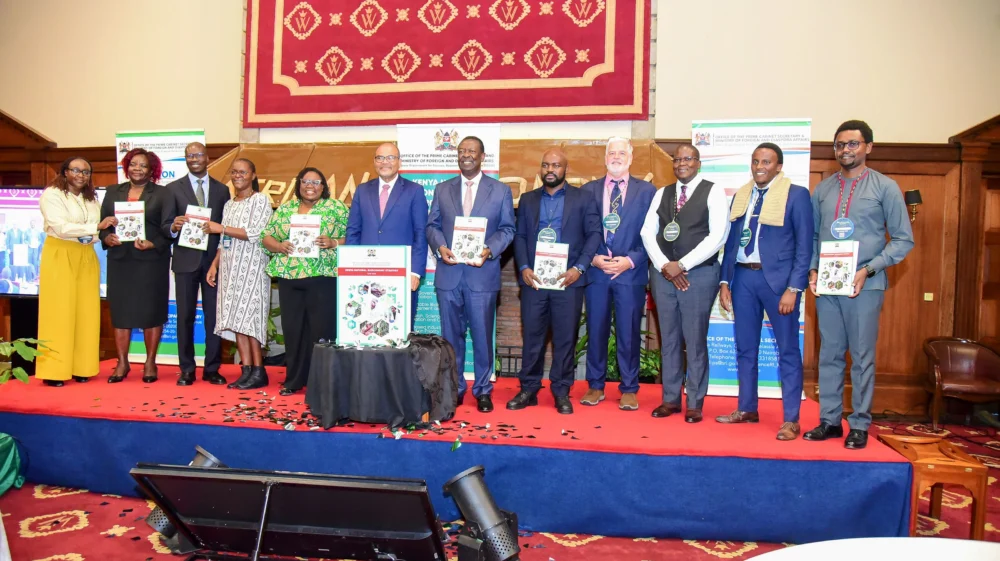
Feature / Kenya has launched its first National Bioeconomy Strategy, becoming one of a small number of African countries with a dedicated national bioeconomy strategy.
Feature / Africa's bioeconomy could power jobs, industry and climate resilience, but only if finance, knowledge and innovation start moving in step.
Media coverage / SEI’s Alphayo Lutta emphasizes that one way Kenya can reduce its vulnerability to global oil disruptions is to give greater attention to its bioeconomy.