part of How El Niño is shaping a planet in crisis
Start readingEl Niño is an inherently unpredictable phenomenon that will likely unleash profound effects on global food production in parts of the world. SEI experts Johanna Hedlund and Ed Carr argue that international cooperation that responds to local conditions can provide a bulwark against cascading impacts on the food system.
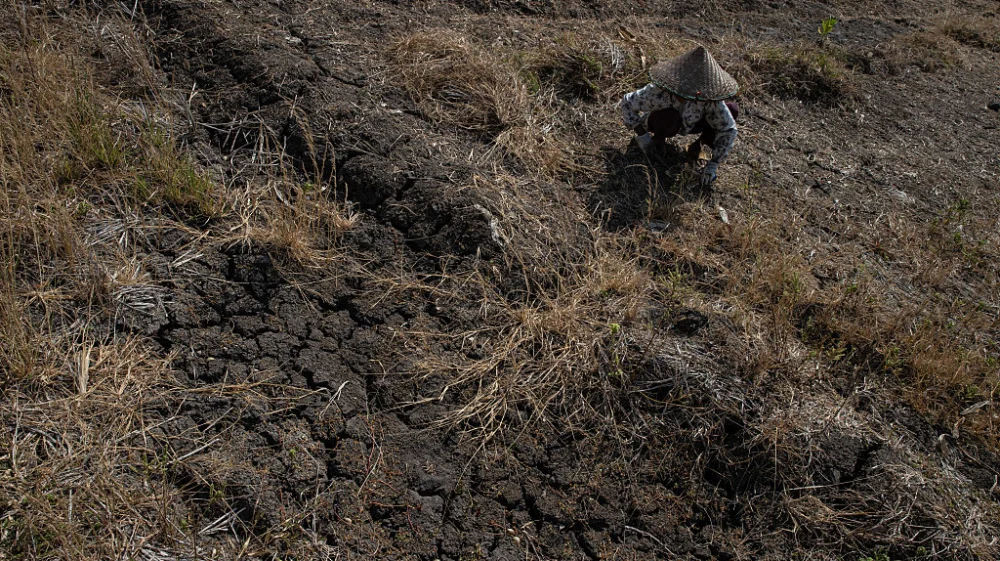
The current record El Niño event, unfolding in parallel with unprecedented human-induced warming, could put 50 million people at risk of acute hunger by next year. The event has already triggered failed harvests from severe drought and disproportionally affected rainfed crops due to the weakening of the Indian monsoon. Further impacts on local harvests and farming practices in various places are also projected to push up food prices worldwide, and into 2028.
Efforts to forecast the risks associated with El Niño and respond effectively are challenged by two fundamental uncertainties. First, El Niño’s impacts depend on the confluence of global atmospheric processes marked by complexity and uncertainty. While this El Niño event will likely significantly affect food production in various parts of the world, prior El Niño impacts are not exact roadmaps to what will emerge in coming months. Second, the consequences of El Niño are often not confined to where harvests fail. Because the climate risks across the food system can cascade globally, El Niño-driven climate extremes can trigger both acute food production shocks and potentially permanent changes to food systems with effects on food availability and prices in distant places. How these impacts will spread through trade, markets, and policy responses is difficult to predict. As a result, individuals and households may therefore struggle to afford, access, or acquire food, which can deepen affordability crises worldwide, even in wealthy countries.
The current El Niño therefore embodies a fundamental challenge of decision-making and action in the Anthropocene: How can we make good decisions with inherently uncertain information and what structures are needed to turn decisions into effective action? Prior experience and emerging research suggest that these challenges, while significant, are not intractable.
The socioeconomic consequences from the ongoing El Niño have led to countries declaring national emergencies in countries like Bolivia, Panama, Peru and other countries across North and South America. These actions signal that communities already facing hunger, conflict, displacement, or poverty expect to experience conditions that deepen existing humanitarian needs.
The current El Niño therefore embodies a fundamental challenge of decision-making and action in the Anthropocene: How can we make good decisions with inherently uncertain information and what structures are needed to turn decisions into effective action?
Humanitarian organizations use seasonal forecasts to prepare for and mitigate El Niño impacts. Acting early through such systems can cost less than responding after crises unfold. But predictions of El Niño-imposed climate extremes remain probabilistic. While historical, observational records provide important data on what parts of the world are often affected, the inherently uncertain character of El Niño’s impacts means we will get some forecasts wrong. If policy responses rely heavily on forecast-triggered tools rather than using forecasts to monitor emerging impacts and respond quickly, governments, farmers, and other food system actors risk preparing for an outcome that never occurs, leaving both the food and humanitarian sectors unprepared for the impacts that forecasts miss.
Analysing trade and price pathways that transmit local challenges to distant locations adds a layer of complexity and uncertainty to these efforts. Without clear information on the systemic effects of policy decisions, responses to acute crises, such as export bans and other protectionist responses, can exacerbate the stresses El Niño places on national, regional and even the global food system. For example, in 2023, India banned exports of non-basmati white rice to curb rising domestic prices, partly in anticipation of El Niño-related crop losses. This stoked a pronounced increase in the global price of rice, spreading vulnerability to importing regions in Africa and South Asia.
Improved forecasts with clear framings of uncertainty are only one component of effective decision-making and action under increasing climate variability. Response options must be nimble and adaptable to changing priorities as impacts continue to emerge. Effective flexible public assistance programs include shock-responsive social protection, which can channel assistance to households via cash transfers for food and water, access to safe water and food banks, alleviation of loans, supporting public health services, and more depending on the character of local need. Such programs allow for greater connections between humanitarian response, adaptation policy, and social policy, ensuring that short- and longer-term efforts to manage the impacts of a changing climate also support national development that addresses the challenges of vulnerable groups.
Response options must be nimble and adaptable to changing priorities as impacts continue to emerge.
Nimble response options rest on system preparedness. Broader market conditions and the potential disruption of social expectations and the social order mean that farmers will transform or abandon production well before the limits of a system are reached. System preparedness thus further involves developing early warning systems for both rapid-onset and slow-onset climate risks, as well as their systemic implications, that are also informed by small producer decision-making. Early warning systems that rest on biophysical parameters alone will fail to identify systems under stress in a timely manner. Furthermore, recent research shows pooled funds can catalyse bilaterial funding and mobilize attention and resources needed for improved emergency response, even in the context of limited adaptation finance and humanitarian resources.
Finally, the need to think about effective action under climate variability should be a long-term priority. The recent FAO-IPCC co-sponsored Expert Meeting and Outcome Report on Food and Agriculture highlighted the need for developing adaptation pathways tailored to “locally diverse development trajectories while remaining sufficiently flexible to respond to future climatic uncertainty, including the possibility of temperature overshoot trajectories”. There is thus a need to identify potential interventions that address identified risks from rapid-onset shocks or slow-onset stresses at the site of the shock or stress to produce transformations to sustainability. This work includes connecting short-term interventions aimed at local and system-level resilience with outcomes that facilitate transformations to greater systemwide stability.
Under unpredictable conditions, the key to fostering long-term climate resilience and disaster preparedness is twofold. First, forecasts must be transparent about their levels of uncertainty. Second, aid and emergency response systems must be flexible enough to use this information productively, adapting to conditions on the ground and how people actually behave. This is no easy undertaking. But close local cooperation between weather services, governments and humanitarian organizations, with the goal of tailoring solutions to the community and farm level, can collectively build a durable global food system that saves lives and livelihoods.
This perspective is part of an ongoing series by SEI experts on the multifaceted challenges of El Niño and solutions to address them. View the full series here.
Collection / In a new series, SEI experts explore how the 2026–27 El Niño is deepening existing vulnerabilities on a planet already under accelerating climate change.
Tool / CPT+ is designed to generate seasonal and sub-seasonal forecasts for operational forecasting or research.
Media advisory / SEI researchers will be on site at the climate COP31 in Antalya, Türkiye, from 9 to 20 November, to offer expert commentary and analysis on central topics.
Tool / A maproom is an interactive online climate information platform designed to make climate information easily accessible and usable.
Collection / In a new series, SEI experts explore how the 2026–27 El Niño is deepening existing vulnerabilities on a planet already under accelerating climate change.