How streets and transport are planned determines how easily people reach work, school, healthcare and everyday services. For World Sustainable Transport Day, we asked experts from Bosnia and Herzegovina (BiH) and Sweden, all involved in the BiH SuTra project, what sustainable transport means and what it would take to make mobility in the country’s cities and municipalities more sustainable.
Sustainable transport is about more than cutting emissions. It has the potential to widen access to jobs, education and services, reduce inequalities and make communities more resilient and liveable. For Bosnia and Herzegovina, where car dependency, congestion and a lack of infrastructure for pedestrians and cyclists affect many towns and communities, it is also a chance to rethink how places are planned.
According to the United Nations, a sustainable urban transport system should offer people and goods different ways to move around in a manner that is safe, affordable, accessible, efficient and resilient, while minimizing carbon and other emissions and environmental impacts.
The benefits therefore go beyond mobility itself. Reducing unnecessary car dependency can help address congestion, improve air quality, reduce noise and create more space for pedestrians and social life. Equally important is ensuring that streets are designed for everyone, including children, older people and persons with disabilities.
For Professor Osman Lindov of the Faculty of Traffic and Communications at the University of Sarajevo, this is the real test. “I would judge a transport system by whether a child can walk safely to school, an older person can reach a clinic and a wheelchair user can get to a bus stop and board the bus,” he says. In practice, this means continuous pavements, safe crossings, accessible stops and affordable public transport that runs when people need it. “Those everyday journeys should guide decisions about how we use street space,” he adds.
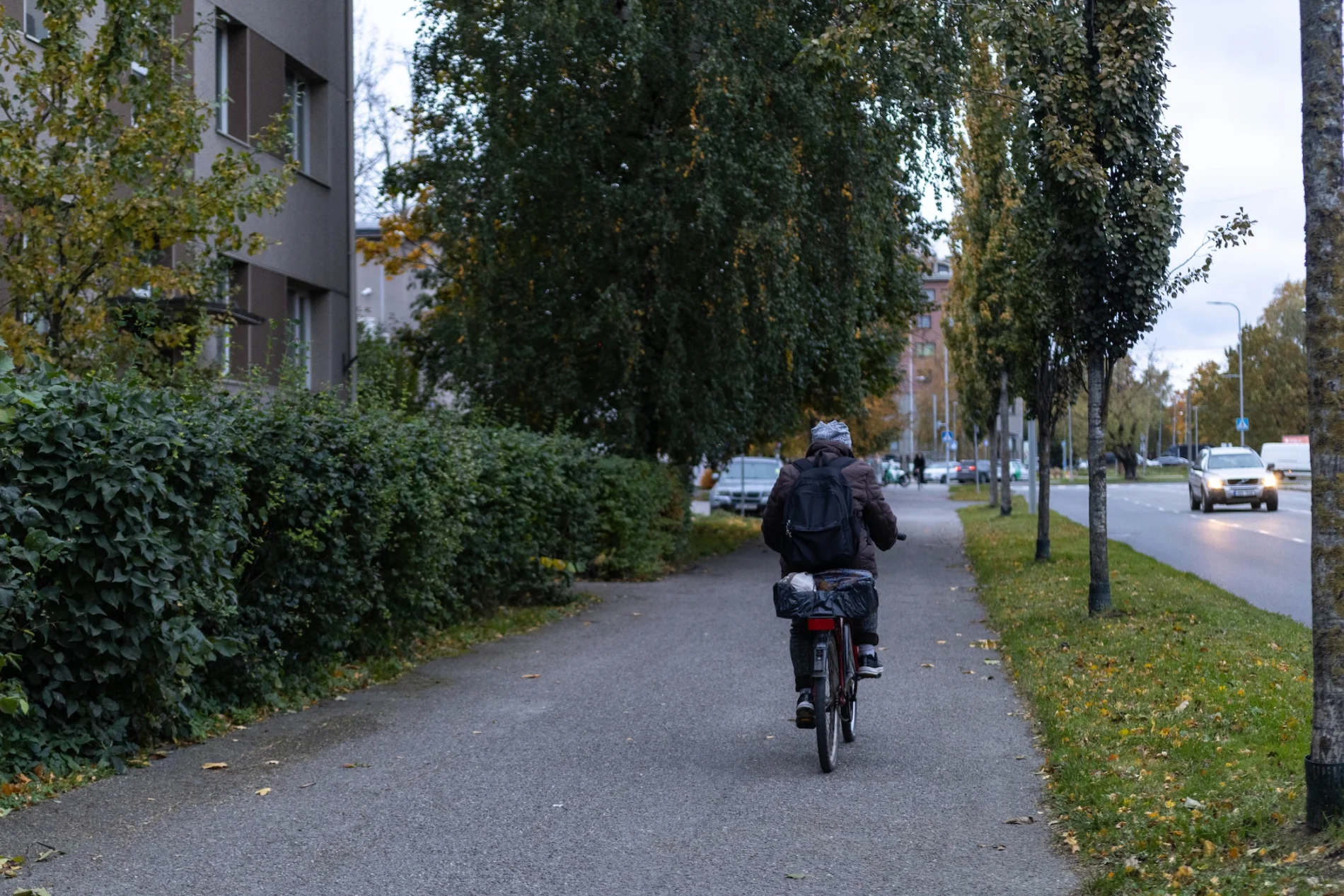
Cyclist in Tallinn, Estonia.
Photo: Anette Parksepp / SEI
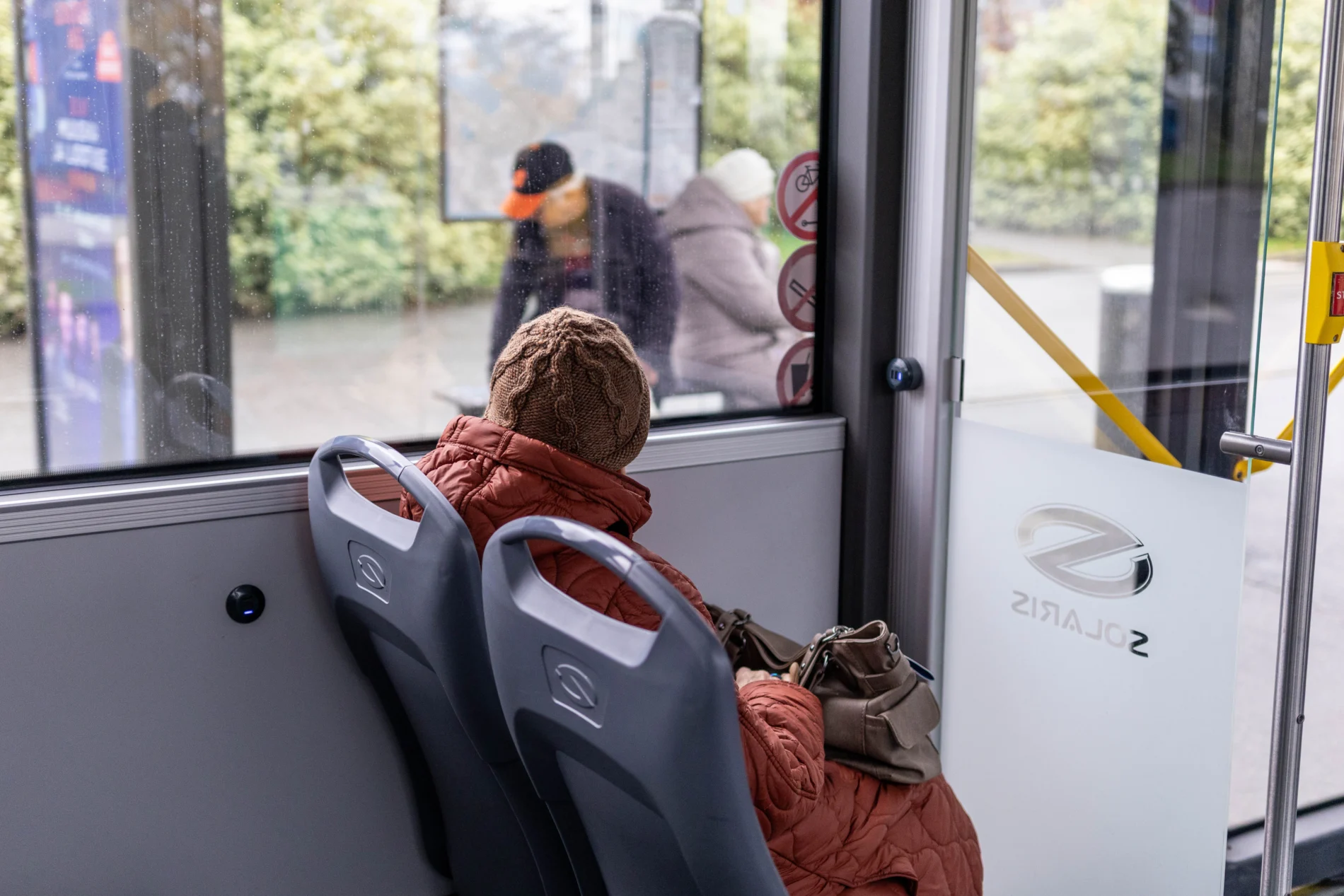
Elderly people using free public transport in Tallinn, Estonia.
Photo: Anette Parksepp / SEI.
In Bosnia and Herzegovina, the conditions and needs differ considerably between larger urban centres and smaller municipalities.
In larger cities, Lindov says, the main problems are congestion, pollution, unreliable journeys and streets where walking or cycling feels unsafe. In smaller towns and rural areas, the question is often whether people can make a trip at all without a car.
If the only bus to town leaves early in the morning and there is no convenient return service, a simple medical appointment can take most of the day.
Professor Osman Lindov of the Faculty of Traffic and Communications at the University of Sarajevo
The transition towards more sustainable mobility therefore requires not only investment in infrastructure but also a change in how transport and urban development are planned. This means considering the needs of residents, making better use of existing infrastructure and ensuring that different transport modes work together. Making existing buses more dependable is one example. According to Lindov, even a short bus lane at a busy junction, or traffic lights that give buses priority, can help make public transport more reliable.
Swedish cities have shown that sustainability and accessible, efficient mobility can go hand in hand. This is the result of decades of consistent commitment, combining large-scale investments with smaller policy measures. Emma Persson, a sustainability consultant at the Swedish energy consultancy Ekzel AB, and Ariana Tanha, Ekzel’s executive director, have advised the municipalities involved in the BiH SuTra project on several planned transport and mobility measures. Persson points to the “push-pull” approach, which has encouraged a gradual shift towards public transport and other sustainable modes. Cities have introduced measures such as congestion charges, low-emission zones and speed limits, and “a key element of the Swedish approach has been to combine these measures with attractive alternatives, such as efficient bus, tram and rail services,” she explains.
Tanha adds that cities also changed how streets are designed and managed, with pedestrian and school zones and a street hierarchy that puts pedestrians, cyclists and public transport ahead of private vehicles. Frameworks such as the Stockholm Urban Mobility Strategy and Sweden’s Vision Zero policy, which aims to eliminate road deaths and serious injuries, supported this shift. “This resulted in lower vehicle speeds, safer streets and improved conditions for walking and cycling, making urban areas more attractive and people-friendly,” he says. Many of these measures, such as school zones, lower speeds and better bus services, do not depend on the scale of a city like Stockholm and could be adapted for municipalities in Bosnia and Herzegovina.
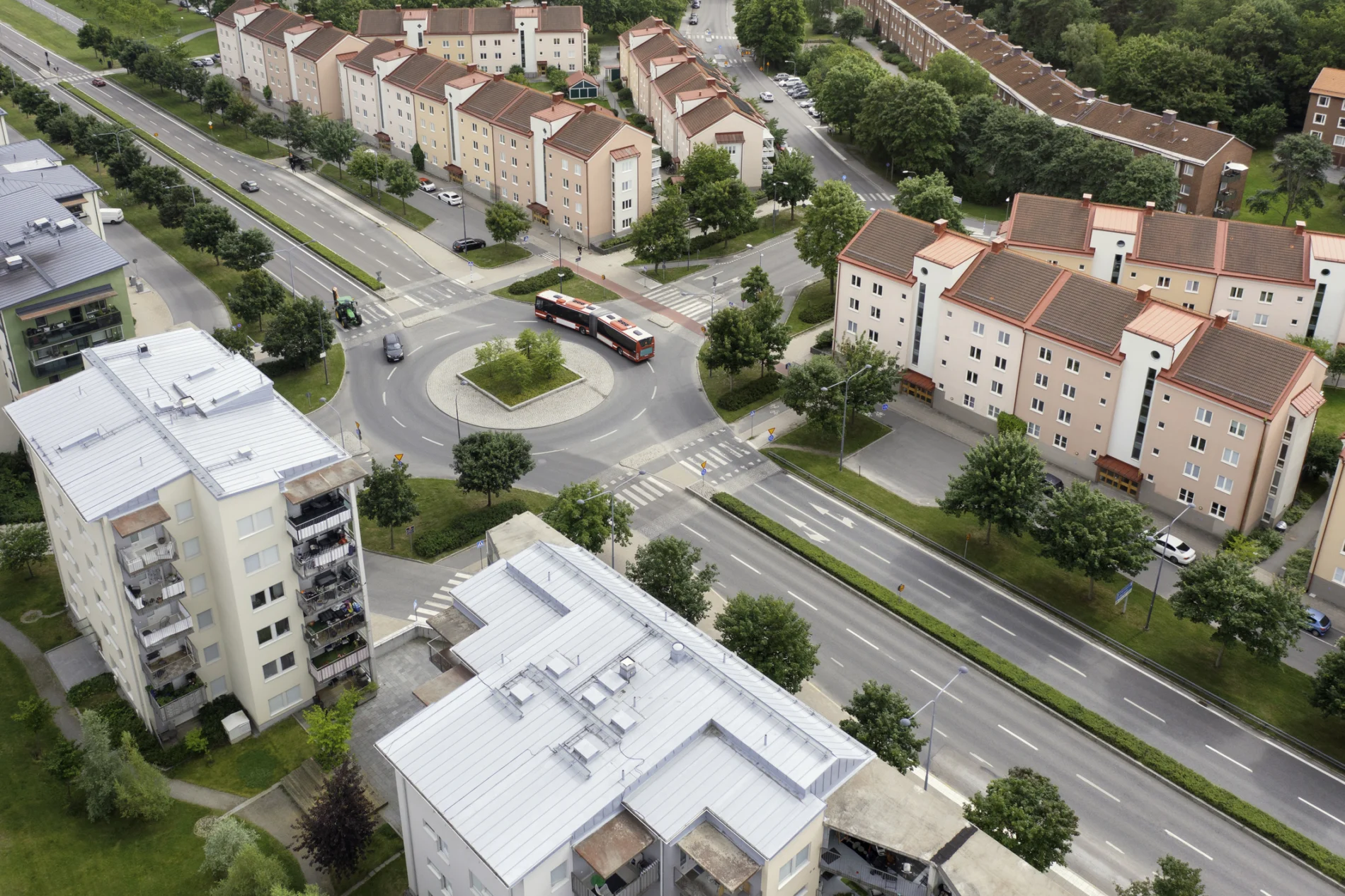
A public transportation bus at a roundabout in Hässelby, Stockholm.
Photo: Marcus Lindström / Getty Images.
Creating more sustainable urban environments does not have to start with large and expensive infrastructure projects. Municipalities can make meaningful progress through smaller, targeted interventions that improve everyday mobility.
Lindov recommends starting with routes to schools and public transport stops. “A marked crossing is of limited use if parked cars hide children from drivers or if traffic approaches too fast,” he says.
He suggests three practical measures:
“Municipalities can start with a single school, street or bus route and use what they learn to decide where to expand,” Lindov says.
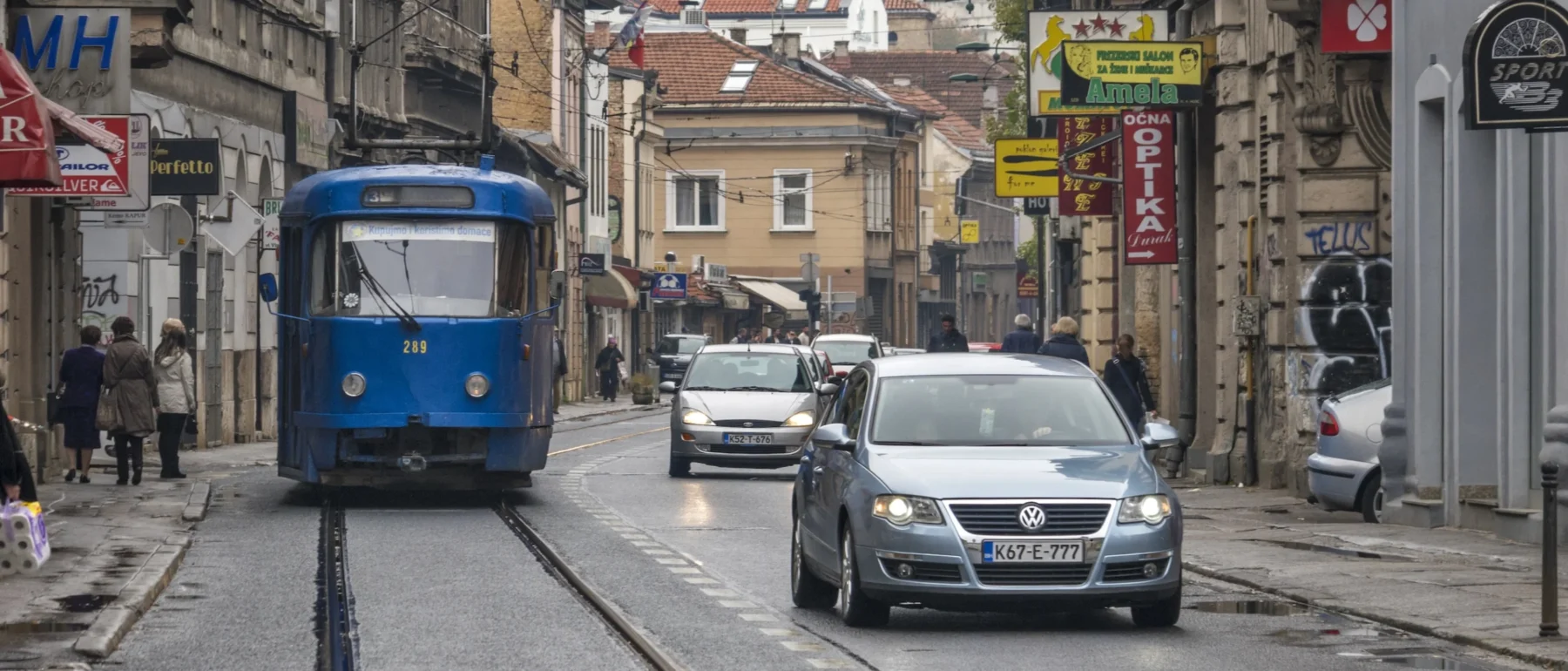
There are already examples nearby, both large and small. Lindov points to Sarajevo’s investment in accessible trams, which shows how renewing public transport can make everyday travel easier for more people. Ljubljana took a different approach: it gave pedestrians more space in the city centre and introduced free electric shuttle rides for people who have difficulty walking. The idea also works on a smaller scale. “A smaller municipality could apply the same idea on its main street by making it easier to walk while keeping shops and services accessible to people with limited mobility,” he says.
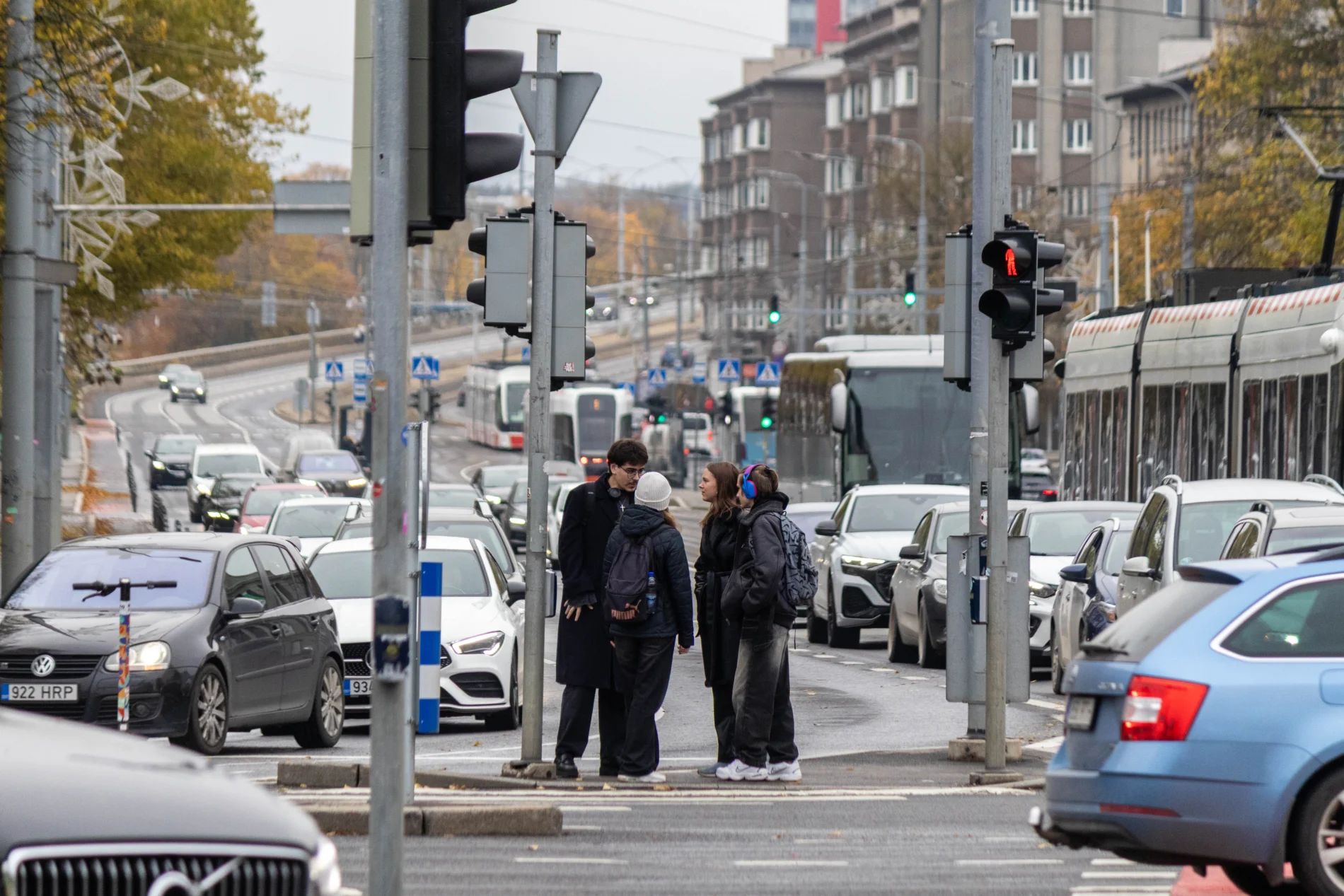
Pedestrians waiting to cross the road on a small refuge island surrounded by heavy traffic in Tallinn, Estonia.
Photo: Anette Parksepp / SEI.
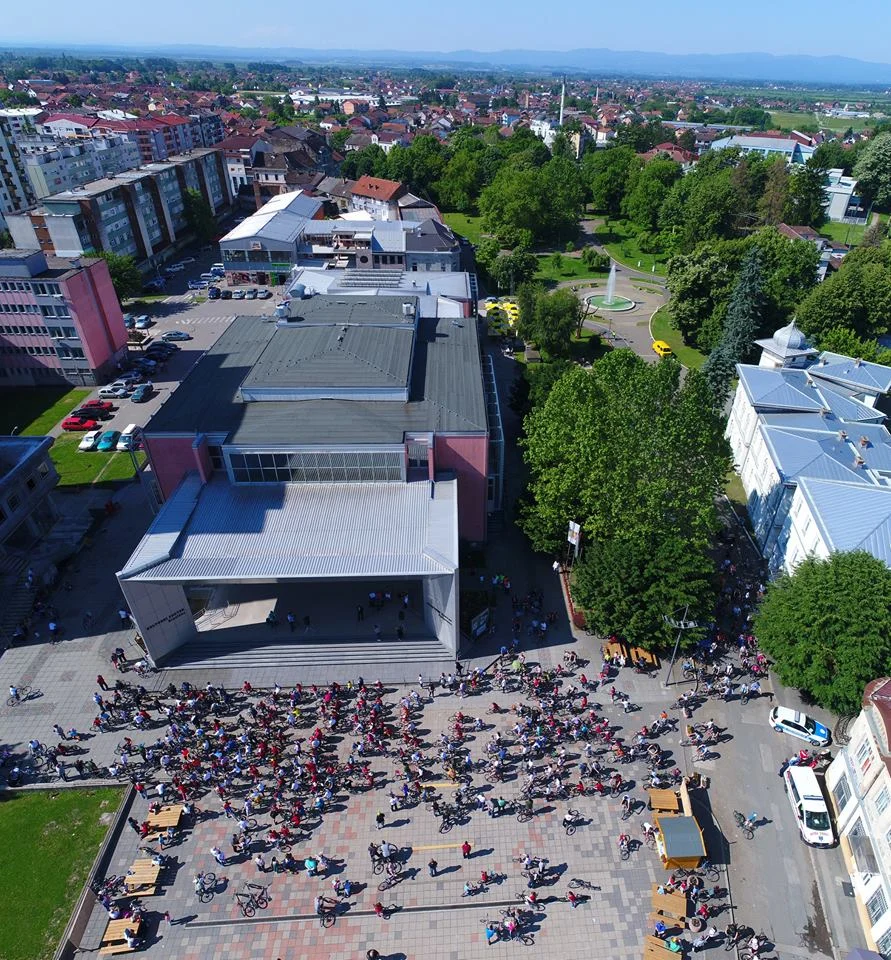
Aerial view of the city of Gradiška, Bosnia and Herzegovina.
Photo: Courtesy of City of Gradiška / BiH SuTra project.
Making sustainable mobility and transport a reality requires local commitment, knowledge and the capacity to translate plans into concrete action. SEI implements the Sida-funded Sustainable Transition of Bosnia and Herzegovina (BiH SuTra) project, which helps municipalities – particularly in coal-dependent regions – plan and carry out their transition to a more sustainable future. In the city of Živinice, the project is supporting investments aimed at reducing traffic congestion and improving air quality in the city centre. These include a multi-purpose garage with parking and charging facilities for bicycles and electric vehicles. The proposed garage could help free up central streets if accompanied by measures to manage parking and reallocate street space to pedestrians and other sustainable modes. The project may also support the development of a new intersection designed to improve traffic flow, reduce bottlenecks and contribute to lower vehicle emissions. Experts from Ekzel note that roundabouts can help to improve traffic flow. Where space allows, planners could replace signalized intersections with roundabouts, which can reduce congestion and delays, lower the risk of serious traffic accidents and decrease maintenance costs associated with traffic signals. Lindov adds that roundabouts may be suitable at selected locations, following an assessment of traffic conditions, safety and accessibility for pedestrians, cyclists and persons with disabilities.
The experts we spoke to also stress that lasting improvements in urban mobility depend on strong political leadership, long-term planning and consistent prioritization of sustainable transport modes. Major infrastructure projects can help, but sustained policy commitment often delivers the greatest impact over time.
By working closely with local authorities and other stakeholders, the project helps strengthen local capacities and identify practical solutions that improve mobility, enhance the quality of urban environments and support more sustainable and liveable cities.
Project / BiH SuTra aims to improve local capacities to implement efficiently and effectively environmental and sustainable transition policies in BiH.
Feature / As part of the BiH SuTra project, a delegation of mayors and municipal staff visited sustainable Sweden.
Perspective / Electric mobility is key to reducing greenhouse gas emissions. Who stands to benefit and who could be left behind?
Project / The goal of the project was to make the areas around Tallinn's schools safer, in order to encourage children to travel on foot, by bicycle, or public transport.