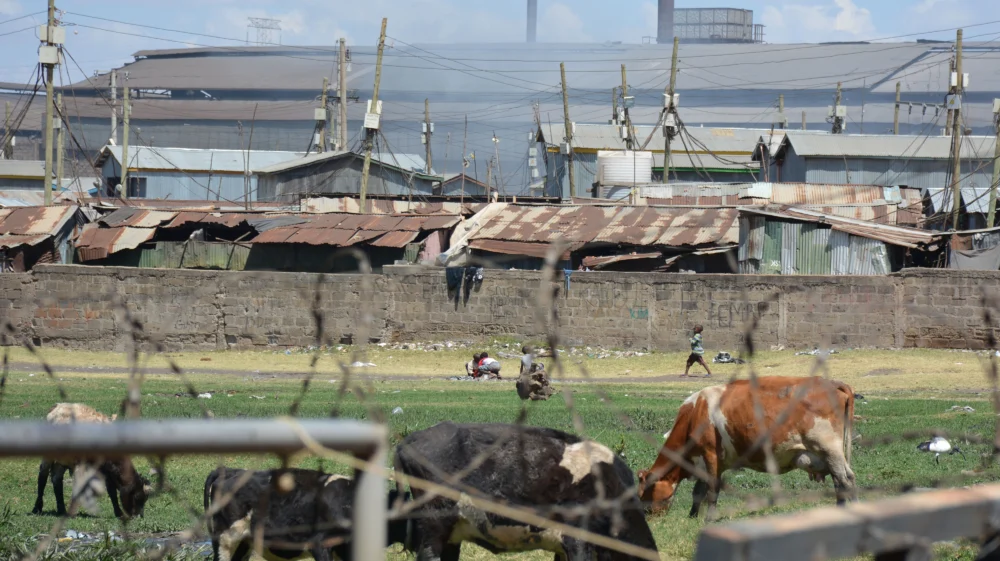
As the world marked the International Day of Air Quality on Monday, Ms. Eileen Sidi and her two children aged four months and four years had nothing to celebrate.
Ms Sidi and other residents off Mombasa Road in Nairobi, are experiencing severe health problems because of pollution from a nearby cooking oil factory.
Comment by Philip Osano, SEI Africa Director, in the Nation.
PM2.5 composition can include harmful chemicals such as vehicle exhaust fumes, soot from burning tyres and asbestos. Photo: Thorsten Gast / EyeEm / Getty Images
SEI Africa in Nairobi is partnering with others to monitor air quality in Kenya to inform policy change.
The Nairobi county approached the UN Environment Programme (Unep) which, together with the Stockholm Environment Institute (SEI), installed an automatic real-time air quality sensor in January 2020.
The air quality equipment is supposed to provide residents with pollution early-warning, identify pollution hotspots and encourage behaviour change among industries to avoid polluting.
Dr Philip Osano, Director of SEI Africa
Two sensors—one from Unep and another installed by Nema—have already picked up on high pollution levels of PM2.5.
Health workers trained by Philip Osano on how to conduct a survey on energy, health and air pollution in 2018. Photo: William Apondo / SEI.
Photo: William Apondo / SEI.
Project / A project to assess levels of knowledge and people's understandings of air pollution and see whether this changes over time.
Journal article / "Breathing well" is about more than air quality: cleanliness, population and building density and the presence of vegetation all make a difference.
Feature / Discover how air quality research since the 1990s has shaped policy and highlighted the health, economic and social benefits of addressing air pollution.
Journal article / This research examines how changes in population vulnerability and exposure to air pollutants affect global air pollution-related mortality trends.