Skip navigation
river
Event

IWA Water and Development Congress and Exhibition

This event aims to present solutions spanning water and sanitation services, the role of water in urban areas, the links between cities and basins, and the opportunities to achieve climate resilience. SEI’s Thanapon Piman will co-chair the workshop “Inclusive water and sanitation for circularity and climate-resilient cities” on 9 December.

8 to 12 December 2025

The Water and Development Congress & Exhibition 2025 will take place in Bangkok, Thailand from 8-12 December 2025. It builds on the resounding success of the 2023 edition in Kigali, Rwanda, which was a landmark event for water, sanitation, and climate resilience in low- and middle-income countries. Attracting nearly 2,700 participants from 85 countries, the 2023 Congress featured an engaging programme of 39 technical sessions, 40 workshops, and 5 forums, including the High-Level Summit on Sanitation and the Climate Smart Utilities recognition programme. It will take place at the Queen Sirikit National Convention Center, Bangkok.

The 2025 edition is co-hosted by Asian Institute of Technology and has the overall theme of Water, sanitation, and innovation – pathways to progress and a resilient future. The comprehensive programme will be built around five thematic tracks:

  • Ensure Safe Drinking Water: Innovative approaches for treatment and supply.
  • Advancing Wastewater Treatment and Sanitation Services: Sustainable solutions for all.
  • Smart Water Management: Integrated approaches for effective water management and planning.
  • Enhancing Utility Management and Operations for Sustainable Growth.
  • Strengthening Governance and Financial Systems for Long-Term Development.

Additional features and activities will include the Exhibition – a key part of the event – and various forums and special platforms, including a forum ‘From Land to Sea: Tackling Pollutants, Protecting Health, and Restoring Ecosystems’.

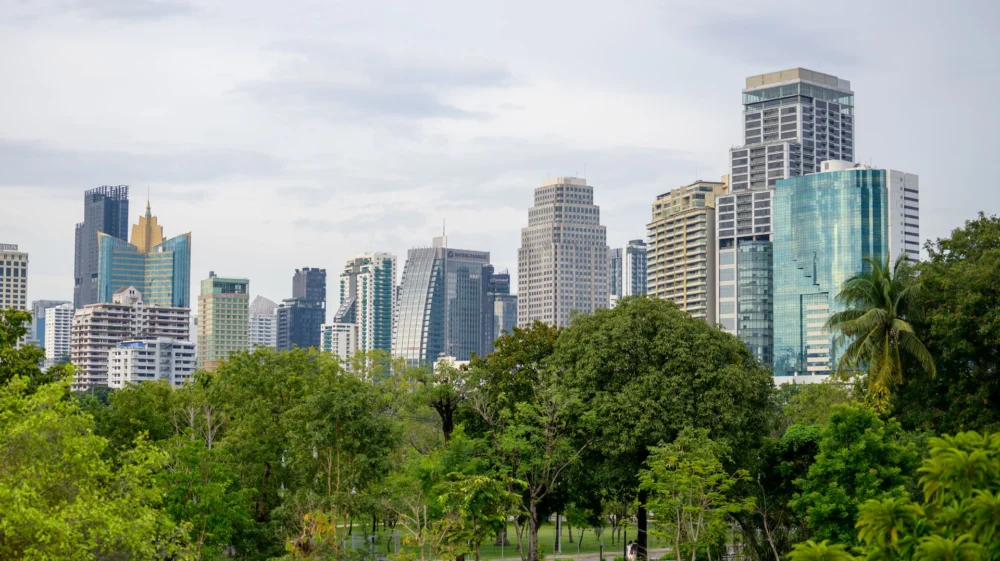
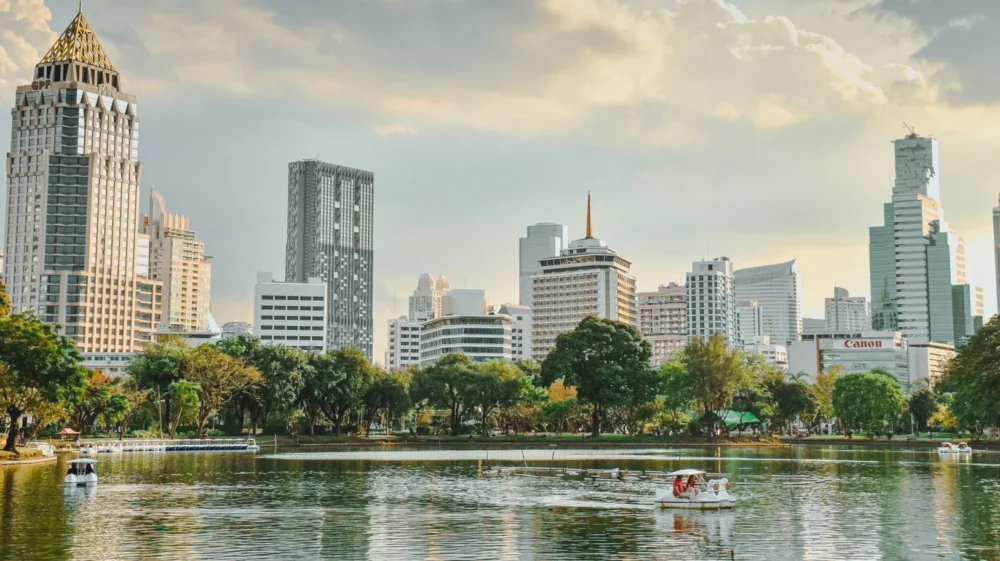
Bangkok, the vibrant heart of Thailand, provides the ideal setting for this global water congress. From its urban innovations to the serene beauty of Thailand’s natural landscapes, Bangkok offers the perfect mix of tradition and modernity—mirroring the goals of the Congress to build sustainable, innovative water solutions for the future.

How to attend

If you wish to join the event on site or online, please visit the link below.

Register now

SEI participants

Marie Jürisoo
Marie Jürisoo

Speaker

SEI Asia

Thanapon Piman
Thanapon Piman

Speaker

SEI Asia

Satish Prasad

Research Fellow

SEI Asia

Inclusive water and sanitation for circularity and climate-resilient cities

When: 1:30 – 3:00pm

Chair: Sangam Shrestha

Co-chair: Thanapon Piman

Speakers: Agus Nugroho; Thanapon Piman; Chadchart Sittipunt; Kazushi Hashimoto; Anjlee Agarwal

Climate change, manifesting as “climate whiplash” with alternating extreme droughts and floods, places unprecedented stress on urban water and sanitation systems. These systems are deeply interconnected: water scarcity threatens sanitation service continuity, while conventional sanitation often wastes valuable water and nutrients, contaminating precious water resources. This linear approach creates a vicious cycle that undermines urban resilience, public health, and the potential for water circularity. This workshop moves beyond siloed approaches to explore the critical integration of Water Resource Management (WRM) and Citywide Inclusive Sanitation (CWIS) as a foundation for circular and climate-resilient cities. We will investigate how data-driven tools like Urban Water Accounting and integrated modelling platforms (e.g., WEAP with WASH-Flows) can provide the evidence base to unify planning. The session will focus on practical strategies for designing inclusive sanitation solutions that actively contribute to water circularity—such as water reuse, nutrient recovery, and groundwater protection. By closing the loop, we can design systems that are not only equitable but also water-efficient and resilient to climate shocks, thereby safeguarding water quality and quantity for all urban residents.

Workshop on Systems Leadership

When: 10:30am – 12:00pm

Speakers: Natee Sithiprasasana; Dr. Jennifer Molwantwa; Mei Yee Chan; Marie Jürisoo; Spurthi Kolipaka

The idea: Leading in complexity

Today’s challenges are deeply interconnected: the climate crisis, failing infrastructure, inequality, and systemic injustice are not isolated problems. They are symptoms of broken or misaligned systems. Conventional leadership approaches—based on control, linear logic, and short-term wins—are insufficient for solving them.

That’s where systems leadership comes in. It offers a way to lead within complexity: to connect people, ideas, and structures across silos and sectors to drive long-term, meaningful change. This forum will be your opportunity to learn and practice systems leadership. Whether you are expert systems leader, notice or occasional practitioner the forum will inspire you to translate insight into action, supporting you to see differently, lead differently, and intervene with purpose.

At the heart of systems leadership are six transformative insights, or “aha” moments. These moments shape how we see problems, design change, and show up as leaders. In complex systems, change often begins not with action, but with perception. Systems leaders report that their most significant breakthroughs come from a shift in how they see the problem—and their role within it. These are the “aha” moments: powerful insights that reframe what leadership looks like, where change happens, and how we move forward together.

These insights are more than ideas—they are shifts in practice and perspective. Each one represents a turning point in your systems leadership journey.

Aha 1: Seeing the System

Understand that everything is connected. No issue exists in isolation. Begin by observing the actors, institutions, behaviours, and forces shaping the system you’re part of.

Aha 2: Realizing the Complexity

Wicked problems don’t have single causes or simple fixes. Recognise that your perspective is partial and that adaptive learning matters more than rigid planning.

Aha 3: Recognising Who Has a Role to Play

Systems change is collective. The solution isn’t yours alone. It depends on those with the power to enable or block change—including unlikely or invisible actors.

Aha 4: Questioning Traditional Problem-Solving

Top-down fixes often fail. Look for ripple effects, not just big interventions. Rethink how change happens—through small shifts, feedback loops, and adaptation.

Aha 5: Cultivating the Skills and Behaviours We Need

Leading in systems requires curiosity, humility, self-awareness, and courage. You are part of the system you seek to change.

Aha 6: Find interventions that will stimulate more significant systems transformation

When working with systems that are a long way from providing the desired results, like a public service system that is significantly off track to achieve the SDGs, look for deeper leverage points to prioritise interventions that might stimulate more radical and significant change.

The forum focuses on promoting systems leadership at two levels: 1) within utilities or service providers, and 2) within the wider national system or enabling environment. Leadership at each of these levels can be reinforcing and lead to change at scale.

Objectives for the workshop:

  • To promote systems leadership in water and sanitation at all levels
  • To further develop our collaboration with the IWA community e.g. on systems level issue on topics critical to utility water supply and citywide inclusive sanitation and other themes. This could include formation of a specialist group on systems.