Editor’s choice
SEI’s program on Water and Circularity supports better management of water resources and more climate-resilient water and sanitation services. Drawing on research from SEI centres across the world, the program offers insights and tools for coordination and collaboration between Water Resources Management (WRM) and Water and Sanitation services (WatSan).
Lake Chalco and the wetlands of Tlahuac border between Mexico City and the State of Mexico. Photo: Sergio Mendoza Hochmann / Getty
2025–2026
Climate change is rapidly forcing decision-makers to rethink how water is managed. SEI’s program on Water and Circularity supports this process through research, co-creation of solutions and capacity building.
Topics can for example include:
We work with governments, municipalities, water utilities, research institutions, companies and NGOs across the world.
Get in touch with the Program Lead, Kim Andersson: [email protected].
We will continually update upcoming events on this page.
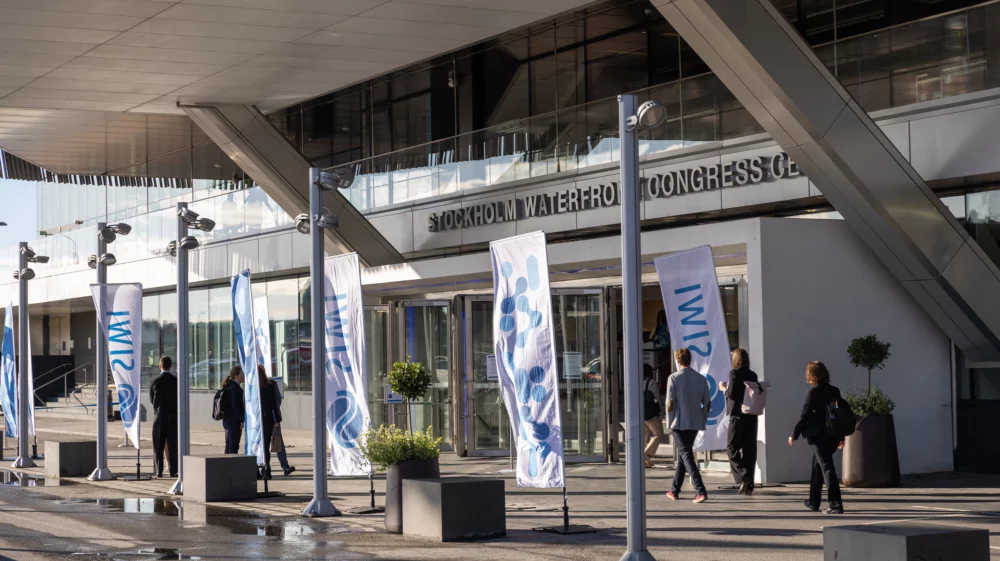
Past event / Explore the dynamics of water at the 2025 World Water Week, where experts unite to address water's role in climate action.
24 August 2025 / About Adaptation, Disaster risk, Planning and modelling, Sanitation and Water resources
The program supports decision-making towards more climate-resilient water and sanitation services as well as the long-term sustainability of water resources and natural ecosystems. The focus is on ways to ensure critical coordination and collaboration between Water Resources Management (WRM) and Water and Sanitation (WatSan) services.
The One-SEI program on water and circularity contributes to:
The program addresses a range of growing risks that make water resources management and the provision of water and sanitation services more difficult. As climate change intensifies, water scarcity, extreme floods and droughts become increasingly common, which threatens the reliability of water systems and sanitation services. Droughts and water shortages could jeopardize both social and ecological systems, fuelling competition for water resources between domestic, industrial, and agricultural users, ecosystem and others.
Climate-induced disasters are also threatening Water and Sanitation (WatSan) services and watershed infrastructure, disrupting waste disposal systems and degrading water quality and ecosystem services.
Lack of water and sanitation services tends to aggravate existing inequalities. The failure of WatSan services due to climate‑related disasters places an additional burden on women and children, who often bear responsibility for water collection and household hygiene. This can in turn trigger a cascade of further failures that hamper daily life and economic activities. Ultimately, the challenge could force communities to migrate, shifting pressure on water‑related services to new locations.
There are many critical connections between Water Resources Management (WRM) and WatSan services but there is often a lack of governance structures for integration and collaboration.
Water issues are still largely addressed in silos and at different scales. This creates unnecessary risks – water supply and sanitation interventions may fail due to dwindling water sources, while WRM strategies might overlook critical human health aspects related to lack of water access and poor water quality.
Today’s fragmented water governance also means that opportunities are not captured. Improved integration of water resources management and WatSan makes it easier to effectively address climate change, environmental pollution and health issues, for exampling by increasing circularity.
It is therefore crucial to establish appropriate governance structures that allow for collaboration and integration between WatSan and WRM planning and actions.
Research on bridging Water and Sanitation (WatSan) services and Water Resources Management (WRM) can help identify critical gaps in coordination that impede the development of holistic, climate-resilient solutions. Furthermore, research can explore different solutions that ensure safe drinking water, sustainable sanitation, and effective hygiene practices while preserving water resources for multiple uses, including biodiversity and ecosystems.
It is especially important to consider new threats posed by the climate crisis, as well as economic shifts, and what this means for the integration of WatSan and WRM. How can for example increased circularity and wastewater reuse improve agriculture and health?
SEI also offers useful tools such as WEAP (Water Evaluation and Adaptation Planning), WASH-Flows and the Clean & Green Framework.
By integration we mean, for instance, bringing circularity, such as wastewater reuse, into WEAP (Water Evaluation and Adaptation Planning) and WRM as well as bringing the data on the availability of water for domestic purposes. In both cases, we would take other human and ecological needs into account and how they impact each other in terms of both quantity and quality. This integration is particularly crucial in regions where climate variability exacerbates water-related diseases and undermines development gains.
Ultimately, the coordination of WatSan and WRM, and the wider impact on the economy is not only a scientific necessity but a societal imperative to safeguard public health, water, food, and energy security, and societal resilience in an era of climate uncertainty. Understanding the links to the wider economy can motivate finance and implementation for more equitable access to water and more climate-resilient economies.
Project / The WICER project in Iraq tackles water security challenges through innovative water management, circularity promotion, resource recovery and capacity building.
2024 - 2025 / About Cities, Sanitation and Water resources
Project
2008 / About Water resources and Water-energy-food nexus
Feature / The “One-SEI” programs foster cross-centre research and partnerships to accelerate action on climate, nature and wellbeing.
1 July 2025 / About Adaptation, Climate policy, Finance, Food and agriculture, Innovation, Mitigation, Participation, Planning and modelling and Water resources
Past event / Join the FSD team at COP28 as they participate in three events on renewable energy investment, trade and green steel production.
04 December 2023 / About Climate policy, Finance, Innovation and Renewables
Journal article / This paper analyses how transboundary hydropower development in the Mekong River generates injustices against downstream communities in Northeast Thailand.
18 June 2026 / About Adaptation and Climate policy