Graphic: Bangkok Climate Action Week.
Bangkok Climate Action Week (BKKCAW) will take place from 3 to 11 October 2026.
At BKKCAW 2026, SEI Asia brings evidence to action — bridging research, policy and finance for climate resilience across Asia.
SEI Asia will convene and contribute to sessions on inclusive climate finance, equitable low-carbon mobility and workforce development for a just energy transition in Thailand. These discussions will draw on regional evidence to examine barriers, identify solutions and support concrete policy and on-the-ground commitments.
Join SEI Asia at BKKCAW to engage with research and dialogue on critical climate and environmental challenges across the region.
Graphic: Women Climate Initiative.
Organizer: Women Climate Initiative (WCI)
When: 8:30-12:00
Where: Nextopia, Siam Paragon
Women-led climate solutions hold enormous potential, but too many entrepreneurs still face barriers to accessing the finance, networks and policy support needed to grow.
This session brings together entrepreneurs, investors, policymakers and ecosystem leaders to explore a critical question: How can we de-risk the entrepreneur, de-risk the investment and unlock the opportunity?
Through bold perspectives, practical solutions and the voices of young women, the discussion will examine what it takes to build a stronger pipeline of women-led climate ventures and green jobs. Participants will explore how catalytic capital, blended finance, stronger markets and smarter policy can help move promising solutions from early-stage ideas to scalable businesses.
Join the conversation on how finance can become a more powerful enabler of women-led innovation—and how women entrepreneurs can play a greater role in shaping an inclusive, climate-resilient economy.
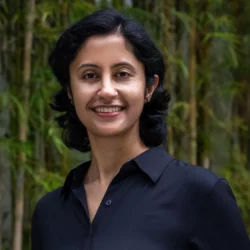
SEI Research Fellow Labisha Uprety will speak at this session.
Graphic: MicroSave Consulting (MSC).
Organizer: Stockholm Environment Institute (SEI), MicroSave Consulting (MSC), Asia-Pacific Rural and Agricultural Credit Association (APRACA)
When: 15:00-17:00
Where: Mekong Room, SEI Asia Office
Drawing on evidence generated through the ICCAP project across six countries (Bangladesh, Bhutan, Cambodia, Fiji, Lao PDR, and Nepal), this event will explore how climate finance can better support climate-resilient development. It will bring together senior experts to identify where barriers and solutions to inclusive climate finance converge across national contexts, where they differ, and why.
The discussion will translate country-level learning into a coherent regional policy narrative, with practical implications for financial institutions, policymakers and development partners. Participants will examine how evidence can help shape more inclusive, responsive and effective financing approaches for climate resilience across Asia.
Graphic: Adaptation Research Alliance.
Organizer: Adaptation Research Alliance, in collaboration with Stockholm Environment Institute (SEI) and Social Research Institute, Chulalongkorn University
When: 10:00-12:00
Where: Mekong Room, SEI Asia Office
Finance shapes not only what adaptation work gets done but also who decides, whose knowledge matters, how risk is shared and whether communities have the freedom to respond to changing circumstances.
This dialogue will bring together community representatives, philanthropic funders, intermediaries and adaptation practitioners for an open conversation on trust, power and locally led adaptation. It will not be a panel or a series of institutional presentations. Participants will share experiences, listen to different perspectives and explore what trust-based funding looks like in practice.
Some of the expected dialogue participants include various community groups, Plastic Solutions Fund, Turning Tides Facility, Samdhana Institute, Jesuit Refugee Service and many more.
Our central question is: What would adaptation finance look and feel like if communities had genuine power to shape decisions, use resources and define success?
The conversation will explore:
• When has trust enabled communities to act—and when has its absence created barriers?
• What behaviours and funding practices build genuine trust?
• What prevents funders from sharing power, providing flexibility or accepting uncertainty?
• What could funders, intermediaries and community partners do differently?
By the end of the session, we hope to have identified practical changes that can make adaptation funding more responsive to local priorities, more equitable in decision-making, and more supportive of long-term relationships.
Graphic: SEI Asia
Organizer: Chulalongkorn University Social Research Institute (CUSRI), Sustainable Environment Research Institute, Chulalongkorn University (SERI), and Energy Research Institute, Chulalongkorn University (ERI)
When: 13:00-15:35
Where: Social Innovation Hub, Chulalongkorn University
Thailand’s energy transition will depend not only on technology and investment, but also on a workforce equipped to shape and participate in a low-carbon future. This session examines green workforce development in Thailand within the wider Southeast Asian context, connecting to SEI’s Justice Energy Transition Policy Analysis and Capacity Knowledge (JETPACK) project, which supports a more just and inclusive energy transition in Thailand.
University students, young people and early-career professionals are central to this transition, yet their perspectives are too rarely reflected in policy and workforce planning. This half-day programme puts their voices at the centre through a keynote on university strategy and student-survey findings, an expert panel sharing regional and practical experience, and a student-led discussion in which regional institutions, experts and employers respond directly to questions gathered before the event.
The session will open with welcoming remarks from Professor Dr. Wilert Puriwat, President of Chulalongkorn University, and Marie Jürisoo, Centre Director of SEI Asia.
Graphic: SEI Asia
Organizer: Stockholm Environment Institute (SEI), Adaptation Research Alliance (ARA), Chulalongkorn University Social Research Institute (CUSRI)
When: 9:00-12:00
Where: Social Innovation Hub, Chulalongkorn University
The session, organized by Chulalongkorn Univesity Social Research Institute (CUSRI), Stockholm Environment Institute (SEI), and the Adaptation Research Alliance (ARA) will present key insights and recommendations emerging from CARF 2026 and provide a platform for dialogue on the challenges and opportunities for strengthening climate resilience across food value chains. Through interactive discussions and collaborative activities, participants will identify priority adaptation needs, exchange experiences and perspectives, and explore opportunities for future partnerships between research and practice.
Graphic: SEI Asia.
Organizer: Stockholm Environment Institute (SEI), Urban Design and Development Centre, Faculty of Architecture, Chulalongkorn University (UDDC), Urban Sphere Solutions (USS), and Mahidol University
When: 10:00-12:00
Where: 7th floor, Kasem Uttayanin Building, Chulalongkorn University
How can Bangkok reduce transport emissions and improve air quality without deepening existing social and economic inequalities? This session explores practical pathways towards low-carbon mobility that are accessible, affordable and responsive to the needs of all city residents.
Participants will consider what a credible social contract for congestion pricing in Bangkok could look like, including how policy can balance environmental goals with affordability, accessibility and public trust. The discussion will also examine inclusive approaches to transport policymaking that bring environmental, social and economic priorities together.
Graphic: SEI Asia.
Organizer: Stockholm Environment Institute (SEI), Center for Ecological Economics (CEE), Rockefeller Foundation, Embassy of Sweden, International Climate Initiative (IKI), and Regional Adaptation Investment Facility
When: 13:30-16:30
Where: Oriental Residence Bangkok
Climate finance must reach the communities most exposed to climate risks, yet gaps in capacity, access and institutional coordination continue to limit its impact. This session brings together climate-finance professionals, regulators, multilateral institutions, academics and civil-society organizations to examine the barriers to inclusive climate finance across Asia.
Participants will explore practical ways to connect capability with capital: strengthening the capacity of institutions and communities, improving access to appropriate financing, and translating evidence into action. The session will introduce capacity-building tools and a regional adaptation investment facility, while creating space for partners to identify concrete policy priorities and on-the-ground commitments for more inclusive, locally responsive climate resilience.
In-person participation and by invitation only.
Graphic: SEI Asia.
Organizer: Transitions Research, in collaboration with C40 and Stockholm Environment Institute (SEI)
When: 14:30-16:30
Where: Mekong Room, SEI Asia Office
City and provincial governments across Asia operationalize national climate ambitions into actionable plans. What does city governance need to deliver on them? This session frames that question around institutional architecture: the human, knowledge, tools, relational, and financial layers that convert a policy commitment into delivery. Each layer draws on a mix of actors, government bodies, intergovernmental agencies, CSOs, and private partners, whose roles shift based on the layer’s requirements. These layers hold when sustained and built into government practice, allowing them to outlast any single office or funding cycle. Mapping these variations across geographies surfaces the combinations that deliver results and the gaps that recur.
The format of the event is a participative roundtable. Over 90 minutes, participants will hear short provocations from participating organizations, then discuss key questions in small breakout groups, and come together to share insights and connect.
The session is organised by Monsoon Academy, the capacity-building arm of Transitions Research, in collaboration with C40 and SEI, drawing on their work with climate cells and city networks across South and Southeast Asia to ground this mapping in practice and bring city and provincial governance closer to the mechanisms that carry policy intent through to delivery.
SEI Senior Research Fellow Diane Archer will speak at this session.
Graphic: Transitions Research
Organizer: Transitions Research and Stockholm Environment Institute (SEI)
When: 10:00-11:30
Where: Mirror Hall, Lumphini Park
How can cities respond to extreme heat in ways that are practical, locally grounded and built to last?
This participatory workshop invites participants to look at heat through the lens of everyday urban life. In small groups, you will explore how rising temperatures affect buildings, transport, public spaces, energy and water, and identify where action is most urgently needed.
The session will focus on turning challenges into workable responses. Participants will develop ideas, consider the conditions needed to implement them, and discuss how different actors — including local authorities, communities, businesses and civil society — can contribute.
A key part of the conversation will be how promising local initiatives can grow beyond isolated pilots. Through group exercises and shared learning, participants will consider what is needed for locally tested solutions to influence wider urban systems, climate strategies and policy.
The workshop is designed as a space for practical exchange, creative thinking and constructive debate on how cities can respond to heat in ways that are both effective and responsive to people’s everyday realities.
SEI Research Associate Raja Asvanon will speak at this session.
Past event / SEI joins the Climate Week in New York to highlight global leadership and finance solutions for accelerating the transition to net zero industry.
Media advisory / SEI invites journalists to a media briefing where its leading experts will share their perspectives on the major themes shaping COP31.
Perspective / Asia’s next financial revolution must make climate adaptation finance accessible to vulnerable households and small businesses.