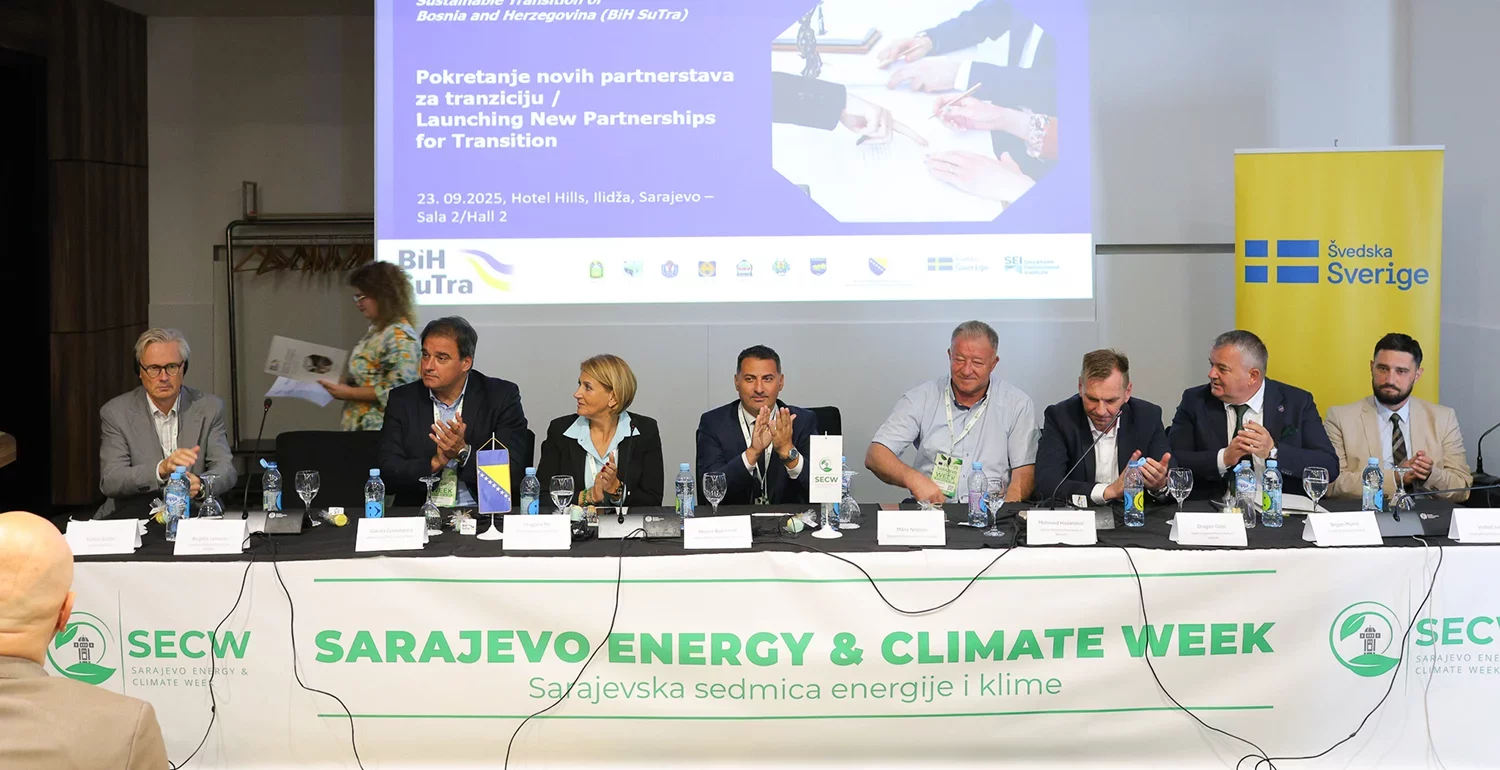
SEI expanded its partnerships on just transition during Sarajevo Energy and Climate Week, as three more municipalities and cities joined efforts to lead their communities toward a cleaner, greener future.
As part of this year’s Sarajevo Energy and Climate Week (SECW 2025), SEI and the Sida-funded BiH SuTra project shared insights on making energy transition a reality in the region. Discussions covered energy governance, circular economy development, and the move away from coal, while SEI also welcomed new partners to the project.
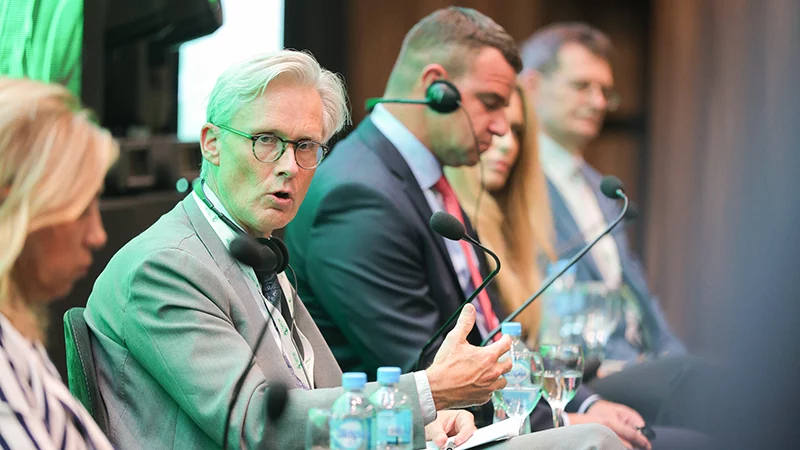
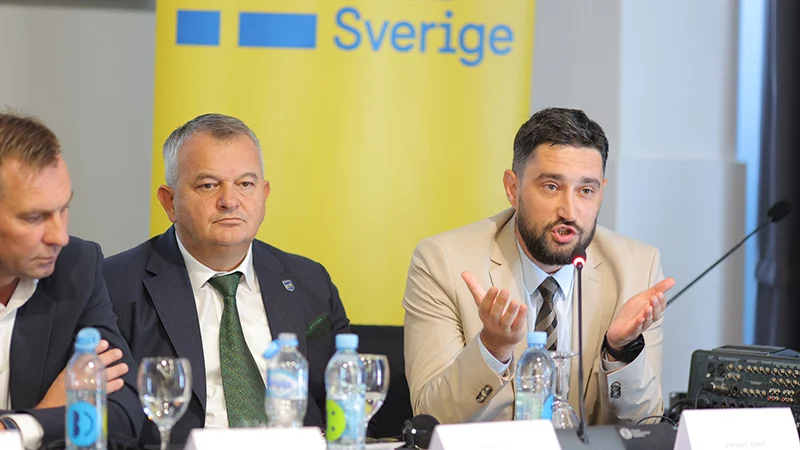
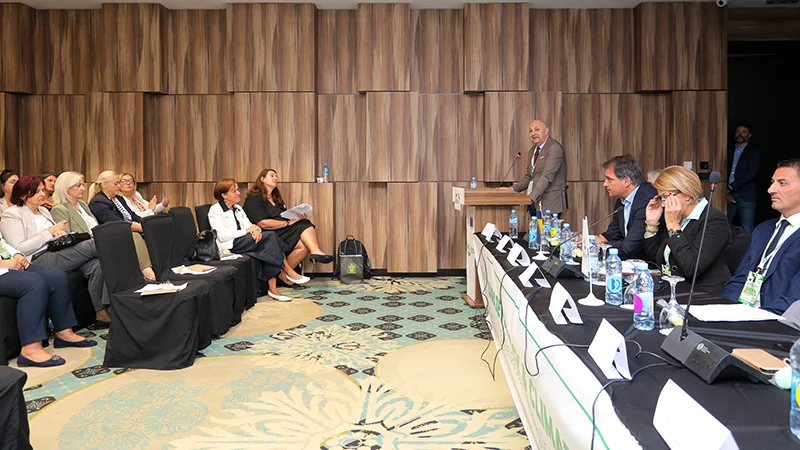
SEI’s Executive Director, Måns Nilsson, joined a panel on Bosnia and Herzegovina’s (BiH) power sector, drawing on Sweden’s experience with carbon taxation. He explained that Sweden’s carbon tax in the 1990s was not a standalone climate measure, but part of a broader tax reform.
“The key was to design something simple and easy to implement, with exemptions that could be gradually phased out. Far from being a burden, this approach actually helped industry adapt – rapidly reducing fossil fuel use and accelerating the shift toward renewables,” Nilsson said.
SEI Executive Director Måns Nilsson speaking in a panel at the SECW conference.
Photo: Jasmin Agovic.
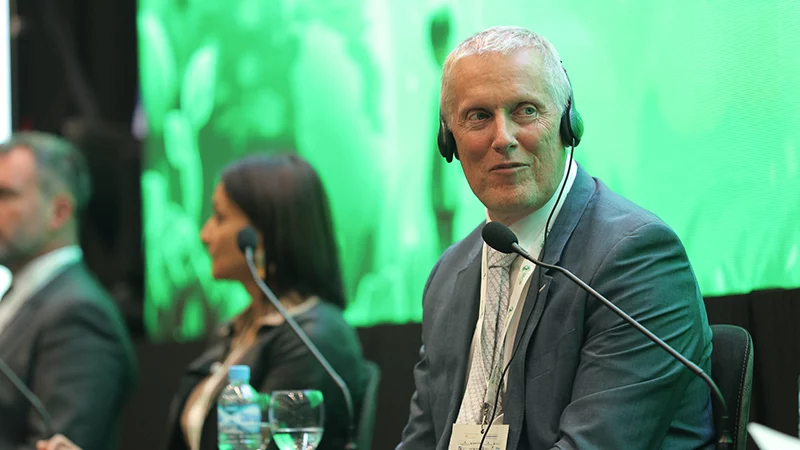
SEI contributed lessons from research and practice to discussions on recycling and just transition. SEI Senior Expert Tomas Thernström spoke on waste management and circular economy, stressing that recycling must be simple if it is to succeed – though achieving simplicity often requires significant investment.
“Successful recycling cannot rest on the shoulders of a single actor: municipalities, state institutions, producer responsibility organizations, utility companies and property owners need to work together, as they all share responsibility in making recycling accessible and appealing,” Thernström underscored.
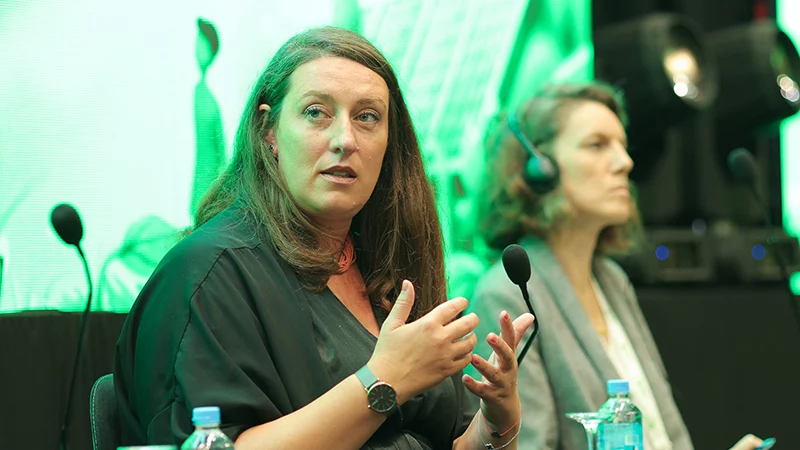
At a separate panel on achieving a just transition in coal regions, SEI Team Leader and BiH SuTra Project Manager Saša Solujić highlighted a broader perspective that goes beyond mine closures and decarbonization to include water management, agriculture, nature protection and biodiversity. Agriculture, in particular, emerged as a dynamic area, opening new opportunities and bringing people together.
Solujić stressed the importance of open dialogue with local communities to ensure people can express their concerns, hopes and ideas.
“If we include all relevant actors – especially young people – while keeping long-term community needs in focus, [this] fosters stronger support and deeper understanding of transition as an inclusive, collective process,” she noted.
Both panels demonstrated that cross-sectoral cooperation, local engagement, knowledge exchange and international support are vital for a fair and sustainable transition.
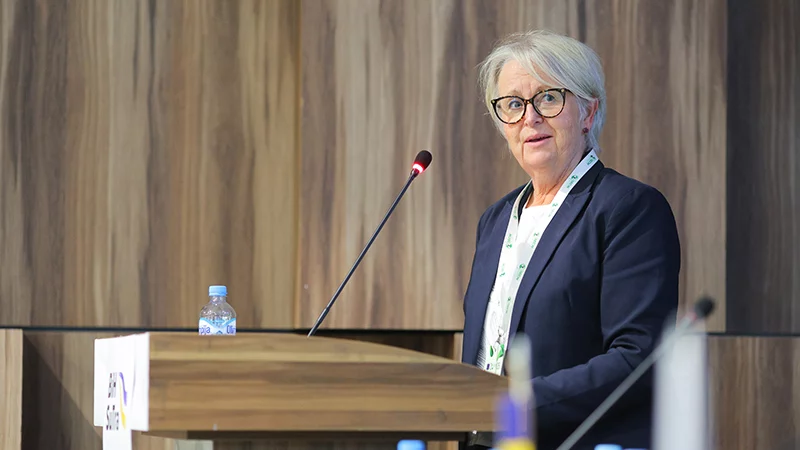
SEI Senior Expert Tomas Thernström spoke on waste management and circular economy at SECW 2025.
Photo: Jasmin Agovic.
SEI Team Leader and BiH SuTra Project Manager Saša Solujić spoke on how to achieve a just transition in coal regions.
Photo: Jasmin Agovic.
A key highlight of SECW 2025 was the side event where SEI announced new partnerships for transition. Since 2022, SEI has supported locally driven approaches to developing transition plans and implementing comprehensive transition policies across BiH. So far, Banovići Municipality, Breza Municipality, Ugljevik Municipality, and Živinice City have adopted transition plans and begun taking concrete steps toward climate-neutral development.
We fully support BiH SuTra and a sustainable transition. We are unfortunately a big polluter of the river Janja due to our sewage and wastewater, but we are now at concept design of new water treatment plants to improve the conditions of the river, as outlined in our transition plan developed together with the project.
Dragan Gajić, Mayor of Ugljevik Municipality
As more local partners are joining the BiH SuTra project, change is increasingly happening with the communities, not just to them. Many mayors and local representatives shared how BiH SuTra helped open their eyes to new opportunities, foster collaboration and demonstrate that “going green” does not mean losing jobs or lowering living standards.
“Breza is a mining community and closing the mine has been resented among the people, until BiH SuTra came and started the transition process. Thanks to the engagement with citizens, they now understand better that transition and sustainability mean a better future at all levels of the local life, and not necessarily that standards of life would be reduced and jobs lost. Only this is a key result,” said Vedad Jusić, Mayor of Breza Municipality.
Vedad Jusić, Mayor of Breza Municipality gave some key reflections at the side event.
Photo: Jasmin Agovic.
“If there is any community interested in this type of project it is Kakanj, being one of the most polluted communities in BiH. We are in favour of the overall approach and very interested in finding new ways and new solutions, and we look forward to have our partners support us,” commented Mirnes Bajtarević, Mayor of Kakanj Municipality, one of three local self-government units to sign a memorandum of understanding with SEI at the event, along with Gacko Municipality and the City of Gradiška.
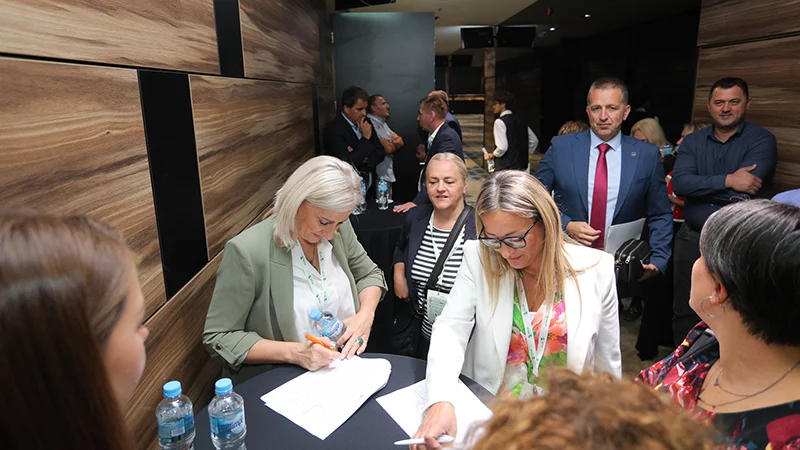
Through BiH SuTra, these communities are formalizing their commitment to design and implement effective, inclusive and locally driven transition measures.
We must be aware that to unlock success in this effort, we need two elements: our international partners and their commitment, as well as ourselves – the local community. I thank all the individuals in this project who recognized we could become a partner even before we ourselves realized this was an opportunity.
Vukota Govedarica, Mayor of Gacko Municipality
In his keynote, Nilsson shared:
“It is fantastic to witness the readiness and motivation from local partners working on transition, such as on reducing pollution, finding ways to decarbonize, and improving health and quality of life for citizens across Bosnia and Herzegovina. At SEI, we are not only committed for the duration of this initiative – we aim to be a trusted, effective knowledge partner to the country for years to come.”
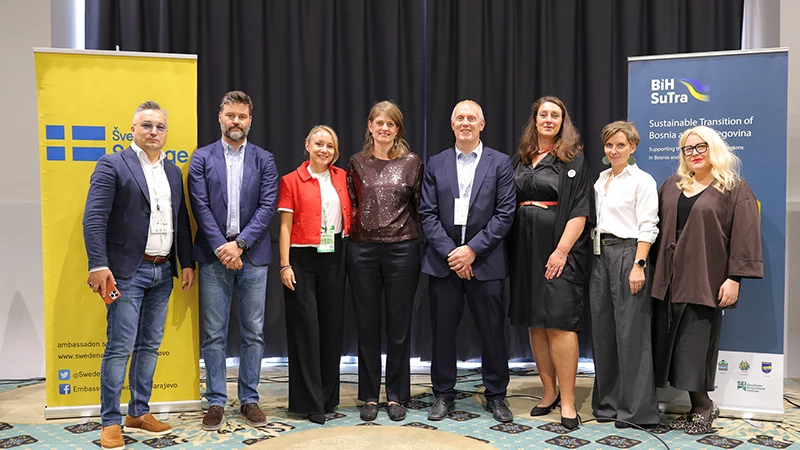
The BiH SuTra implementation team.
Photo: Jasmin Agovic.
As the project moves forward, SEI and its partners continue to translate planning into action. BiH SuTra is not only shaping strategies but also inspiring local leaders to see transition as a shared opportunity for growth and renewal.
“We have developed four concrete transition plans that we are now supporting communities to implement, and we look forward to having more municipalities and cities on board. We have organized information and consultation campaigns in the project, but we need to do even more; we need to ensure we discuss, we bring up conflicting opinions, and be able to collaborate and draw conclusions together; the industry, the power plants, the mines, the citizens,” said Solujić, Project Manager of BiH SuTra.
I’m very honoured to be part of this new chapter of Gradiška. This event shows that communities like us in BiH can be carriers of a responsible and inclusive transformation.
Dragana, representative of City of Gradiška
Looking beyond Sarajevo Energy and Climate Week 2025, the project now moves forward with new partners. The next steps include visioning workshops for new partners; interactive, solution-oriented sessions to develop a shared long-term vision for climate neutrality by 2050, alongside continued support for existing partners as they implement their transition plans.
Project / BiH SuTra aims to improve local capacities to implement efficiently and effectively environmental and sustainable transition policies in BiH.
Feature / What can a study on household waste in Bosnia and Herzegovina (BiH) teach us about driving change across the wider Western Balkans?
Feature / Municipalities and cities from Bosnia and Herzegovina visited Sweden for a study tour on sustainable agriculture run by BiH SuTra project.
Journal article / Researchers will conduct a review that is global in scope, with the aim to inform Swedish decision making on hydropower.