The April 2026 First Conference on Transitioning Away from Fossil Fuels provided a turning point in the global effort to wind down global fossil fuel reliance.
As do all first endeavors, this event provided several lessons that can inform better processes in the future and, ultimately, a fairer energy transition for all.
SEI’s delegation to the conference give their insights.
The First Conference on Transitioning Away from Fossil Fuels (TAFF), held in Santa Marta, Colombia, co-hosted by the governments of Colombia and the Netherlands, marked a significant turning point in global climate discussions. Not in deciding whether to transition away from fossil fuels, but in confronting how to do so, raising important questions on who will shape those pathways.
The key outcome of the conference was itself the development of a sustained inter-governmental process for initiating concerted global efforts to transition away from fossil fuel dependency, supplementing UNFCCC negotiations where multilateral progress has stalled. In the initial Conference Takeaways report, the co-hosts explicitly noted the need for “collective action for closing governance gaps” while stressing the importance of supporting the UNFCCC.
Ultimately, this was a historic and consequential meeting. It was also – inevitably – contentious. Should the conference prioritize markets and private investment as levers of change, or enable governments to define and coordinate a shared climate transition, with strong civil society input? Does a global roadmap emerge merely as the aggregate of national roadmaps, or through coordinated efforts to meet the Paris Agreement? What obligations might states have to each other?
While the need to advance a coalition of the willing and overcome UNFCCC negotiation stalemates is undeniable, actors must tackle the fundamental question of how a global transition can unfold without the collaboration of those who control the world’s largest share of emissions and supply.
Here are SEI’s recommendations for building post-conference momentum for concrete implementation of an equitable transition away from fossil fuels.
One of the clearest signals from Santa Marta was a shift in the global conversation. For many countries and coalitions, the debate moved beyond whether a fossil fuel transition is necessary towards the practicalities of implementation, covering timelines, financing, governance and inclusion.
Yet this shift in perspective is uneven. Major emitting countries such as US, China and India did not attend the conference and thus were not involved in the conference roadmap, due to be formally presented to the COP30 presidency at London Climate Action Week in June.
While the need to advance a coalition of the willing and overcome UNFCCC negotiation stalemates is undeniable, actors must tackle the fundamental question of how a global transition can unfold without the collaboration of those who control the world’s largest share of emissions and supply. The countries and actors present in Santa Marta represented one-third of the global economy – a phenomenal turnout for a conference only six months in the making. But to convert that power into action, further concrete support is needed via nationally determined contributions, supportive subsidies, strengthened carbon markets, broader cultural shifts and more.
Channelling more technical and financial resources to support just transitions – especially in Global South countries and regions most socio-economically dependent on fossil fuel revenues – are essential tools in developing a critical mass of economic power and geopolitical influence. Intentional partnerships that feature knowledge exchange between North-South and South-South actors are one example. Financial tools and mechanisms such as blended finance, investment de-risking, non-debt-creating climate finance and reducing fossil fuel subsidies are others.
Photo: Camilo Betancur / SEI
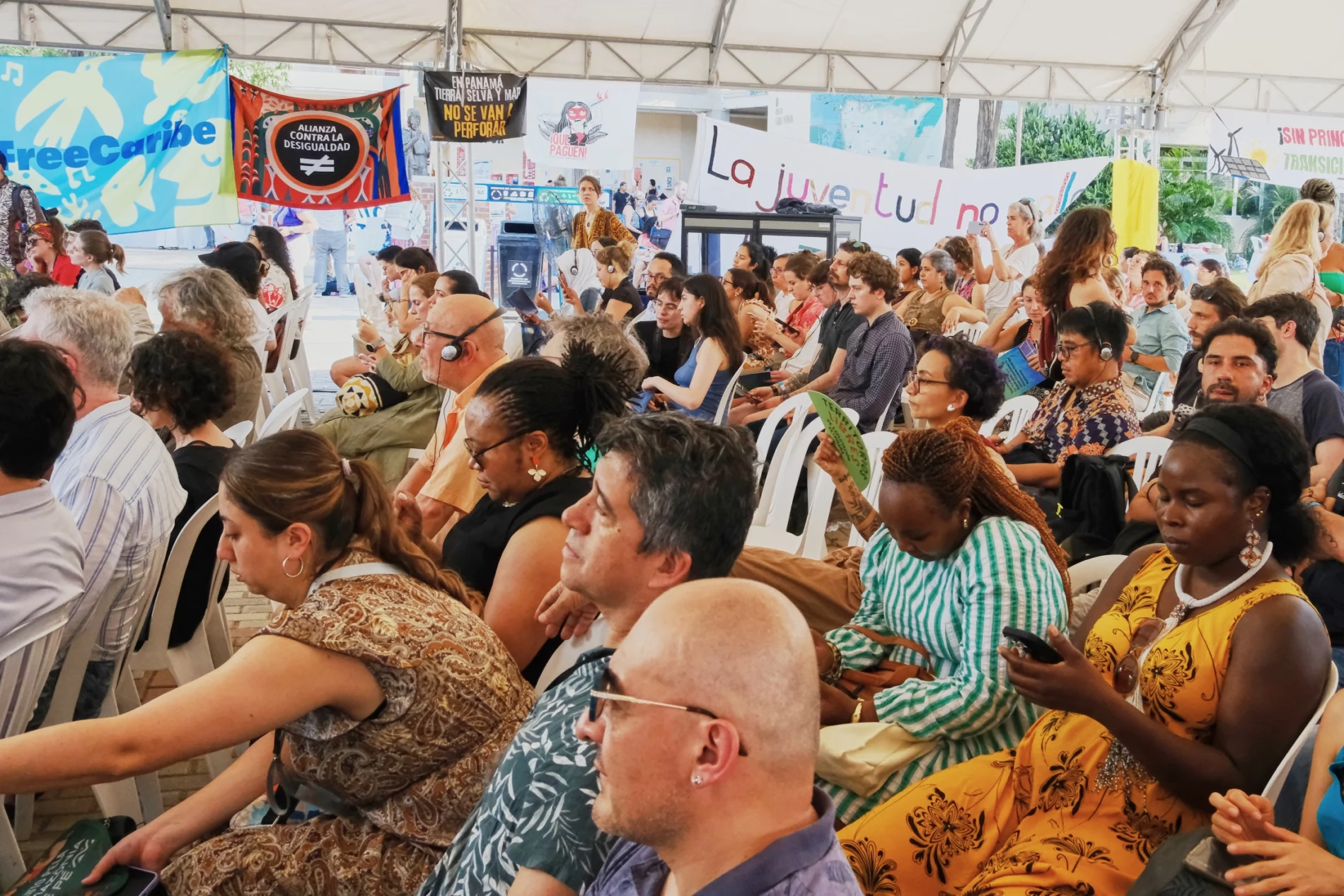
Working groups and discussions underscored the challenge of whose knowledge counts in shaping transition pathways and the complexity of designing truly inclusive meeting spaces – even with the most ambitious intentions.
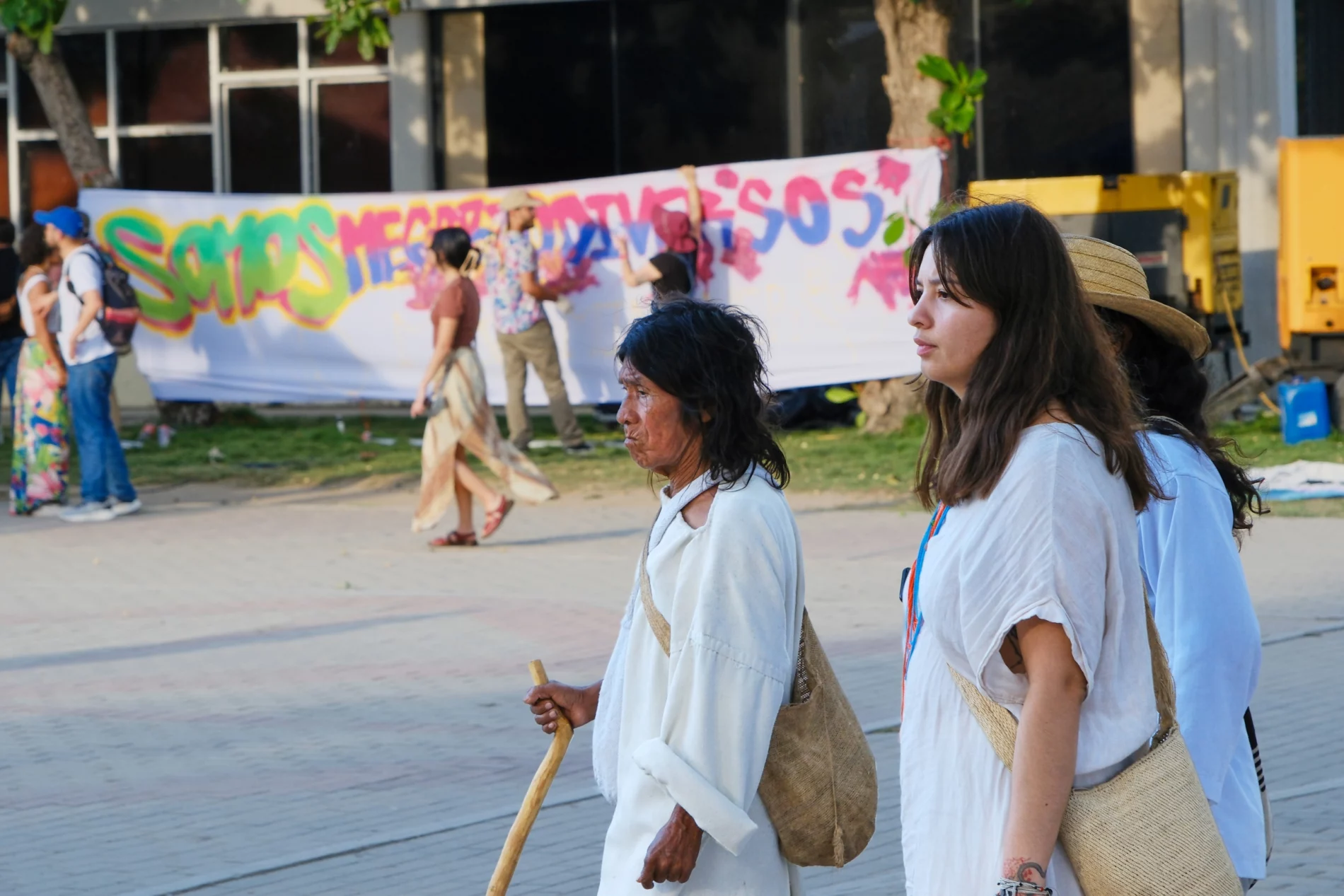
The conference made a clear effort to be inclusive, creating dedicated spaces for different constituencies including women, Indigenous people, labour groups, social movements and sub-national actors. While the Colombian government sent its observers to these dialogues to feed back into its conference takeaways reports, the formal channels for feeding into the high-level conference was widely considered insufficient. Generally, it consisted of a few-sentence summary from each major workstream, and a very short intervention, neither of which was transparently developed.
Moreover, while forward-thinking, this structure also unintentionally reinforced silos. The replication of familiar institutional structures with separate academic, community and government spaces did not unleash integrated dialogue and collaboration spaces needed for participants to listen to and learn from each other. These dynamics shape which voices are heard and which solutions are considered viable. While this fragmentation may support the rapid organization of large-scale events, it impedes the realization of systemic transformation, which depends on integration.
Methods to bridge this gap include open dialogue processes as an alternative to traditional panel-and-Q&A formats, such as roundtables, town hall sessions, labs or film screenings followed by open discussions. These formats allow participants to contribute more equally, which is particularly important for encouraging gender and decolonial perspectives.
In cross-sectoral dialogues, integrating academic, community and government actors through these formats can harness their insights into a transformative agenda grounded in diverse forms of knowledge and experience.
Photo: Camilo Betancur / SEI
While the conference generated a wide range of technical, economic and social solutions, it also surfaced different perspectives on how these approaches might connect and be implemented more widely.
At the core are different understandings of what a transition away from fossil fuels entails: an incremental, market-based change, or a more transformational change characterized by a broader social and economic restructuring, as advanced by civil society and Indigenous communities?
During the formal governmental conference, participants expressed a willingness to explore what systemic transformation means in practice. The co-hosts’ Conference Takeaways Report cites well-known incremental climate-focused policies rooted in existing economic systems and institutions while also amplifying the transition as “a broader structural economic transformation and development challenge” that called for “transforming the productive, territorial, and social conditions that have sustained fossil fuel dependence and associated vulnerabilities”. Coalescing around what “systemic” means can help bridge the incremental to a wave of transformational action.
Incremental actions – such as removing fossil fuel subsidies, providing investment and technical support to economic diversification, improving market conditions for renewables or even addressing regulatory barriers to fossil phaseout – are necessary and far better than no action, but are unlikely to be enough without deeper structural change that addresses the institutions and power dynamics at the root of the fossil economy. A lens that centers care, reciprocity and relational approaches to nature, and also validates Indigenous and local knowledge, is a powerful and evidence-based method for facilitating a lasting fossil fuel phase-out centered in systemic change. Reversing the inequality and concentration in resources and political power that has occurred over recent decades is also needed to shift these structural barriers. Here, combining approaches is key.
At the core are different understandings of what a transition away from fossil fuels entails: an incremental, market-based change, or a more transformational change characterized by a broader social and economic restructuring, as advanced by civil society and Indigenous communities?
Across all discussions, a common challenge emerged: a lack of integration across sectors, knowledge systems and policy agendas. Without greater coherence, even well-developed solutions risk remaining partial or ineffective.
This is evident, for example, in the continued separation of fossil fuel supply and demand debates, despite being deeply intertwined. Fragmentation of solutions across sectors and scales, as well as the absence of coherent frameworks to bring them together, can threaten the achievement of a comprehensive global energy transformation.
At the same time, this fragmentation reflects the broader complexity of the transition itself. It demonstrated the urgency of moving forward and the difficulty of doing so in a way that is inclusive, coherent and politically viable.
A second TAFF conference will be held in Tuvalu during 2027, co-hosted with Ireland, providing an opportunity to build on the Santa Marta’s momentum.
Ultimately, success will depend as much on process, dialogue and relationship-building as on policy, technology and finance. Bridging all these dimensions is essential to driving the systemic change required for a sustained transition away from fossil fuels.
Perspective / Calls in Colombia to increase gas production could set the country down an environmentally and financially perilous path despite cleaner energy alternatives.
Perspective / How is the war on Iran impacting affecting energy and transport systems around the world? In this analysis, SEI regional experts give their verdict.
SEI brief / This brief examines how South-South cooperation may help advance planning and implementing just transitions.