part of Environment and policy in Asia
This podcast episode with Dr. Anoulak Kittikhoun, former CEO of the Mekong River Commission (MRC) Secretariat, unpacks the challenges and approaches of the MRC for transboundary water governance of the vital Mekong River Basin upon which millions depend for their livelihoods.
00:00 – 00:24
Welcome to SEI Asia’s podcast on environment and policy in Asia. In this podcast series, we invite experts to discuss the many critical and complex environmental challenges in Asia, and how to find solutions through policy and partnerships.
00:32 – 00:36
Rajesh: Thank you very much, Dr. Anoulak for joining us in this podcast episode.
00:36 – 00:38
Anoulak: Thank you, Rajesh for having me.
00:38 – 00:57
Rajesh: We want to explore matters focusing on your experiences as a CEO of the MRC – we know that you just stepped down from a three-year term. But we also want to address broader issues related to the Mekong River Basin based on your own wide, vast experience on regional cooperation and sustainable development.
00:57 – 01:14
Anoulak: Yes Rajesh. I’m very happy to join you and join the audience and talk about the Mekong River Commission [MRC] and the Mekong issues based on my experience as the CEO for the past three years but also been with the Commission, for I think, almost 13 years.
01:14 – 01:46
Rajesh: Some of our listeners may not know much about the Mekong River Commission itself; so maybe I thought we could do a small background. Because the MRC is an intergovernmental organization that works with the governments of Cambodia, Laos, Thailand and Vietnam, and its goal is to sustainably develop the Mekong River Basin,manage its shared water resources.
As an MRC’s CEO, Dr. Anoulak, having done your three-year term, could you just tell our listeners what your main role and tasks were in this position?
01:46 – 02:40
Anoulak: Well, yes, the CEO is the head of the Mekong River Commission Secretariat. We are the technical, administrative, executive arm of the Commission. We facilitate the member countries cooperation and we provide services such as being a knowledge hub to the Commission.
Like you said, the Commission’s role is to sustainably develop and manage the Mekong River Basin and its related water resources. We do those things through various means and the Secretariat of the Commission provides services to the countries.
The CEO is the one who is, I guess, part diplomat, part science expert, facilitator and leader of this arm of the Commission.
02:40 – 03:10
Rajesh: Thanks. That’s a very lovely summary of what the MRC is and your role is. And very interesting to know that the role is also part diplomat and science expert – but we’ll come back to that.
The Mekong River is so often described as the lifeblood of the Mekong region because it supports millions of people across the basin countries. From your experience as CEO, what do you think is the most pressing challenge facing the Mekong Basin today? And how can regional cooperation address it?
03:10 – 03:50
Anoulak: Well, I mean, start from the top: The Mekong River is the largest, longest river in Southeast Asia. It has the largest fisheries in the world. It is the second most biodiverse. Top 10 or 12 in the world in terms of flows, basin size, and population [with] 770,000,000 people, 6 important countries, 1 superpower, 2 regional powers. And the river and the basin are the heart of ASEAN, the 5th largest economy in the world. The Mekong contributes significantly to that in terms of rice, in terms of fish, in terms of energy, tourism, etc.
03:50 – 04:38
Anoulak: But all of this is under a lot of pressure, as you know, because of economic growth for the past decades.
I would name maybe 3 fundamental challenges. First is a changing, or has changed now, flow regime. So what was once a natural flow regime has changed. Second, climate change is also fundamental; and third is the reduction of sediment. And if you notice, the Mekong is brown. We want the Mekong to be brown, you know. We don’t want it to be blue like the Danube or something. So these are the three fundamental challenges.
And then the other important challenges, but I don’t think it’s fundamental: environmental degradation issues, wetlands, watershed, fish, etc.
04:38 – 05:15
Anoulak: I mean, all of these are transboundary challenges. They cannot be addressed by one single actor, one country. Cooperation is key. And the Mekong is lucky because we have the Mekong River Commission and we have the Mekong Agreement, which is a quite broad, flexible agreement. The countries should use the Mekong River Commission through its procedures, through its guidelines to its tools, and based on the “One Mekong, one spirit” to cooperate. And how to do that? I would be happy to cite a few examples in other questions.
05:15 – 05:35
Rajesh: Thank you, Dr. Anoulak. So in that sense, leading an organization like the MRC, it requires navigating diverse political, cultural and environment interest. What was your leadership philosophy when dealing with such complexity and how did you foster collaboration among the member countries?
05:35 – 06:42
Anoulak: Well, the MRC is a great organization, but it’s a complex organization. You know, the organization is made of four member countries as we’ve said: Laos, Cambodia, Vietnam, Thailand. And these countries are of different sizes, different geographical locations in the basin, and different stages of development, so naturally that invites complex and different interests in terms of using the water resources.
And upstream, you also have a major country, China, which has significant influence not only in the river but also politically, geographically, economically, etc.
Then you have various, because as I said in the beginning, the Mekong is a great world river – we have a sort of a natural interest among regional powers, external powers, you know, in terms of sustainable development of the river, but also maybe geopolitical interests as well.
06:42 – 07:40
Anoulak: So my approach in terms of leading the MRC has always been, you know, to build up the MRC, given the mandate and the mission that has been given to us through the Mekong Treaty [signed in 1995] to build that up, to be as strong as possible, but with a global network of friends around the world, and making sure that whatever it is given to us in terms of mandate and mission, making sure that benefits first and foremost are for the countries of the basin, first and foremost the member countries, but also the people of the basin.
What I like to call, you know, when I was there, try to encourage my staff, we need to make a difference because if we don’t make a difference to either the interests and the concerns of the countries and the people, then will be out of business very quickly.
07:40 – 08:15
Rajesh: Thank you, Dr. Anoulak. And it is true that this is also made more complex by, as you said, a significant influence of an upstream country like China. And as you said, it’s not just about the river, but also politically and economically. I would like to relate this to two of the challenges that you said were key in the Mekong – that was about flow regimes and sedimentation. And we know that the upstream dams do have an impact on this. Would you like to talk a little bit about that and how MRC and especially in your tenure dealt with this key challenge?
08:15 – 08:58
Anoulak: Well, our approach is a cooperative approach. Based on the tools and the procedures and the guidelines that we have, and based on our knowledge base, through studies, monitoring, etc., we know how the river has changed.
Actually we have done a joint study with all the six countries, including China, on how this river has changed. Through joint modeling, through consultation, stakeholder engagement, you know, we have found that: yes, the river has changed and the primary driver of this change has been climate.
08:58 – 09:45
Anoulak: But that doesn’t mean that the developments of the past decades have no effects. The study does also acknowledge that this development has brought a lot of benefits: economic growth, energy production, etc. But it does have impacts on the changing flow regime.
Now, to what extent that the impacts are? We are still undergoing further stages.
So we know that the flow regime has changed. From a very large, for example, wet season, we have now a much more tame [weak] wet season. From a very dry dry season, we now have much more water on average during the dry season.
09:45 – 10:25
Anoulak: Now this has brought opportunities, but also challenges.
Opportunities – for example, during the wet season, you could have less flooding in some areas. If you coordinate water infrastructure, that is dams and storages properly, you can optimize the amount of reduction in terms of floods.
During the dry season, as we have seen in 2016, 2019-2020, you know, when the Mekong faced drought, we have releases from upstream storage. So that alleviated drought. To some extent, those are sort of opportunities that this flow regime has.
10:25 – 11:27
Anoulak: But you’re right that they’re also environmental challenges, you know, in terms of reduced sediment.
Reduced sediment does not only come, of course from upstream dams, but it also comes from other factors like sand mining, for example, especially in the delta. And you also have other environmental issues, like how low flows during the wet season especially can affect fish, so that has also implication for livelihoods, especially in the Tonlé Sap, for example.
Now we need to do more studies and we need to take a cooperative approach, not a blame-game approach. Look at the issues, understand it scientifically and then try to come up with cooperative and joint measures to address them. I think we’re on the right track because we have built up relationships, scientific knowledge base, and we know what to do. And the next step is the political will from the leaders of the countries to implement them.
11:27 – 12:05
Rajesh: That is an extremely studied and a good unpacking of a very, very complex problem. Because we are talking, as we said, geopolitics, we are also talking environment. There is climate change on top of that and in between there is this desire for economic growth.
You have also emphasized transboundary cooperation as the approach that has been successful in the past and will be in the future.
In your tenure, how did you navigate these competing interests? In particular, please tell us, what lessons can other transboundary river systems learn from the Mekong and MRC experience?
12:05 – 12:37
Anoulak: Well, our approach, and I think of the past 10 years that I’ve been there and I think this will continue with the new CEO from my discussion with her, is that the MRC is meant or was established to support good development, you know, “sustainable development” as we call it. Because the basin needs it. You know, the basin, despite its economic growth, there are many pockets of poverty left. The basin needs development, but good development. The question is how to do that?
12:37 – 14:20
Anoulak: What we’ve been doing at the MRC is three ways.
First, we encourage the countries, or we nudge them to follow the rules. So for their projects, plans, etc., they need to follow the rules that the Commission have put in place, that they themselves have put in place, in terms of being transparent, shared data, shared information, consultation, listening to your neighbors, listening to people, etc. Then try your best to improve your plans and projects.
Second is to mitigate, monitor and adapt. Naturally, when you have plans from the countries, they often do not think basin-wide, which means that they think quite narrow focus in terms of the country’s benefits and to some extent mitigate the environment to that country. But we are talking about a transboundary river. When you put something in the river, it has an impact. So the best option you can do is following all of these consultations and data sharing, and recommendation from a scientific approach. You need to mitigate as much as possible, put in place the best technology, allow the MRC and the member countries and the people to monitor what you’re doing. And then, in case things happen that you do not anticipate, especially in an adverse way, you try to adapt. That has been our approach for the past decade with, you know, dams in the basin, other water infrastructure, etc.
14:20 – 15:35
Anoulak: I think to some extent it has work, but all of these are not enough, because if you just keep mitigating or adapting, there is a point where you reach, you know, a tipping point. And the basin either is not developed optimally or the basin is developed unsustainably.
So the third way that we have been trying to do is what we call “being proactive” in terms of planning, meaning we don’t just wait for the countries to submit projects, but we actively study from a basin-wide point of view, then suggest or recommend sort of basin-wide projects from a basin-wide point of view.
For example, you know, things that the countries do not necessarily think themselves can be joint infrastructure projects in terms of storage. It can be also nature-based solutions and management measures. It can be coordination of existing infrastructure or putting in place other infrastructure that are more optimal. Then the countries may forego some of the plans and projects that they have, which from our point of view may not be optimal or sustainable.
15:35 – 16:20
Anoulak: We have various examples around the world. I’ve taken the countries to many places around the world, one of which is Itaipu Dam project between Brazil and Paraguay. They jointly invest and they jointly operate and they even cooperate with the community in terms of giving them shares and benefits in the projects for life, not just compensation, and that has been much better in terms of the operation of the project, the sustainability of the environment. And they also made an agreement with downstream country, Argentina, not to affect in terms of its flow regime or water quality, etc. So I have encouraged the countries to look at some of these examples.
16:20 – 17:25
Anoulak: As for what others can learn from the MRC: every river is unique. Every basin is unique. Every situation is unique. But I would say three things.
One is that institution building takes time. You know, we started in the 1950s and then we had a war where a lot of things were not implemented, for better or worse. And then we started again in 1995 with the current Commission. So it takes time, takes efforts to build up our institution, our procedures, our guidelines, our capacity.
Second, for the Mekong and I think for various international rivers in the developing world, we need a cooperative regime, but with some good obligations and rules and procedures. We cannot have a too strengthen regulatory regime. I think it’s not possible yet for this part of the world. So a cooperative regime, emphasizing cooperation but with a semblance, sort of good dose of rules, regulations, etc.
17:25 – 18:05
Anoulak: Third and this is key. You need to build up a strong Secretariat. Because if you don’t have a very strong impartial technical executive arm, the Commission would not work. And I’ve seen many, many international rivers or international commissions where they have very nice things on paper, but the body that services the member countries is very weak, and it’s not very well supported. It lacks people with good leadership, with good skills.
And I think the Mekong has been lucky to have the MRC.
18:05 – 18:30
Rajesh: I would agree. The Mekong has been extremely lucky to have the MRC and we will take these lessons to heart.
Consensus is sometimes a goal. So there is cooperation leading to consensus, but consensus is not always possible, not always realistic. You have any thoughts on that given the complexity of involving many interests?
18:30 – 19:33
Anoulak: I think you should strive for consensus because once you have it, then it’s much easier to defend whatever the decisions that we are implementing. Now, sometimes I face also, not only in the Mekong, but in other issues that you don’t have consensus. And then you need to think from an overall perspective whether you pursue it or not, even if you don’t have full consensus.
And I think based on the role, especially of the MRC Secretariat, as a technical, impartial arm of the Commission, you need to respond to requests, even though you don’t have consensus. And sometimes, you know, we get blamed for this, but that’s life. We make decisions to to do it as best we think.
At the end of the day, if you think that it’s important to pursue it, even though you don’t have full consensus, I think “pursue it”!
19:33 – 19:55
Rajesh: There has been so many that I can follow up questions, but for lack of time, maybe I’d like to focus on one aspect of the MRC which I think also relates to the lessons that you are sharing for other basins and other institutions, is that your strong Secretary has also been strong on science. Tell us a little bit about that, Dr. Anoulak.
19:55 – 21:50
Anoulak: I wrote a book with a friend of mine, Susanne Schmeier, who is, I think, an authority also by her own right, in terms of transparency, water cooperation.
And we came to the conclusion that: to have an effective river basin organization, you need a very strong scientific body because you know, in the basin you have various actors – not just the basin authority, you have also NGOs, research institutions like SEI [Stockholm Environment Institute] in the Mekong, so you need to navigate.
And maybe if you don’t do the science yourself, you need to be able to understand what others are producing and then sum up for the countries, you know, and so that they can trust. That role is very important. But we’re not a think tank, you know, we’re not a research institution.
So we need to do science to fit a purpose and that is to support either an ongoing project assessment or a basin planning exercise – what I just talked about in terms of proactive planning. So that’s very important and it’s very important for the Mekong River Commission Secretariat to continue to speak based on science.
But my approach is to speak in such a way that also does not ruffle up certain actors or countries, because I think that is very difficult to go on. So you have to always balance science with diplomacy. And sometimes that’s not an easy balance to get, and sometimes you have to be on one side or the other. But I think all leaders of the MRC needs to keep that balance.
21:50 – 22:42
Rajesh: I’m going to come back to something you said about the primary driver has been climate change and how it’s impacting the changing flows, wetlands, ecosystems and so on. We know that this is exacerbating challenges like droughts, floods and rising sea levels in the Mekong Region, especially for downstream country like Vietnam.
How do you see climate change reshaping the future of the Mekong Basin? And in that sense, what role should the MRC play, especially in helping communities adapt to these changes? And I want to emphasize communities because you have emphasized it several times now about how communities have to have a role in consultation, that they need the data and they need to be helped in making transition.
So could you connect these dots of climate change, communities adaptation and the future of the Mekong Basin?
22:42 – 23:35
Anoulak: All the climate change deniers of the world, they are denying at their peril. So we know from our studies that during the past decade, say from 2010 to 2020-2021, we have more drought events than flood events overall. You know, in terms of rainfall, precipitation, all of this has been reduced compared to the past, decade before. So we know this from our scientific study and from our monitoring of the basin and we know this also from our projection of future climate risk.
We also project that despite past drought of the decade, in the future, there might be big floods. We cannot forget also floods even when we’re in droughts. And we have experienced this, not mistake, but this neglect, last year.
23:35 – 24:40
Anoulak: In the middle of last year, people were still remembering a lot of drought and then Typhoon Yagi hit. And in August, September, we were experiencing flooding in the mainstream of the Mekong for the first time, for a very long time, and people forgot about that. And this is climate change.
Despite all of our models, all of our monitoring, we still have issues in terms of anticipating, predicting and forecasting the scale of the impacts of climate change. Lucky – the MRC have a good short-term forecasting in place. Our 5-day, 7-day forecast is pretty good, world-classed. It’s pretty accurate, 90%. We put this to work and that really helped the communities along the basin, especially in the upper part of the lower Mekong Basin, from Chiang Saen down to Vientiane, Nong Khai, Nakhon Phanom in Thailand.
24:40 – 25:42
Anoulak: And we did that and we emphasized that as the first priority, get your models and your system of forecasting and monitoring as good as possible. But second, that’s not enough. And we learned this from Typhoon Yagi: it’s not enough because a lot of people did not get the message. Or they either got the message but they were not prepared enough to do anything about it, to move, or to be prepared, etc. So we need to connect, I think, forecasting with the disaster preparedness and response people, organizations, communities. This is not traditionally the mandate of the Mekong River Commission.
And I told the team this, you know, when I was there, that we cannot just do our mandate. So there are organizations working on disaster preparedness at the national level, local level, regional level. We need to cooperate with these organizations to connect between forecasting and response preparedness of people on the ground.
25:42 – 27:00
Anoulak: And finally, these can only do so much, you know, forecasting, preparedness, etc. When the flood comes, you need to move. So in other parts of the world, but also in our parts of the world as well, we begin to make more investment in terms of both hard infrastructure, like storage to save from flooding, but also nature-based solutions.
You know, you need to save some areas where there are natural flood storage. Maybe don’t develop them etc. But this needs a lot of careful consideration because it needs a lot of trade-offs. Are you going to choose floods, to live with floods and continue to develop? Or you want to be protected from floods, but then you have to make decisions on other kinds of environmental assets that needs to either be protected or developed?
So these 3 things, I think, you know, to address the impact of climate change which are happening. It’s not theory anymore and it will happen more and more in the future. You will have extreme droughts in some years and you’ll have extreme floods in some years. We need to be prepared for that; and you cannot be prepared enough!
27:00 – 27:09
Rajesh: Excellent, Dr. Anoulak. We will take that message to heart as we proceed on our work with research to policy.
27:09 – 27:27
Anoulak: Thank you very much. It has been, you know, good to talk to you. And I hope that, you know, the MRC continues to do good work and that institutions like SEI and researchers who care about the Mekong continue to work with the MRC, because I think we have the same goal.
27:27 – 27:35
Rajesh: Thank you very much, Dr. Anoulak. And we, of course, also wish you very well in your next step in your journey.
27:42 – 27:54
Thank you for listening to SEI Asia’s podcast on environment and Policy in Asia. For more information on these topics, guests and our work, please visit our website on www.sei.org.
Among the world’s great river basins, the Mekong River Basin poses one of the most complex challenges for transboundary water governance, given its scale, diversity and politics. Millions of people across Southeast Asia, both within and outside the basin, depend on its ecosystems and resources for their lives and livelihoods.
Established to sustainably manage the shared water resources of the basin, the work of the intergovermental Mekong River Commission (MRC) began in the 1950s with cooperation efforts that were eventually formalized in the Mekong Agreement, signed in 1995 among the four Lower Mekong Basin countries of Cambodia, Lao PDR, Thailand and Vietnam. These efforts took place within the larger context of the end to the US war in the region and the desire of regional governments for peace and stability.
Dr. Anoulak Kittikhoun recently stepped down as CEO of the MRC Secretariat – the operational arm of the MRC based in Vientiane, Lao PDR – after his three-year term ended in 2024. His tenure at the MRC spanned more than a decade, during which he learnt about and grappled with transboundary water governance in the context of the multifaceted, and often competing, political and economic interests of the four member countries – Cambodia, Lao PDR, Thailand and Vietnam – while being shadowed by the influential upstream presence of China.
Anoulak Kittikhoun
Below is an excerpt of the podcast conversation with Dr. Anoulak Kittikhoun for the latest episode of SEI Asia’s podcast series on “Environment and Policy in Asia”. Dr. Anoulak, former CEO of the Mekong River Commission Secretariat, shares insights from over a decade of experience navigating the complex terrain of transboundary water governance in the Mekong River Basin.
He explains that “the MRC is a great organization, but it’s a complex organization. You know, the organization is made of four member countries… different sizes, different geographical locations, and different stages of development, which naturally invites complex and different interests in terms of using the water resources.”
Being CEO of the MRC brings with it some unique challenges, as he notes:
The CEO is the one who is, I guess, part diplomat, part science expert, facilitator and leader of this arm of the Commission.
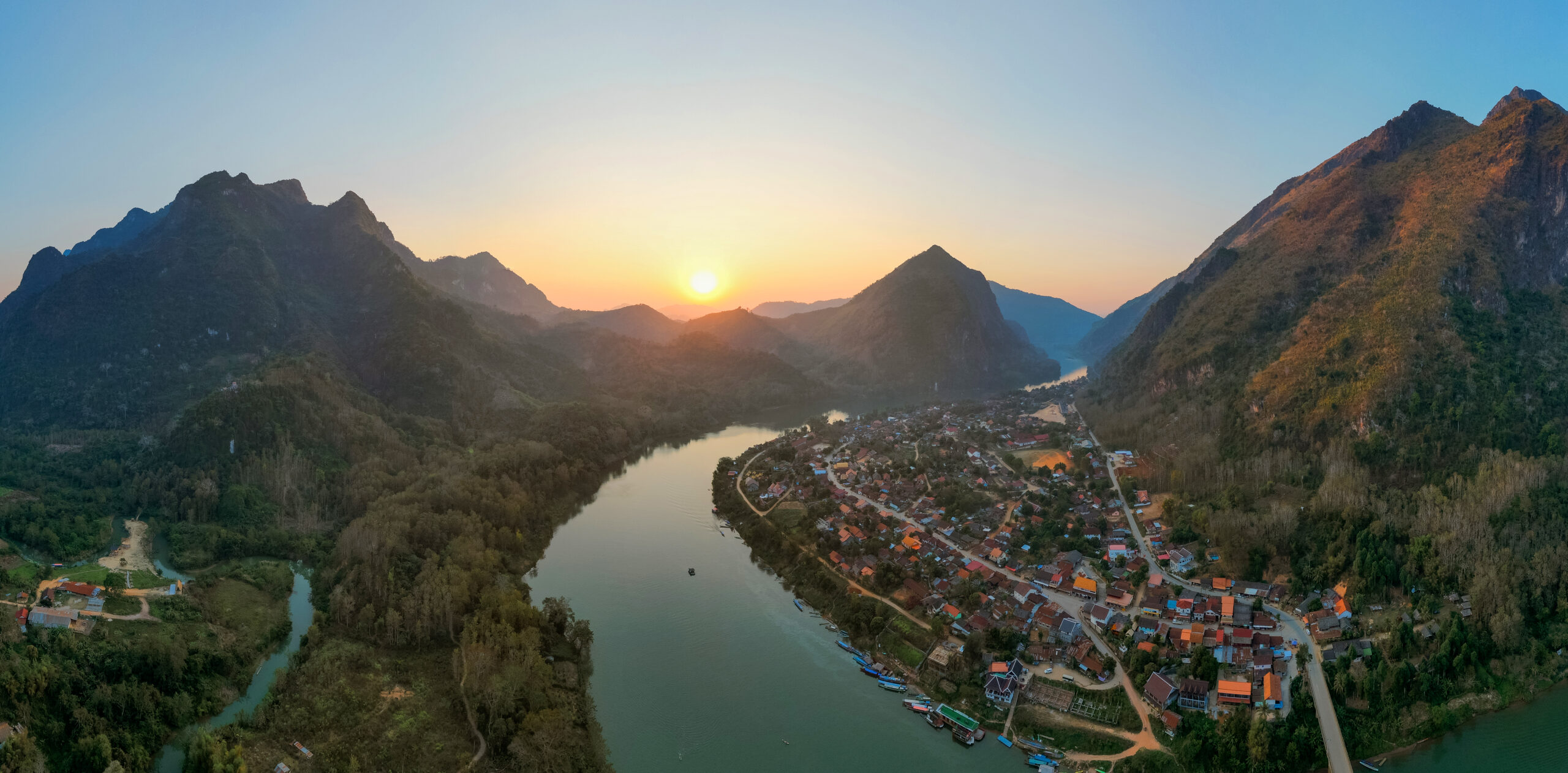
As the largest river in Southeast Asia and the second most biodiverse globally, the Mekong River is often described as the lifeblood of the region, supporting millions of people through fisheries, agriculture and energy production. Dr. Anoulak notes, however, that “all of this is under a lot of pressure because of economic growth for the past decades.”
The Mekong Basin faces three existential threats: altered flow regimes, climate change, and sediment loss. Once characterized by predictable seasonal floods and droughts, the river’s flow has shifted due to upstream dam construction combined with impacts from the earth’s changing climate. Dr. Anoulak says:
What was once a natural flow regime has changed.
The sediment flows of the Mekong River are as vital as the flow of water. While dams have been built to provide hydropower and ease drought, they disrupt ecosystems and trap sediment that is vital for maintaining the basin’s fertility
“We want the Mekong [River] to be brown,” he emphasizes, highlighting the Mekong sediment’s role in sustaining agriculture and fisheries.
The Mekong Basin faces significant power imbalances, with China controlling the upstream and Vietnam heavily dependent on downstream flows particularly for the Mekong Delta. China operates 11 of the world’s largest dams on the upstream portions of the Mekong River (also known as the Lancang River), which combined store more than 47 billion cubic meters of water and can generate 21 310 MW of electricity. Thesedams, unregulated by the MRC, often significantly impact downstream flows and sediment transportation.
Dr. Anoulak acknowledges the ecological impacts of infrastructure projects like dams on the river’s ecosystems. He says the MRC has aimed to offer nuanced negotiations to align divergent priorities and political interests, as cooperation remains pivotal. As he states,
The sediment flows of the Mekong River are as vital as the flow of water. While dams have been built to provide hydropower and ease drought, they disrupt ecosystems and trap sediment that is vital for maintaining the basin’s fertility
“We want the Mekong [River] to be brown,” he emphasizes, highlighting the Mekong sediment’s role in sustaining agriculture and fisheries.
The Mekong Basin faces significant power imbalances, with China controlling the upstream and Vietnam heavily dependent on downstream flows particularly for the Mekong Delta. China operates 11 of the world’s largest dams on the upstream portions of the Mekong River (also known as the Lancang River), which combined store more than 47 billion cubic meters of water and can generate 21 310 MW of electricity. Thesedams, unregulated by the MRC, often significantly impact downstream flows and sediment transportation.
Dr. Anoulak acknowledges the ecological impacts of infrastructure projects like dams on the river’s ecosystems. He says the MRC has aimed to offer nuanced negotiations to align divergent priorities and political interests, as cooperation remains pivotal. As he states,
These are transboundary challenges. They cannot be addressed by one single actor.
Dr. Anoulak emphasizes that climate impacts are “not theory anymore,” as climate change compounds many of the challenges facing the Mekong Basin. Erratic weather patterns, with more powerful storms like 2020’s Typhoon Yagi, have caused unexpected flooding along with prolonged and intense droughts.
These extremes are straining the capacity of communities to adapt, even as they are already trying their best to deal with environmental degradation. In Vietnam’s Mekong Delta, for example, saltwater intruded more than 90 km inland between 2015 and 2016, causing heavy crop losses in 11 out of 13 provinces.
The MRC has stepped up to these challenges with forecasting systems and data-sharing across the lower basin countries, achieving “90% accuracy” in short-term flood predictions. However, Dr. Anoulak warns that technical tools alone are insufficient. “Forecasting needs to connect with disaster preparedness,” he notes, urging collaboration with local agencies to ensure warnings translate into action.
The MRC’s approach to transboundary water governance holds many lessons for global river basins from the Indus to the Danube, Rhine, Nile and the Amazon. Trust is built through cooperation instead of confrontation, and regional solidarity can help to balance out political power asymmetries. One of the most important lessons is that institution building is not instantaneous, and often takes decades of consistent work.
The MRC may not be without flaws, but its longevity shows that, in politically sensitive environments, consistent dialogue, scientific collaboration, and small steps towards cooperation and trust-building can help improve transboundary water governance.
This episode was supported by SEI Asia’s Mekong Think Tanks Program; our sincere thanks to SEI Asia’s Dr. Chayanis Krittasudthacheewa, lead of the MTT program, for facilitating and making this episode possible.
Program / This three-year program will develop clear and actionable evidence-based solutions to water, energy, and development challenges in the Mekong Region.
Feature / Key messages from the second Joint Steering Committee (JSC) meeting on water-related collaboration between ONWR and SEI Asia on 20 August 2026
Feature / The European Union recently recognized TRANSCEND, an interactive water planning approach supported by SEI.
Project / Horizon Europe project advancing innovative, participatory approaches to water management and climate adaptation under deep uncertainty.