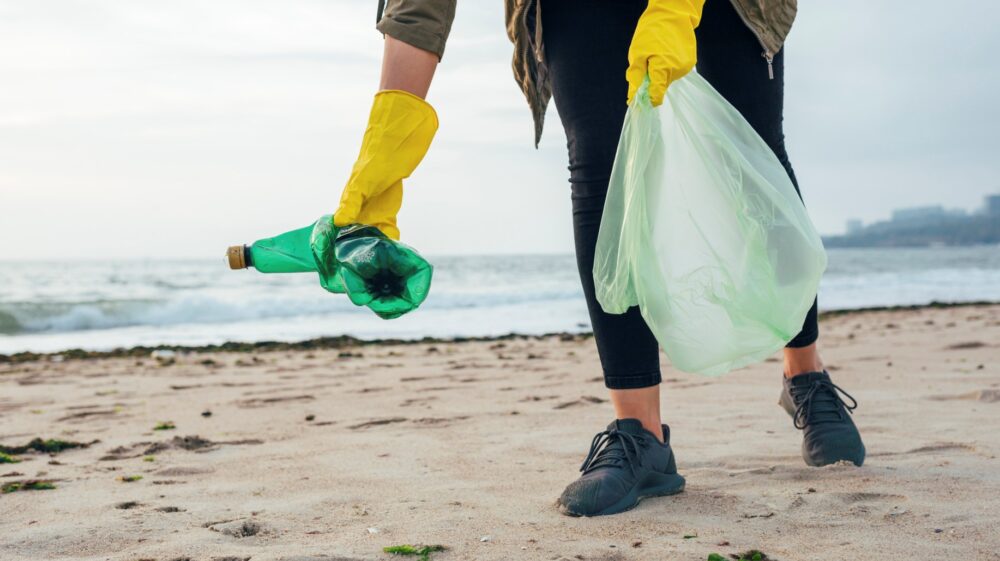
There has been a dramatic increase in plastic production and consumption in Europe to the extent that plastic waste pollutes water resources and risks human and environmental health, potentially harming the entire environmental ecosystem in the Baltic Sea Region (BSR). Current levels of plastic recycling and reuse in the BSR are rather low. Collaboration is therefore needed between local governments and all concerned actors in the plastic waste value chain for knowledge distribution and promotion of best practices.
A project consortium of 18 partners from Germany, Sweden, Finland, Estonia, Latvia and Lithuania developed, tested and deployed concrete solutions to the challenges of plastic pollution in an integrated manner at all relevant levels. The solutions were tested by municipalities at the strategic decision-making and operational level, by public entities as part of their operations, by businesses that use or supply packed goods, produce, trade or manage plastic packaging and packaging waste, and by inhabitants who need to substantially change their single-use plastic consumption.
By the end of the project, the project partners published the solutions and an educational kit for replication by other local authorities, public service providers, and interest groups on the BALTIPLAST Plastic Waste Management Platform.
This project is funded by the Interreg Baltic Sea Region 2021-2027 programme and co-funded by the European Union.

Head of Unit, Senior Expert (Green and Circular Economic Transformations Unit)
SEI Tallinn
Project / The NURSECOAST-II project aims to better adapt wastewater treatment systems to a high seasonality in tourist spots and improve the status of the Baltic Sea.
Project / The main objective of the project was to develop two new island destinations in Helsinki and Tallinn, into sustainable and smart tourist destination areas.
Feature / SEI Tallinn has created a citizen science programme that can be used by students to study the composition and origin of marine litter.