Researchers in this project explore alternatives to pumping depleted aquifers for crop irrigation in Spain. Wastewater reuse is an attractive option, but its practice still lags behind national goals and may even conflict with environmental and recreational water uses. This project uses a hydro-economic model to explore the potential for reclaimed water reuse in agriculture and effective water resource management in this highly water-stressed country.
2022
Photo: Miguel Sotomayor / Getty Images
Growing pressure on water sources from diverse water demands, as well as uses threatened by uncertain regional climate conditions, have increased the use of unconventional water resources (e.g. reclaimed water) to compensate for the water deficit in Spain. Specifically, recycled urban wastewater has become an attractive, reliable and safe alternative to regulated groundwater pumping in over-drafted aquifers for agricultural irrigation.
However, wastewater reuse for irrigation still lags behind stated national goals and may even conflict with environmental and recreational water uses in this high-water stress region. This project uses a hydro-economic model to explore the potential for reclaimed water reuse in agriculture and effective water resource management under climate uncertainties. Management alternatives include different levels of reclaimed water reuse from urban wastewater treatment plants in the region, while climate uncertainty is represented by projected precipitation and temperature changes under different representative concentration pathways (4.5 and 8.5).
We evaluate the quantity of avoided groundwater withdrawal, area of crops irrigated with reclaimed water, impact on farmers’ income, and streamflow available for environmental uses under the combined climate and management scenarios. Such evaluations are subject to reclaimed water availability and groundwater pumping restrictions determined for drought conditions. Our results provide valuable insights on economic and environmental implications of reclaimed water reuse. They can support responsible decision and policy options to maximize the use of these alternatives for integrated and sustainable water resource management in semi-arid regions.
Tool / The Water Evaluation and Adaptation Planning tool (WEAP) provides a comprehensive and user-friendly framework for policy analysis in water resources planning.
About Planning and modelling and Water resources
Tool / WEAP proporciona un marco integral, flexible y fácil de usar para el análisis de políticas en la planeación de recursos hídricos.
About Planning and modelling and Water resources
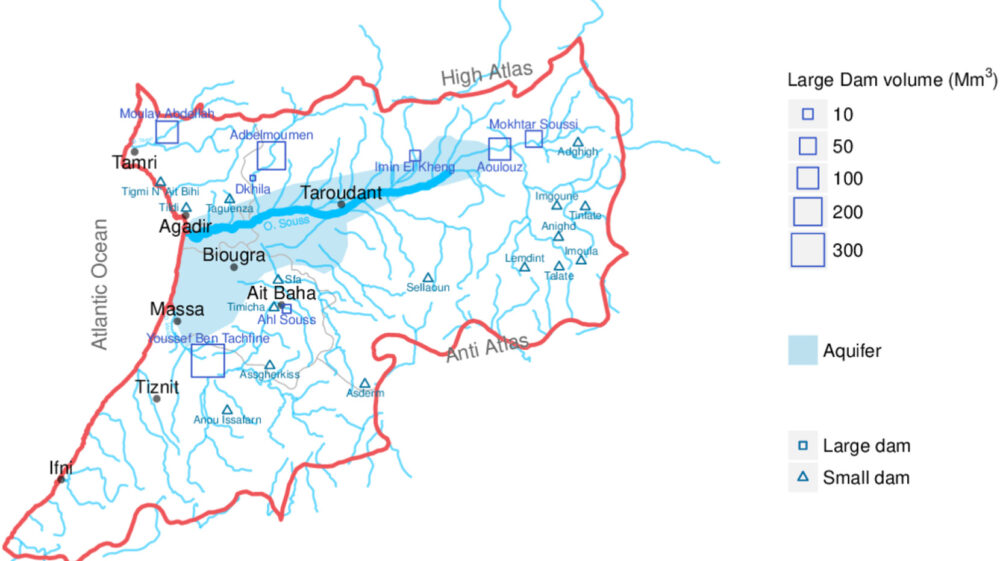
Journal article / SEI scientists used a stakeholder-driven method to explore solutions to a Moroccan river basin's water scarcity through the lens of the water-energy-food nexus.
Journal article / This study analyses how managed aquifer recharge might affect irrigated agriculture in California's Kings Groundwater Basin during drought.
28 May 2022 / About Adaptation, Climate policy, Climate services, Disaster risk, Food and agriculture, Mitigation, Planning and modelling, Public policy, Water resources and Water-energy-food nexus
Other publication / This book chapter explores the importance of the water-energy-food nexus tool to provide possible future climate adaptation strategies in the Global South.

21 May 2022 / About Adaptation, Climate policy, Disaster risk, Ecosystems, Energy access, Food and agriculture, Fossil fuels, Household energy, Land use, Mitigation, Planning and modelling, Pollution, Public policy, Sanitation, Sustainable lifestyles, Water resources, Water-energy-food nexus and Wellbeing