The VINCI project contributes to fighting against climate change by focusing on the tourism sector.
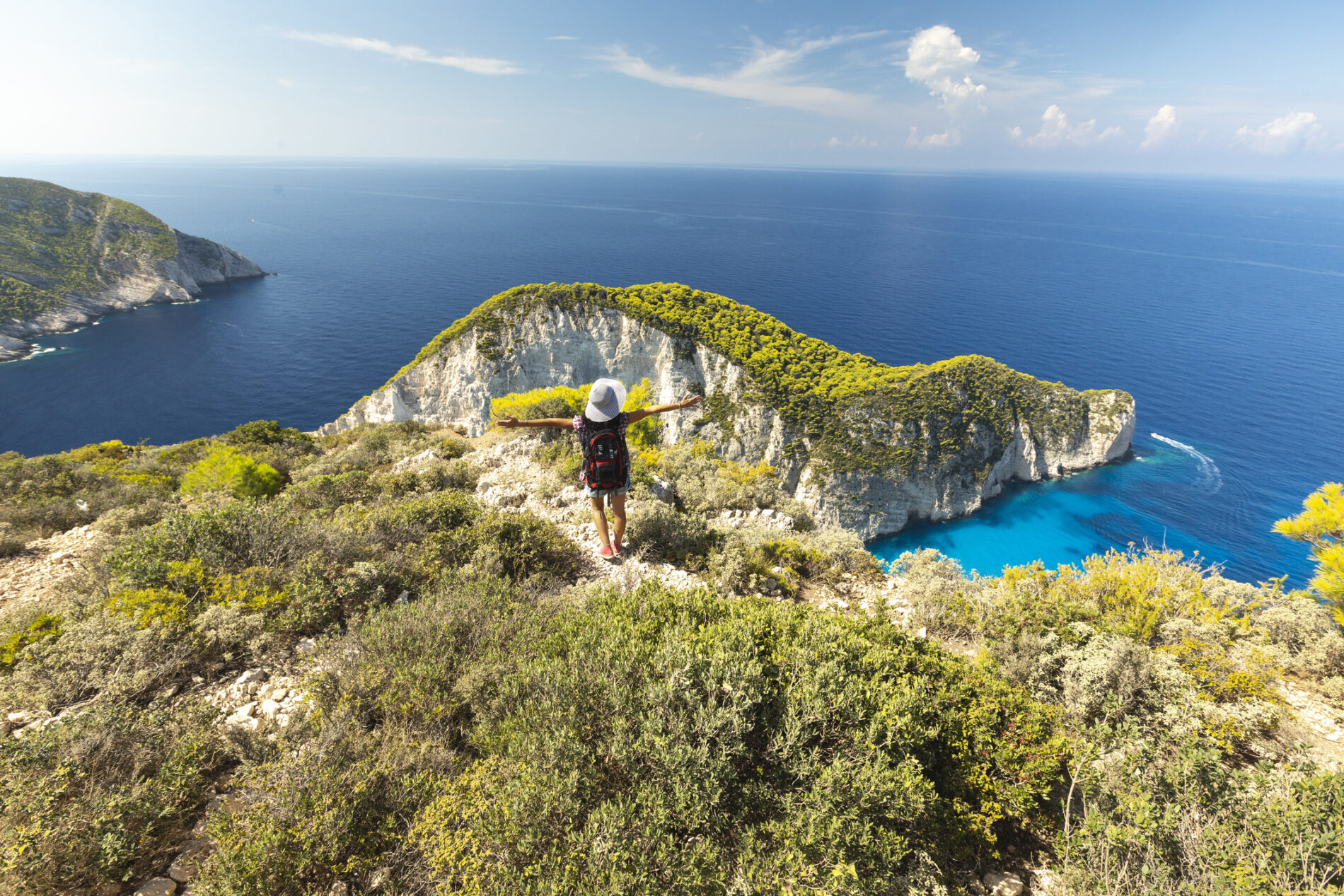
Hiker on Greek island. Photo: Vladimir Vladimirov / E+ / Getty Images.
There are many human activities that contribute to the generation of CO2 emissions and climate change. The European Commission has launched the Green Deal action plan to make the EU’s economy more sustainable by turning climate and environmental challenges into opportunities and making the transition just and inclusive. The tourism industry is one of the EU’s economic sectors that contributes to CO2 emissions and must take action to help reach the ambitious EU’s 2030 Green Deal target of reducing greenhouse gas emissions by at least 55%. Tourism stakeholders need to understand the link between climate change, tourism and transport, low-carbon footprint energy sources and how to design low-carbon tourism travel paths and options. Further compounding the issue, trainers in the vocational education and training (VET) field, as well as tourism mentors, lack relevant training resources on “basic skills of low carbon tourism” that can help them explicitly target and reach out to tourism learners and stakeholders.
Thus, the project aimed to develop an innovative training curriculum and innovative training materials to increase tourism sector stakeholders’ awareness of the sector’s contribution to climate change and possibilities for achieving low-carbon tourism.
The VINCI project delivered the following results:
By the end of the project, VET trainers of tourism stakeholders had a set of modular resources that they can use to effectively train learners (staff members of tourism-related organizations) according to their own learning styles and needs.
The results of the VINCI project are available to anyone interested. All materials are compiled in the VINCI Toolbox, which you can access on the project website. The Toolbox is hosted on the Moodle platform, where you will first need to create a user account before you can register for the course.
The VINCI project was funded with support from the European Commission through Erasmus Grant No. 2021-1-MT01-KA220-VET-000025011.

Head of Unit, Senior Expert (Green and Circular Economic Transformations Unit)
SEI Tallinn
Project / The Climate Neutral Destinations (CliNeDest) project supports sustainable tourism by developing a toolkit for tourism business.
Perspective / The EU and Mercosur countries' treaty puts the two trade blocks in a position to lead towards responsible production of these materials for a green transition.
Tool / This modelling tool helps to plan the national-level transition to net-zero greenhouse gas emissions.