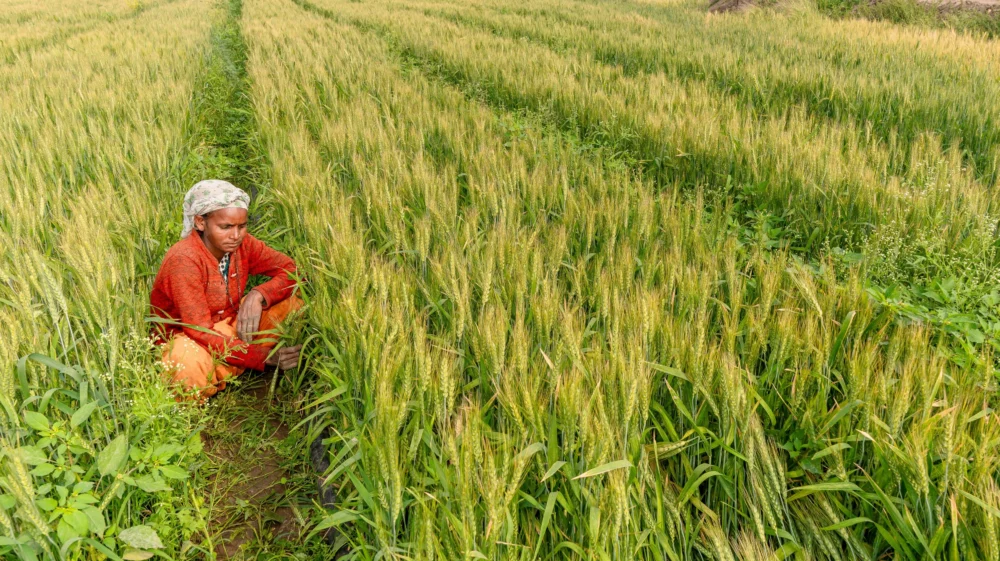
In the specific context of Uganda, this report highlights the key benefits of farmer field schools and provides recommendations for policymakers to support and scale up initiatives at the district level. A district-level focus is valuable because it aligns with existing governance structures and facilitates integration into broader development plans, which can accelerate sustainable development in Uganda.
Farmer field schools are a participatory learning approach that can improve knowledge transfer and empower farming communities to collaboratively experiment with and adopt agricultural practices. While farmer field schools typically do not provide physical resources, they can help farmers access relevant technologies by building capacity through participatory education.
Community members, district, and national policymakers, including program implementers, showed great interest in the prospects of farmer field schools in Uganda during a collaborative learning school held there in 2023. However, accessibility to farmer field schools remains a challenge for most farmers in Uganda, as existing farmer field schools are confined to select districts with a limited number of extension officers.
Farmer field schools can build on the long-standing traditions of unions and agricultural associations within Ugandan farming communities to strengthen engagement and expand their reach.
Feature / This feature spotlights the Collaborative Learning School, which aims to facilitate connections between early-career researchers from Africa and the US.
SEI brief / This brief examines how improving information exchange may help cassava processors in Nigeria can help them address the water and energy challenges they face.
Other publication / This protocol provides a means of reviewing 10 years of CGIAR climate adaptation policy research to assess what actions most effectively achieve which goal.