Skip navigation
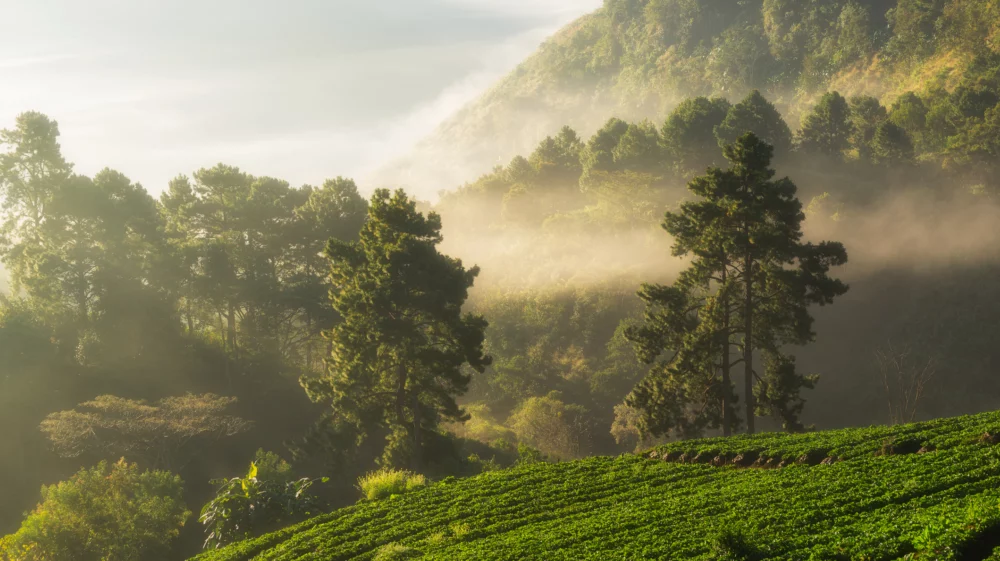
Cultivated field surrounded by trees
One-SEI program

Multifunctional landscapes

Multifunctional landscapes have the potential to reduce pressure on biosystems, prevent land-use conflicts and improve agricultural sustainability. This program will provide practical knowledge for policy-makers, businesses leaders and farmers to support the transition to multifunctional systems.

Active project

2025–2026

Land is under increasing pressure from competing demands form agriculture, forestry, conservation, mining and energy sectors to name a few. Meanwhile, growing populations and persistent food insecurity increases the need for more efficient and more sustainable agriculture. Agriculture is a major driver of biodiversity loss and a significant contributor to land degradation and greenhouse gas emissions. Moving towards multifunctional agricultural and food systems could help address these challenges.

Multifunctional landscapes are those that support and enhance  the benefits of different land uses on the same area; for instance, combining agriculture, forestry, conservation, recreation, urban development, or green spaces. Bringing these otherwise competing land uses together holds the potential to reduce land use competition, prevent further deforestation and biodiversity loss and support sustainable agricultural production. For example, adjacent forests and tree coverage on or near farmed land can help with microclimate regulation by providing shade and enhance pollination services that can improve productivity by boosting crop yields and quality.

However, the current economic structure favours single crop systems that are often resource-intensive, pushing ecosystems to the brink and locking us into a cycle of monocultures. For multifunctional systems to work, supply and value chains need to adapt to improve access and profitability of such production systems.

Our aim is to provide a knowledge base to improve policy and practice decisions for agribusinesses, farmers and decision-makers in the transition towards more multifunctional systems.

Through case studies of diverse land use in Kenya and Colombia, we will:

  • Explore the mutual benefits and trade-offs between different land uses and functions on one plot as well as the socioeconomic conditions under which such systems thrive.
  • Highlight how value chains can go beyond single commodities to support bioeconomy systems that can turn a wide variety of bioresources into valuable products.  

While the need and the benefits of multifunctional landscapes are well documented in research, this program will be the first of its kind to provide pragmatic guidance on transitioning towards multifunctional systems, especially through integration of our findings into SEI’s Water Evaluation And Planning (WEAP) tool.

Selorm Kugbega
Selorm Kugbega

Research Fellow

SEI Headquarters

Mónica Trujillo

Research Fellow

SEI Latin America

Anderson Kehbila

Senior Research Fellow/Research Director for Africa

SEI Africa

Lutta Alphayo
Alphayo Lutta

Research Fellow

SEI Africa

Bibek Gautam
Bibek Gautam

Research Associate

SEI Asia

Ruth Butterfield
Ruth Butterfield

Senior Research Fellow

SEI Oxford

Ivar Virgin
Ivar Virgin

Senior Research Fellow

SEI Headquarters

Profile picture of Brian Joyce
Brian Joyce

Senior Scientist

SEI US

Women in red shirt smiling in portrait
Charlotte Wagner

Senior Scientist

SEI US

Chloe Pottinger-Glass

Research Fellow

Camilo Garzón

Research Associate

SEI Latin America

Amy Molotoks
Amy Molotoks

Research Associate

SEI York

Chris West

Professor and Trase Co-Director

SEI York

Madeleine Fogde
Madeleine Fogde

Team Leader: Agriculture, Land and Bioeconomy; Senior Expert

SEI Headquarters

Profile picture of Annette Huber-Lee
Annette Huber-Lee

Senior Scientist

SEI US

Jonna Wiklund
Jonna Wiklund

Project Coordinator

SEI Headquarters

Alice Tunfjord
Alice Tunfjord

Project Manager

SEI Headquarters

Silvija Marcinkevičiūtė

Communications and Impact Officer

Communications

SEI Headquarters