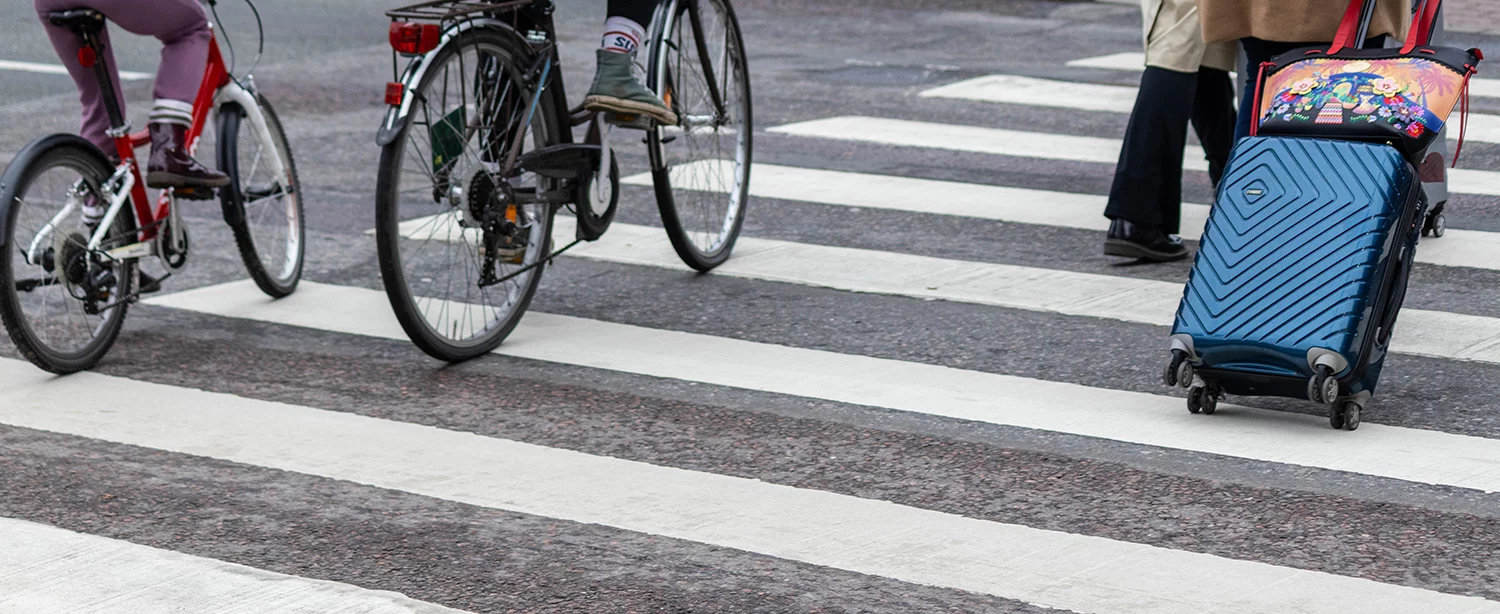
Photo: Anette Parksepp / SEI.
Tallinn and Bangkok could not be more different in scale, density, climate and culture. Yet when we look closely at how people move through these cities each day, a shared realization emerges: mobility is never just movement.
The routes people take, or cannot take, reveal subtle patterns of advantage and exclusion woven into the fabric of cities. Everyday journeys expose how opportunity, risk and dignity are negotiated on sidewalks, crossings, streets and transport systems.
This visual feature series explores how mobility practices make spatial justice visible and is part of SEI’s research program on sustainable transport. Rather than beginning with vehicles, road networks or masterplans, we start with lived experience: how people navigate congestion, weather, infrastructure gaps or shared space. These ordinary moments reveal who cities are designed for and who cities quietly leave behind.
Through photographs and reflections from Tallinn and Bangkok, we examine how mobility is shaped by power, cost, infrastructure design and the social life of streets.
Feature / From Tallinn to Bangkok, everyday journeys reveal who moves freely in the city and who faces barriers along the way.
Feature / Even when transit is free, mobility carries hidden costs in time, safety, pollution and exposure to weather.
Feature / Sidewalks, crossings and street design reveal who moves with ease and who is pushed to the margins of the city.
Feature / Mobility spaces are not just routes but places where social life unfolds and a sense of belonging is shaped.
Feature / Across the world, everyday journeys reveal how mobility shapes access, safety and belonging.