part of Same same but different: mobility and spatial justice in Tallinn and Bangkok
Start readingTime, money, safety and health are currencies of mobility. Mobility is never free, even when the ticket is.
The Same same but different series explores mobility and spatial justice in Tallinn and Bangkok and is part of SEI’s research program on sustainable transport. This chapter examines mobility-related safety, environmental impact and health risks in both cities.
Beyond fares and fuel, the hidden cost of moving includes exposure to traffic risks, polluted air, noise, long commute times and the physical strain of navigating car-dominated environments. These costs are unevenly distributed depending on how, when and where people move.
We asked:
Free public transport provides mobility access for Tallinn residents, yet route planning can be inefficient and commutes long. Road space is dominated by cars and becomes heavily congested during rush hours. Pedestrians and cyclists rarely receive priority and are frequently required to wait, detour or navigate uncomfortable crossings.
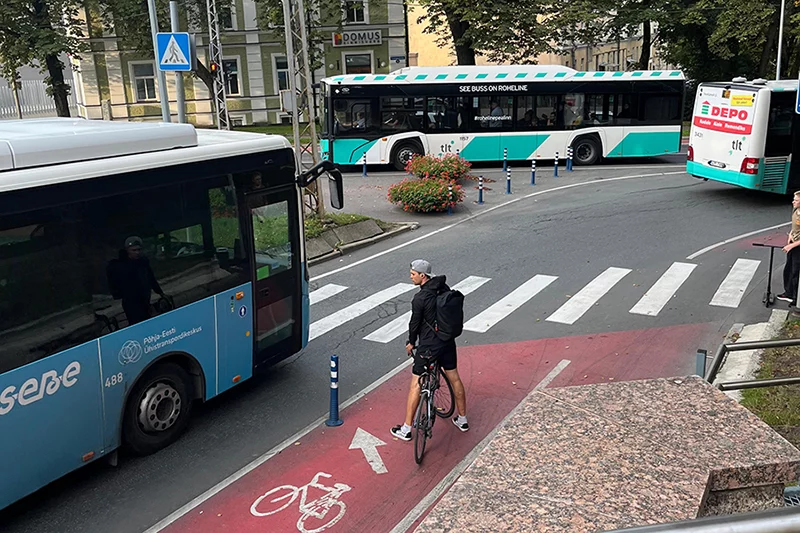
Car-oriented planning reduces safety and comfort for pedestrians and cyclists. Pedestrians are often squeezed between fast traffic and greenery, sometimes left standing in narrow refuge islands.
Pedestrians and cyclists are frequently required to wait, detour or navigate uncomfortable crossings.
Photo: Shimin Huang / SEI
Weather adds another layer of cost.
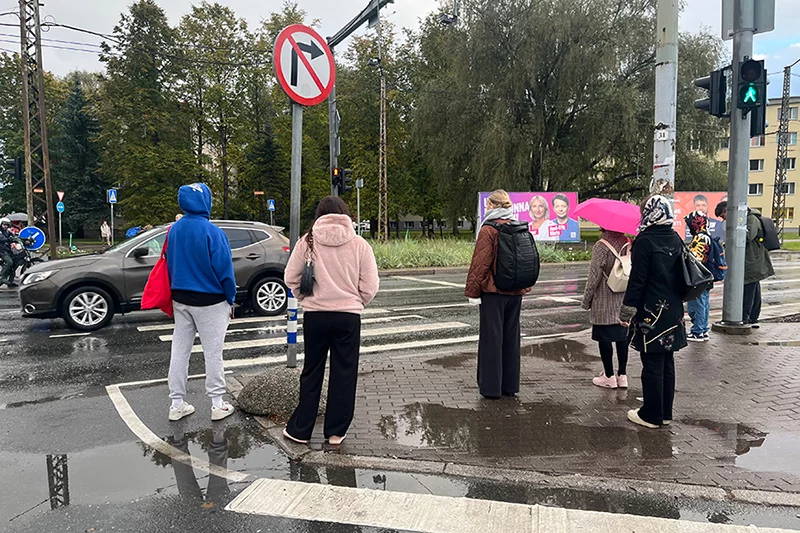
In rain, pedestrians stand in splash zones and puddles while cars speed past, soaking clothing and belongings. These puddles often contain petrol residues, oils and bacteria, posing health risks to people and pets.
Pedestrians cannot be sure that they will not get soaking wet from a passing car on a rainy day.
Photo: Shimin Huang / SEI
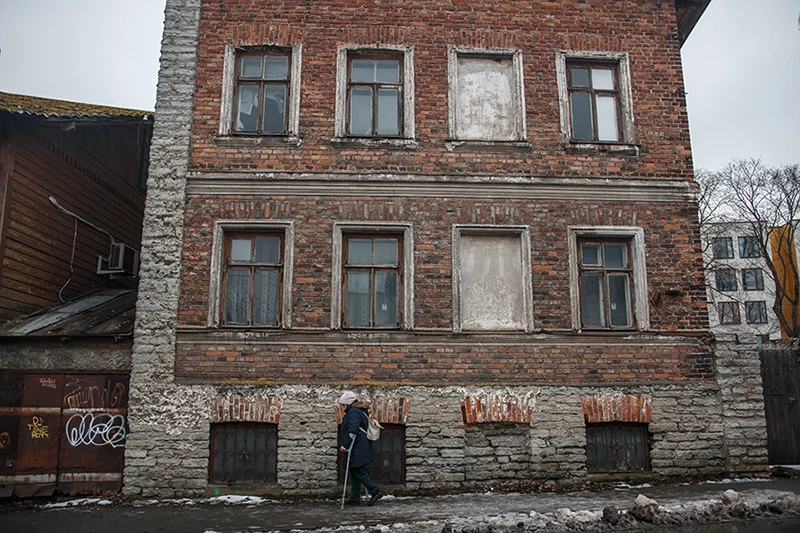
Winter imposes a seasonal mobility “tax”. Darkness, ice and snow create hazards, especially for elderly people and those using mobility aids, who must navigate slippery sidewalks, cold winds and reduced visibility with every step.
A person walking on crutches along an icy pavement on a winter day.
Photo: Anette Parksepp / SEI
Conflicts between cars, e-mobility users, cyclists and pedestrians remain a constant feature – reflecting a system still transitioning from vehicle dominance toward safer and more equitable movement.
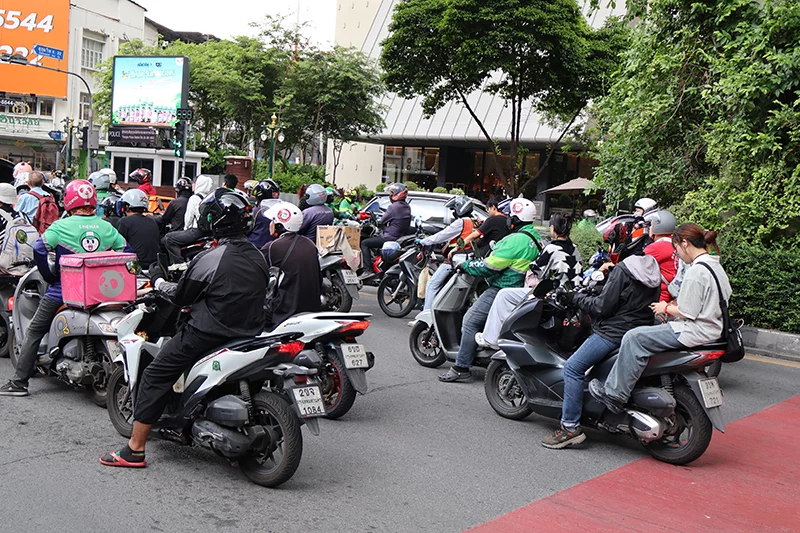
In Bangkok, air pollution, heat, rain and congestion shape everyday choices. During monsoon downpours, the city can grind to a halt for several hours. During the hot season, temperatures often exceed 40°C.
People on scooters must navigate stressful, noisy, hot and polluted conditions.
Photo: Johanna Lehtmets / SEI
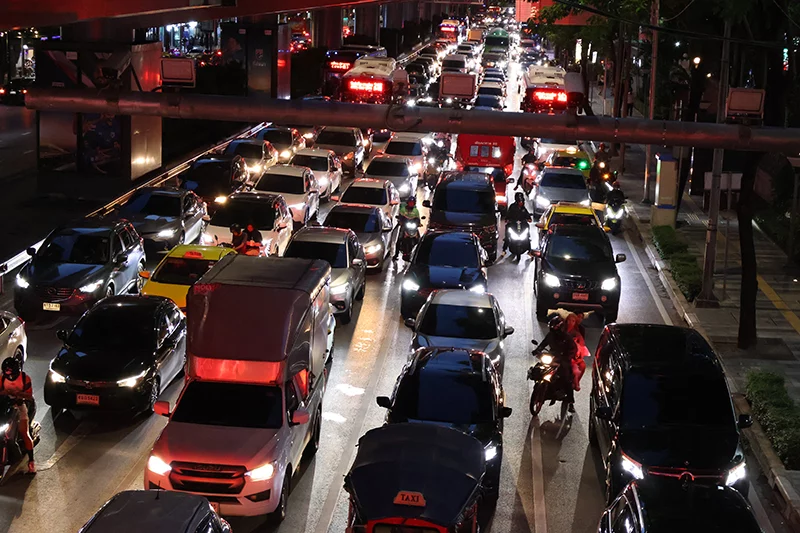
Cars remain the preferred option despite delays, their comfortable interiors offering shelter from heat and storms. Motorbikes provide speed and efficiency but expose riders to pollution, heat and elevated crash risk.
Outdoor workers – motorbike taxi drivers, street vendors and delivery workers – face these conditions year-round while keeping the city moving.
In hot or stormy conditions, many people prefer cars despite delays.
Photo: Johanna Lehtmets / SEI
From icy sidewalks to toxic air and hours lost in congestion, the true cost of mobility is paid in time, health and safety – and these costs are not shared equally.
Feature / Sidewalks, crossings and street design reveal who moves with ease and who is pushed to the margins of the city.
One-SEI program / SEI advances fair, inclusive, and low-emission transport solutions worldwide, bridging global insights with local action for a just mobility transition.
Project / Using a visual storytelling approach, this project documents everyday mobility practices and infrastructure use, revealing local issues.
Feature / What can a study on household waste in Bosnia and Herzegovina (BiH) teach us about driving change across the wider Western Balkans?
Feature / At the Bangkok Climate Action Week 2026, SEI Asia will showcase research and build pathways for climate action through science, dialogue, and engagement.
Journal article / A 40-year village study in Thailand shows how migration, return and circulation shape the country’s ongoing agrarian transition.