What is the UN Biodiversity Conference and why does it matter for business? Read our guide to find out what is on the agenda and how the role of business is changing – from why chocolate needs good data and how to track deforestation risks, to the growing interest in the bioeconomy and how to make biodiversity investments bankable.
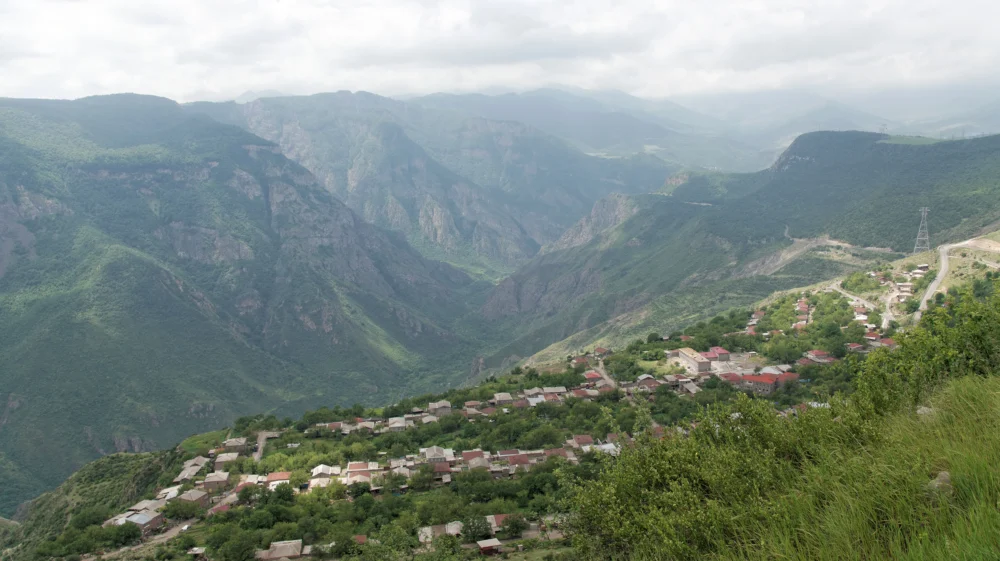
The conference takes place in Yerevan, Armenia, 19–30 October and consists of three meetings that follow up on key international biodiversity agreements. This guide primarily deals with the main event, COP17, which is the 17th Conference of the Parties to the Convention on Biological Diversity (CBD). (The other two meetings are CP-MOP12 about the Cartagena Protocol and NP-MOP6 about the Nagoya Protocol.)
The conference is expected to attract representatives from most of the 196 Parties to the convention, as well as international organizations, NGOs, financial institutions, businesses and others.
COP17 will discuss the first global review of progress towards the ambitious Kunming-Montreal Global Biodiversity Framework adopted at COP15 in 2022. The review draws on different sources of information, including the National Biodiversity Strategies and Action Plans (NBSAPs), in which countries describe how they will deliver on the framework’s goals and targets.
Other agenda items include how to improve the monitoring of the framework, how to mobilize finance, the role of science and how to accelerate implementation. There will be discussions about the economic drivers of biodiversity loss, including investment incentives, and the potential role of emerging biodiversity credit markets.
The conference will also follow up on decisions from COP16. One is the new Cali Fund, to which companies are expected to contribute if they develop products using digital sequence information on genetic resources – such as genetic data from plants and animals. The idea is that companies share part of their profits, with a large share going to Indigenous peoples and local communities.
The first global progress review comes at the midpoint between 2022, when the Global Biodiversity Framework was adopted, and 2030, when its 23 targets should be met. It paints a mixed picture – there have been advances across all targets, but the world is not moving fast enough to achieve them.
One example is Target 3, known as 30×30, which calls for the effective protection and conservation of at least 30% of land, inland waters, marine and coastal areas by 2030. According to the 30×30 Assessment, coverage has increased since 2022 to approximately 20% of land and 10% of ocean areas under national jurisdictions.
Progress is generally slow and uneven on the targets related to economy and finance, for example:
“It is important both because businesses impact biodiversity directly and indirectly, through their value chains – and because businesses depend on healthy ecosystems,” explains SEI’s Executive Director Eeva Primmer.
As a Bureau member of the Intergovernmental Science-Policy Platform on Biodiversity and Ecosystem Services (IPBES), she co-chaired the discussions that led to approving the Business and Biodiversity Assessment in February 2026. The assessment shows that businesses are central to halting and reversing biodiversity loss, but that they often lack reliable data, models and scenarios. Though companies are increasingly expected to disclose their biodiversity impact, they must navigate complex frameworks for compliance and reporting.
“As an approachable methodological assessment, the Business and Biodiversity Assessment helps companies figure out which methods, metrics and policy tools are suitable for them. It summarizes how businesses can contribute to nature-positive outcomes and turn risks into opportunities. The assessment also outlines how policy, finance and other societal actors can help businesses become more sustainable. Such a multi-actor, science-based approach, which can be customized to specific settings, is very much in line with the work of SEI, and we will be present at COP17 to showcase science-based solutions for more effective biodiversity action,” Primmer says.
Nature risks are business risks. This was made painfully clear during the cocoa sector shocks of 2023–2024, when chocolate prices skyrocketed. “For multinational firms, this was a wake-up call. What might previously have been considered an abstract sustainability issue suddenly became very concrete when supply chains stalled, processing plants shut down and workers were laid off,” explains Selorm Kugbega, Research Fellow at SEI.
The experience made more companies aware that they need nature data to understand potential risks – for example, how declining soil fertility, rising temperatures, increased pest and disease pressure, deforestation and persistent farmer poverty can converge into a systemic crisis. At the same time, nature data helps companies identify potential mitigation actions. To this end, Clarmondial and SEI have developed the Nature Tool, a science-based tool presented at the World Economic Forum and the Nordic Climate Dialogues.
The tool is designed to assess nature-related risks and opportunities across agricultural sourcing landscapes. By integrating multiple datasets, it provides a 360-degree view of sustainability risks, synergies and trade-offs. So far, it has been used to guide and monitor seven nature-positive investments across cocoa, coffee and macadamia value chains in sub-Saharan Africa and Southeast Asia.
“Nature data is fast becoming a business necessity. With that knowledge, companies can choose approaches that address environmental challenges while protecting and restoring ecosystems. Only then can we strengthen water security, support more stable agricultural yields and reduce long-term risks to food production,” Kugbega says.
More and more companies, organizations and governments are moving beyond a focus on risk to explore nature-positive business models and market opportunities that add value to nature. Adopting the principles of the bioeconomy can create valuable links between ecosystems, social impacts and people.
“The bioeconomy offers alternative pathways that can create co-benefits and even synergies across biodiversity, climate and sustainable land-use goals,” says Francis X. Johnson, Senior Research Fellow in SEI’s Agriculture, Land and Bioeconomy Team.
Definitions of the bioeconomy vary, but they often include creative spaces or innovation platforms for bio-based products and services anchored in socio-ecological systems and biodiversity-based value chains. One emerging approach is the socio-bioeconomy, which incorporates traditional knowledge and the active participation of Indigenous peoples and local communities. This is particularly important for regions with high levels of social and biological diversity, such as the tropics, where many of the planet’s major forests are found.
At COP17, Johnson will share insights on how such initiatives can be scaled and developed in different geographical and cross-sectoral contexts. SEI has worked on bioeconomy strategies at national and regional levels in Africa, Asia and Latin America.
Trade and consumption are much greater drivers of biodiversity loss than is commonly acknowledged, especially in sectors such as food, energy, infrastructure and fashion. Target 16 of the Global Biodiversity Framework calls on countries to take active measures against waste and overconsumption, but this is rarely done systematically, according to the global progress review.
“To be able to curb biodiversity loss, this must become a high-priority area,” says Jonathan Green, a Senior Research Fellow at SEI who focuses on the impact of trade, consumption and diets on biodiversity.
At COP17, he will talk about science-based methods that help companies, investors and governments track biodiversity impacts across supply chains. One example is the platform Trase, developed by SEI and Global Canopy, which maps how commodities such as soy, beef and palm oil drive tropical deforestation.
“Countries need to address how their consumption drives biodiversity loss, including beyond their national borders. To facilitate this, SEI developed the Global Environmental Indicators of Consumption (GEIC),” Green says.
“We see rising expectations of the private sector to step in and finance nature and biodiversity projects in low-income countries. But investors need a business case: someone has to pay for what a project delivers. Biodiversity benefits are mostly treated as public goods, and actors willing to pay for the value they provide are difficult to find,” explains Carly Evaeus from SEI’s Finance for Sustainable Development Program.
Drawing on her work within SEI’s project Mobilizing private investment for climate and nature, she will be at COP to explore both the role of private finance and the investments that will continue to rely on public finance.
“There is a need for more innovative ways to make projects bankable, new business models that combine multiple income streams, financial instruments that reduce the risk for investors and regulation that creates an enabling environment for private sector actors to invest. At the same time, it is important to understand which projects cannot generate revenue – that is, which will not attract private capital – and so identify where public finance must lead,” Evaeus says.
The UN Biodiversity Conference takes place in Yerevan, Armenia, 19–30 October, to follow up on the Convention on Biological Diversity and its two protocols. The main event is CBD COP17, the 17th Conference of the Parties to the Convention on Biological Diversity.
SEI is actively contributing to CBD COP17 and will be on-site in Yerevan. Here you can learn more about our activities and connect with us.
Tool / Trase enables governments, companies and others to address the environmental impacts of supply chains.
Event on 05 November / Negotiators, researchers and others reflect on the outcomes of biodiversity COP17 in this online post-match analysis.
Feature / Biodiversity action is falling short – SEI shares five recommendations for building more resilient societies ahead of COP17.
Event on 19 October in Dublin / SEI's Francis X. Johnson joins a Global Bioeconomy Summit 2026 panel on how biofuels can accelerate a sustainable bioeconomy.