This project’s overall aim is to analyze how specialties businesses, production systems and markets can promote inclusive value chains in Brazil and Colombia.
Previous research by our team has revealed that local communities, smallholders, civil society organizations as well as public officials in the tropics often struggle to promote their local biodiversity economies. There is a perceived mismatch between local products’ inherent diversity, cultural embeddedness and sometimes artisanal ways of production and the features and demands of commodity markets.
Furthermore, there is an urgent need for innovative policy thinking in combating deforestation. Land-use science and policymaking have been dominated by a mainstream “do no harm” agenda linked to due diligence, zero deforestation and no human rights violations, but which fails to address the need for transformative change at forest frontiers.
COP 30 happening in the Amazon is poised to make this need for innovation in this space even more glaring. The aim therefore unfolds into three interrelated objectives and research questions:
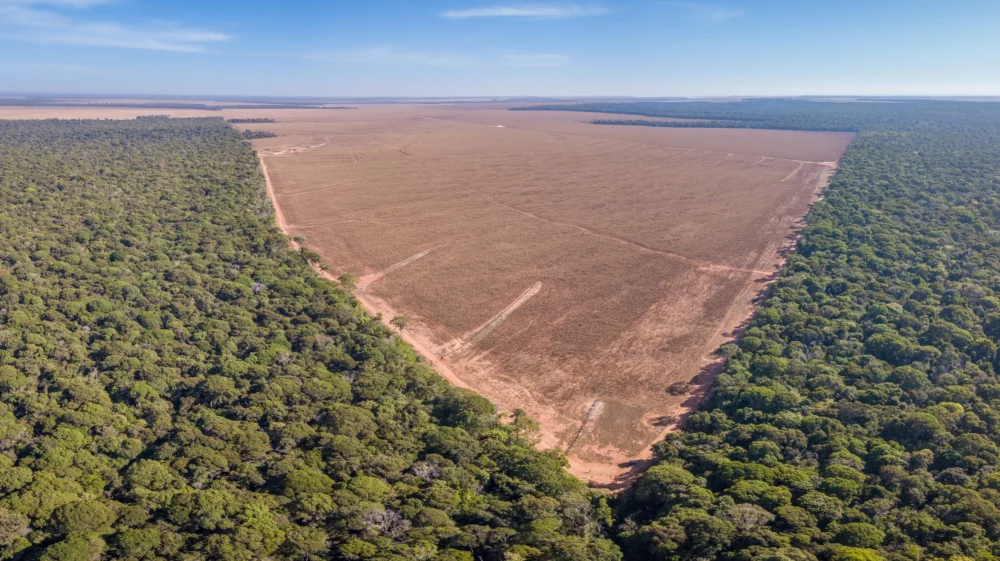
Rethinking sustainable development for tropical regions such as the Amazon remains one of the most pressing needs of the 21st century. Each year, 4-5 million hectares of native vegetation are lost in the tropics, 90-99% of it due to unsustainable agricultural expansion, and mostly to produce a few commodities such as soy and palm oil.
Land-use change is the main source of greenhouse gas emissions in many tropical countries as well as the primary driver of global biodiversity loss. In Brazil, the 2025 host of the climate COP, as much as 74% of emissions derive from agriculture and land use, chiefly due to deforestation.
One key reason for the above is that economic development in tropical regions has often become tied to the expansion of industrial monocultures. While catering to sectoral interests, they erase native vegetation from tropical landscapes and, along with it, the local communities and livelihoods not linked to those sectors. Yet, escaping from such dynamics is hard, and it requires innovation around economic alternatives.
Tool / Trase enables governments, companies and others to address the environmental impacts of supply chains.
Perspective / Commodities are not always the answer. Specialties suit development based on livelihood and biodiversity conservation, as well as more sustainable consumption.
Journal article / The article explores how loopholes in Brazil’s Forest Code enable illegal deforestation in Mato Grosso’s soy sector and the need for full compliance to stop it.
Perspective / A pesquisa conduzida pelo SEI e ACTO mostra como uma nova declaração pode ser fortalecida para proteger esta floresta tropical.