SEI Africa, through its Gender, Environment and Justice Cluster, has joined Commit to Grow Equality (CGE), a multi-stakeholder initiative led by the Food and Agriculture Organization of the United Nations (FAO) working to advance gender equality and women’s empowerment in agrifood systems.
SEI Africa’s contribution to the initiative will focus on strengthening women’s economic agency through the bioeconomy and improving the evidence needed to inform policy and action.
Around the world, women make major contributions to agrifood systems – from food production and processing to the distribution of produce and managing household nutrition. Yet systemic barriers limit their access to land, markets, finance, new technologies and decision-making opportunities. These disparities hinder women’s ability to scale their businesses, improve productivity and take advantage of opportunities across agrifood value chains. Expanding women’s access to and control over finance and other resources, while tackling structural barriers, is key to their fuller and more valued participation in the sector.
Addressing these gaps is not just vital for women. FAO’s report, The status of women in agrifood systems, found that closing gender gaps in agrifood systems could boost global gross domestic product by about USD 1 trillion and reduce the number of food-insecure people worldwide by about USD 45 million.
FAO launched CGE in 2024 to address gender gaps in agrifood systems. SEI Africa is now among its partners, which span governments, UN agencies, philanthropies, the private sector, civil society organizations, development banks and others. So far, partners have made 166 commitments across five thematic areas:
SEI Africa’s commitments focus on two of these: closing the productivity gap and increasing data, research and evidence.
Bringing together different partners creates opportunities to combine resources, expertise and knowledge towards a common goal. This is key to tackling structural barriers, which require coordinated action across policy, investment and implementation.
Drawing on SEI’s Advancing Bioeconomy Development in Kenya (ABDK) project, SEI Africa will connect women entrepreneurs supported by the project with opportunities in Kenya’s growing bioeconomy. The project has created partnerships between Kenyan and Swedish actors, opening up access to investment, markets and technology – all of which remain hurdles for women in the sector.
The circular bioeconomy presents opportunities to create value from biological resources and agricultural by-products, while supporting more sustainable production and consumption. For women entrepreneurs, this can open new avenues for business growth, a way into new and emerging value chains and access to markets. However, this potential cannot be fully realized if systemic and structural barriers persist.
Under CGE’s thematic area on closing the productivity gap, SEI Africa has committed to advancing women’s economic agency through the circular bioeconomy. This includes working to increase the share of agroenterprises supported by the ABDK and circularity projects that are women-owned or women-led. SEI Africa will also work towards aligning relevant policies to support woman-led businesses in these sectors.
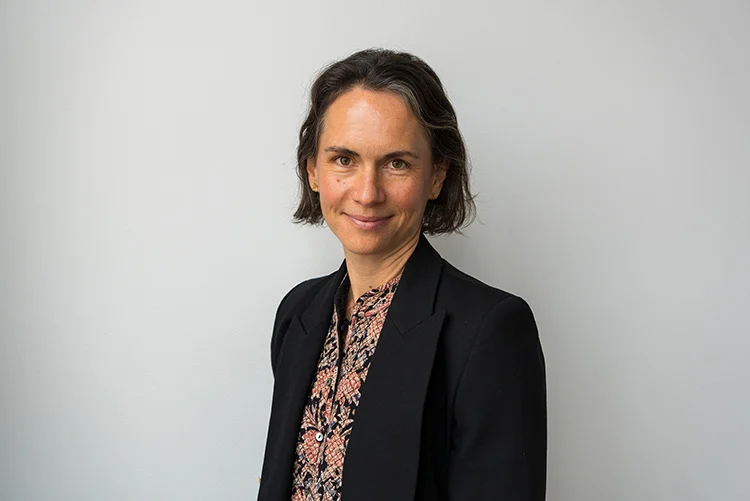
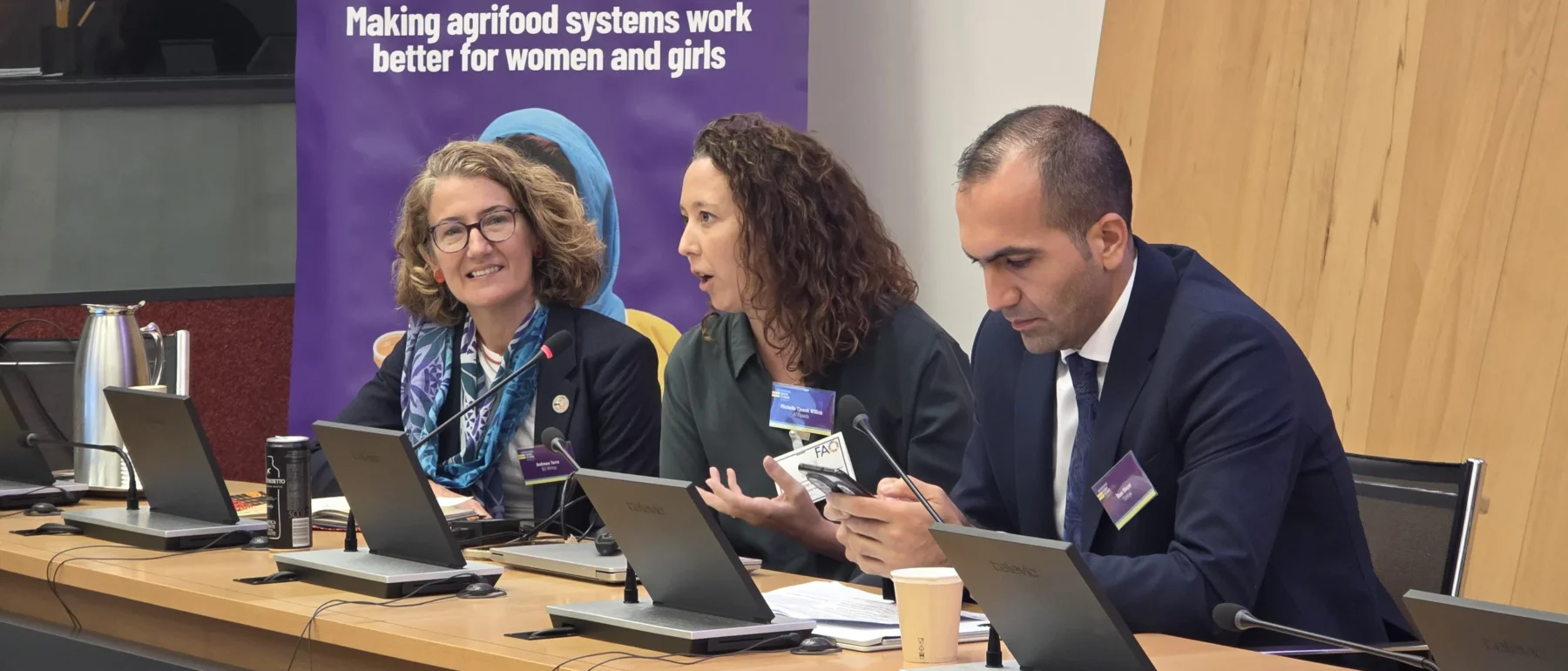
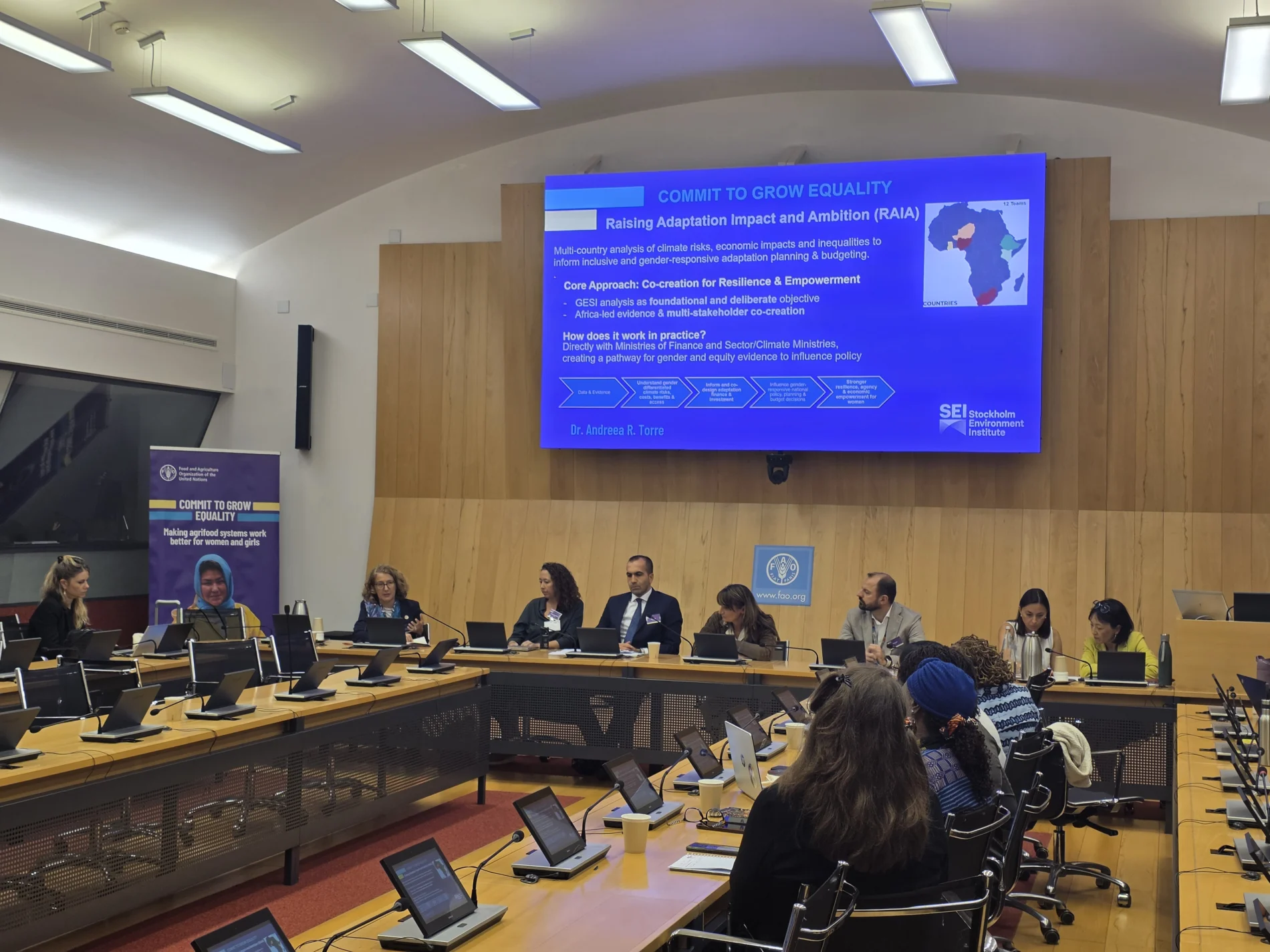
Andreea R. Torre, Senior Research Fellow and Gender, Environment and Justice Cluster Lead presenting at FAO's World Food Forum
Photo: Andreea R. Torre / SEI.
Without evidence, policies and programs risk overlooking women’s needs in the agrifood sector. SEI Africa and other partners under the data, research and evidence thematic area will work to improve the availability and use of gender-disaggregated data.
Gender-disaggregated data can help identify differences in how women and men access resources, participate in agrifood value chains and benefit from sectoral interventions. Such evidence is important in identifying where inequalities persist and informing policies and programs that respond to the specific needs of different groups. It also provides a basis for tracking progress and assessing whether interventions are delivering meaningful change.
In October, SEI Africa showcased its approaches to generating more robust and inclusive evidence to inform adaptation investments, policies and strategies that strengthen women’s resilience at FAO’s in Rome, Italy.
Speaking at the forum, Andreea Raluca Torre, Senior Research Fellow and Gender, Environment and Justice Cluster Lead, said, “At SEI Africa, we co-create African-led, locally grounded evidence to inform more equitable climate policies and investments that advance women’s agency and leadership and strengthen their resilience.”
Achieving gender equality in agrifood systems requires coordinated action. Through initiatives such as Commit to Grow Equality, stakeholders can build on one another’s efforts, strengthen partnerships and create opportunities to scale solutions. This is especially important as the 2030 deadline for the Sustainable Development Goals approaches, with many of the goals – including those on zero hunger and gender equality – off track.
Perspective / As COP31 negotiations get under way, SEI Africa researchers set out the gender priorities African negotiators should hold firm on
Media advisory / Experts from SEI will be at CBD COP17 in Yerevan from 19–30 October and are available for commentary and analysis.
Media advisory / SEI invites journalists to a media briefing where its experts will share their perspectives on key topics ahead of the UN Biodiversity Conference (COP17).