In Colombia, offshore wind energy is emerging as a key driver of the energy transition. Along its Caribbean coast, the country has an estimated potential to generate 50 gigawatts, equivalent to 2.5 times its total installed electrical capacity. Although no offshore wind projects are operational by 2025, interest and expectations surrounding this new industry have grown rapidly.
Colombia has set a goal of installing 7 gigawatts of offshore wind energy capacity between 2030 and 2040. A key step in that direction is the first call to award maritime areas in the departments of Atlántico, Bolívar, Magdalena and Sucre, with the aim of incorporating between 1 and 3 gigawatts of electricity generation capacity by 2035.
Developing these types of projects requires surmounting not only technical, regulatory, and environmental challenges, but also significant social, cultural and territorial governance hurdles. Experiences within Colombia and elsewhere have shown how large-scale renewable energy projects can generate significant local benefits, but can also pose risks of exclusion, conflict, and the perpetuation of inequalities if not designed and implemented though a participatory approach.
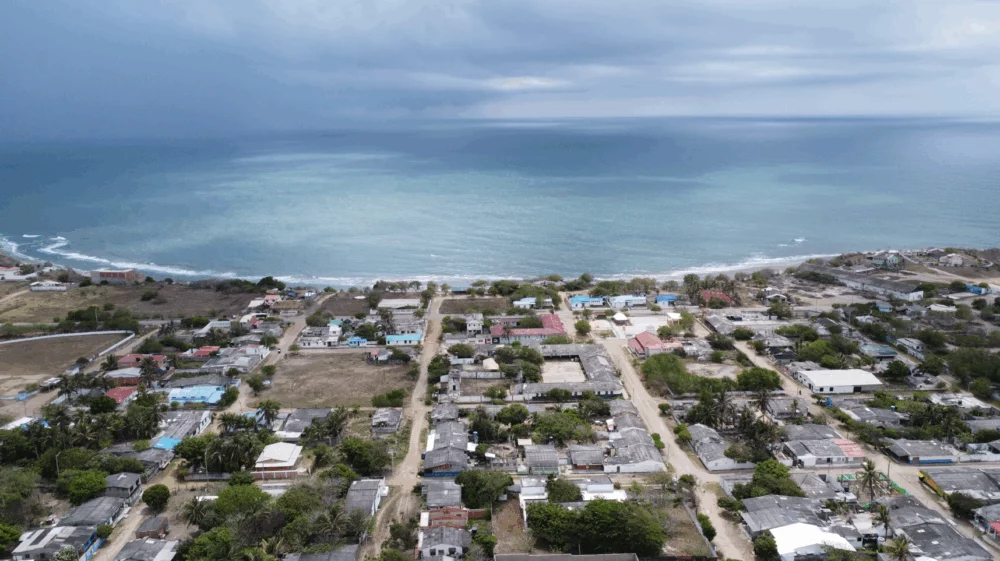
At this crossroads of opportunity and challenge, Galerazamba, in the Department of Bolívar, takes on particular significance. Historically renowned for its saltworks and the close relationship of its inhabitants with the sea, this territory emerges as a potential pioneer in hosting this new industry. This raises crucial questions: How will these initiatives integrate with local dynamics? What impacts will they have? What benefits will they generate for its inhabitants and marine ecosystems? And what mechanisms will ensure a just, participatory and inclusive transition? This story reflects on these questions based on dialogues, interviews, and conversations with local residents.
Offshore wind energy projects do not emerge in neutral environments, but rather in territories heavily influenced by historical relationships between the state and the private sector. Generally, they are evaluated based on collective memory linked to the complex history of salt production, which combines a past filled with progress and local dynamism with a present marked by the desire to revitalize that legacy for the benefit of the community.
Throughout the 19th century and much of the 20th, the Galerazamba saltworks transformed from a strategic resource nationalized by the state in 1824 into an engine of development under the management of the Bank of the Republic and the Industrial Development Institute (IFI). This period is remembered locally as a time in which the saltworks boosted local prosperity through tangible improvements in infrastructure, the provision of public services, and job creation — interventions that strengthened social cohesion. It was a time when the region’s wealth translated into community wellbeing.
We have not seen any company that has brought as many benefits as the Bank of the Republic and, later, IFI.
Cristina Porras, resident of Galerazamba
Privatization in the late 1990s broke that link, giving way to an extraction-focused approach that had negative impacts on employment, human rights and ecosystems, and led to a sense of dispossession among residents in the region.
These experiences were compounded by hydrocarbon exploration. Despite the announcement of discoveries, the exploration did not lead to economically viable projects. Instead, such exploration raised concerns about environmental and social impacts. These concerns were ignored by authorities and companies. Compensation was meager and short-lived, fueling distrust in institutions and companies, and reinforcing the perception that external actors operate in the territory without leaving any real benefits.
The prospect of establishing offshore wind energy facilities in the region is generating both high expectations and reservations. It represents an opportunity to revive the idea that local wealth can be channeled into collective wellbeing, but also raises concerns about the prospect that mistakes of the past may be repeated. The key lesson is clear: without mechanisms for effective participation, equitable distribution of benefits, and environmental protection, even the most promising projects risk repeating patterns of exclusion and dispossession.
Although offshore wind energy is promoted as a strategic source for advancing the energy transition, its development implies impacts and tensions that should not be overlooked. These types of projects transform territories, ecosystems and local economies, generating both risks and opportunities.
The impacts of such infrastructure on marine and coastal ecosystems remain poorly understood, partly because projects have been concentrated in a few regions of the world, and available scientific evidence is still limited. In the Colombian Caribbean, for example, information on migratory species, oceanographic dynamics and coastal ecosystems remains scarce. This lack of knowledge translates into greater uncertainties and risks.
In Galerazamba, the most widespread concerns involve the impact on marine species, the potential disruption of migratory bird routes, and changes in fragile ecosystems such as mangroves and seagrass beds. These issues add to other concerns involving the impact on local economic activities, such as tourism and artisanal fishing.
We have seen that some companies have come in, but they don't socialize their projects with the community, and when we want to see them, they're already done. ... It would be good if they approach the community.
Geraldine Porras, resident of Galerazamba
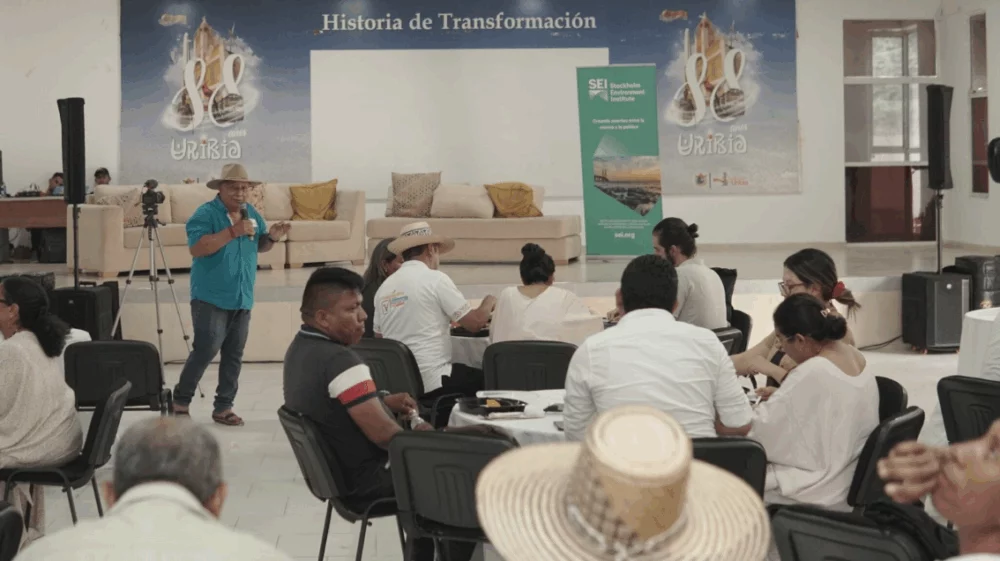
Managing these potential impacts cannot be viewed as merely technical or administrative issues. Addressing these concerns involves ethical and political considerations that are fundamental for a just transition. It is essential to go beyond formal procedures and to establish permanent spaces for dialogue that guarantee effective participation in identifying likely impacts, designing measures to manage risks, and distributing benefits from the early stages of projects. Local communities must be acknowledged not only as recipients of information, but also as actors with real agency to influence decisions. They bring territorial and cultural knowledge that is indispensable for legitimate and sustainable management.
In this regard, technical capacity-transfer programs are a key element required by the first offshore call for bids. These programs should be treated as more than an administrative requirement so that they can become a strategic tool to build strong relationships from the outset of projects. Their success will depend on having well-prepared teams that are sensitive to local contexts, establishing clear communication channels to manage expectations, and learning from past experiences to avoid mistakes and strengthen the social legitimacy of the initiatives.
The concept of positive outcomes for nature suggests that offshore wind energy projects should go beyond avoiding or offsetting negative impacts; they should seek to generate net benefits for ecosystems and communities. This requires integrating conservation and restoration into project planning and operations so that projects can contribute to strengthening of the socio-ecological resilience of coastal areas.
In Galerazamba, there are at least four priority areas where offshore wind energy could help enhance positive outcomes for nature:
The creative use of certain waste materials, particularly driftwood that washes up on beaches, as input for the development of local crafts.
Pastor Vargas, resident of Galerazamba
The sea is not an empty territory, but a shared and socially constructed space where meanings, practices, and emotional bonds converge, shaping the lives of coastal communities. Maritime culture refers to this network of relationships among collective images, values, and representations of the sea. In Galerazamba, this concept manifests itself in diverse ways: from the historical tradition of salt extraction and artisanal fishing to a growing interest in tourism and recreation – now intertwined with the possibility of hosting offshore wind energy projects.
The main challenge lies in articulating these uses in a complementary (rather than competitive) manner, recognizing the plurality of functions of the sea, and ensuring that development of offshore wind projects does not negatively impact these practices, but rather enhances them. This implies designing maritime governance mechanisms that include the community from the outset; promote co-use, co-existence, or co-location agreements; and guarantee that a portion of project profits are reinvested in strengthening the local maritime culture.
For instance, artisanal fishing and aquaculture could benefit if the areas around wind turbines act as artificial reefs that create habitats for diverse species and contribute to the ecological sustainability of the region. This would promote the recovery of species and allow local fishermen to reap greater benefits in terms of abundance and added value of their catches.
The mere presence of such tall towers is already an attraction. We, as a community, would develop a script around that. ... We would show tourists what they're for, and we would then have more information about how much energy is generated, what benefits are derived from it, how it's transported.
Alberto Robles, resident of Galerazamba
Offshore wind energy also opens up tourism opportunities. Galerazamba’a potential as an attraction is recognized due to its innovative nature. However, this does require complementary actions: strengthening local capacities in tourism and entrepreneurship, improving existing infrastructure, and ensuring effective participation of the local community in the planning and management of tourism initiatives.
Galerazamba can become a living lab for multifunctional use of the sea. The challenge lies in articulating both tradition and modernity, ensuring that the energy transition does not displace existing practices but rather strengthens them. If this goal is achieved, Galerazamba will project itself not only as a renewable energy hub, but also as a benchmark for cultural, environmental, and economic integration in the multifunctional management of maritime spaces.
This story, written by researchers from SEI and the University of the Coast (CUC), recounts, through field visits, the challenges and opportunities of offshore wind energy off the coast of Galerazamba, in the Department of Bolívar. The text was edited by Karen Brandon. The audiovisual materials included in this story were produced by Eduar Monsalve and edited by Camilo Martelo. The script was led by Camilo Martelo.
Project / This project aims to guide offshore wind energy development in Colombia in a way that supports fair outcomes and sustainable local benefits.
Project / Systemic, participatory project enabling renewable energy in Colombia through policy reform, social acceptance, and a just transition narrative.
SEI report / This document provides an overview of wind and solar energy in Colombia at the beginning of 2025, with commentary on outlooks.
Feature / An SEI program is strengthening Wayuu capacity to advocate for their interests in wind energy project development and related infrastructure.