part of Indoor air quality
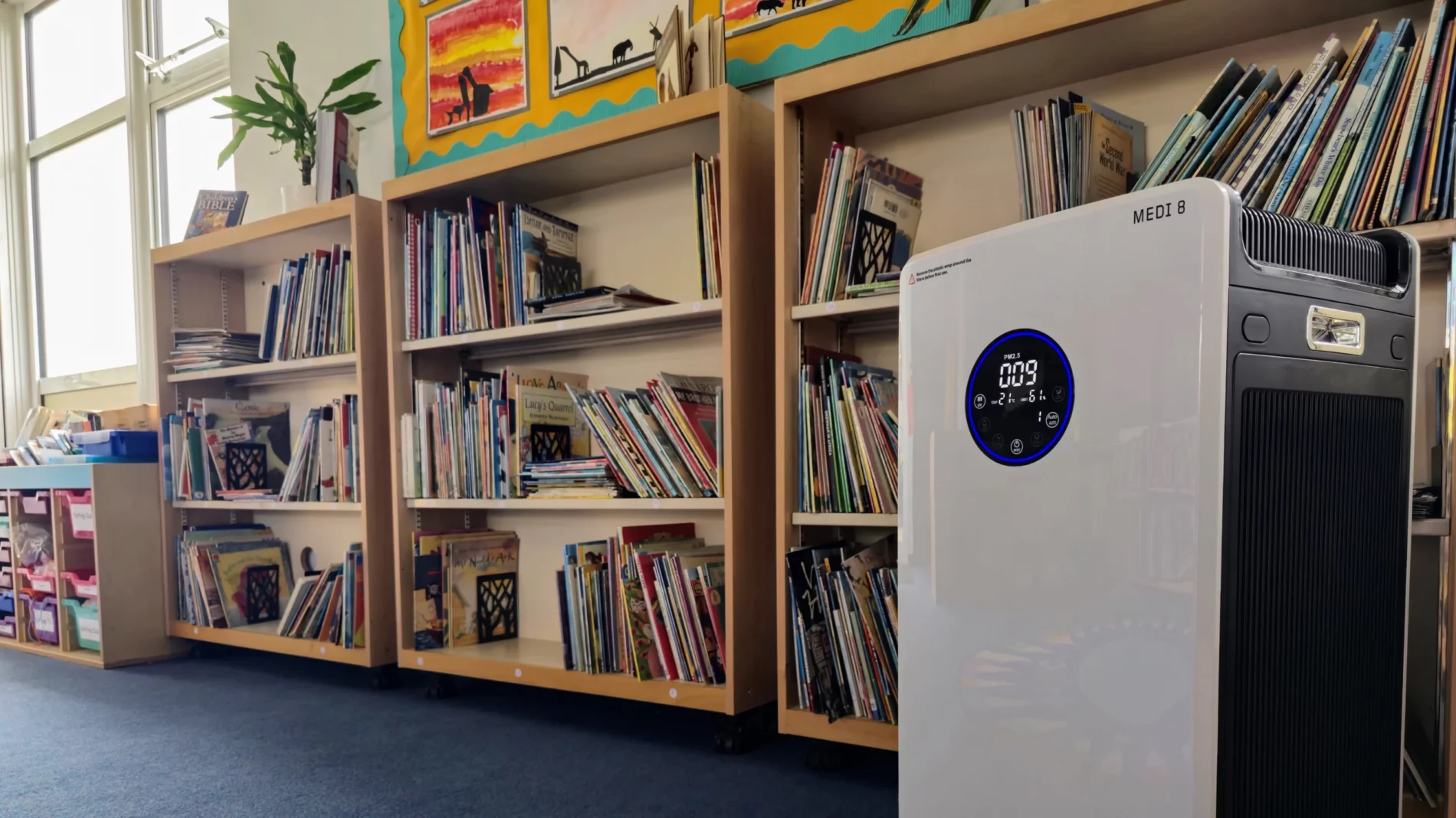
There is a growing interest in using air cleaning equipment in classrooms. Hertfordshire County Council trialed HEPA (High Efficiency Particulate Air filter) units in primary schools, through their Hertfordshire Schools Ventilation Programme (HSVP). We used SAMHE (Schools’ Air quality Monitoring for Health and Education) to help them evaluate the impact on air quality.
HEPA filter unit in a school classroom.
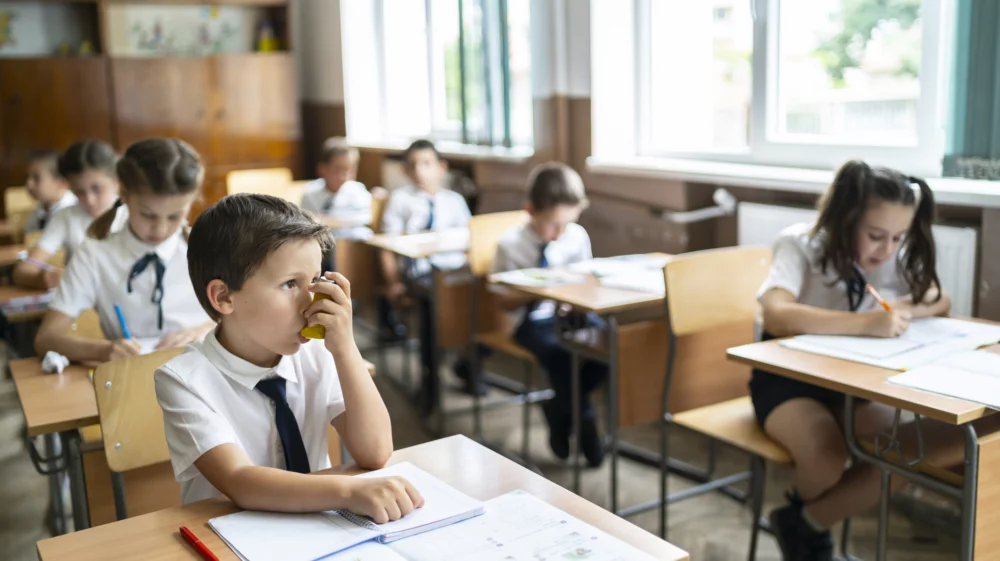
Poor air quality, including exposure to particulate matter, can have significant detrimental effects on children. It can decrease long-term lung health, increase the risk of asthma attacks and contribute to the spread of airborne illness, with resulting absenteeism. Poor air quality can also affect cognitive function, which impacts pupils’ concentration in lessons and could affect their attainment.
To improve air quality, Hertfordshire County Council has installed filters in every classroom in 63 of its primary schools. The Council prioritized schools located in areas of high deprivation and with higher levels of outdoor air pollution.
We supplied SAMHE air quality monitors for each classroom. The monitors measure carbon dioxide (CO2), volatile organic compounds (VOCs), particulate matter (PM), temperature and relative humidity. These measurements are collected into the central SAMHE database for analysis.
We worked with HCC to investigate the effects of running the HEPA filters on air quality in half of those schools, using both air quality data collected by the SAMHE monitors and data on absenteeism provided by HCC.
Schools participating in SAMHE + HSVP have access to the data on air quality in their classrooms through the SAMHE monitor and Web App. Schools can use the Web App to teach pupils about air quality and inform decisions about managing air quality in classrooms.
Initial analysis of data from the 2024 summer term showed that using the filters achieved a significant reduction in particulate matter in the classroom. Moreover, this reduction increased when particulate matter outside was higher, showing that the purifiers are creating cleaner air for all the school community.
By the end of July 2025 we’ll have gathered the first full year of monitoring data. We will analyze that data over the following months.
Hertfordshire County Council presented this work at the UKHSA (UK Health Security Agency) 2025 conference in Manchester on 25 and 26 March 2025.
Use the link below to download the poster.
Poster sharing methods and findings from the SAMHE+HSVP project
Poster: Hertfordshire County Council
This project was funded by Hertfordshire County Council.
We have now developed a web-based tool to estimate the costs and benefits (in terms of both energy use and classroom air quality) of installing HEPA filter units in individual school settings. We co-designed the tool with prospective users including schools, local authorities and the Department for Education. The CHEPA (Classroom HEPA) tool is free and available to all.
Project / A citizen science project monitoring indoor air, created with and for UK schools.
Project / We’ve delivered a co-designed web-based tool to enable schools to see the costs and benefits of installing HEPA filter units.
Project / CHILI aims to ensure that we support and improve children’s health and education as school and nursery buildings are adapted for energy efficiency.
Tool / CHEPA is an easy-to-use calculator that helps schools assess how a HEPA filter impacts classroom air quality and energy use.
Past event / HEPA filters in classrooms significantly improved air quality in Hertfordshire schools: read a poster presented at the UK Health Security Agency Conference.
Other publication / This two-page brief brings together SAMHE's findings and other evidence on air quality in UK schools and makes recommendations for policy and practice.