part of Citizen Science and Indoor air quality
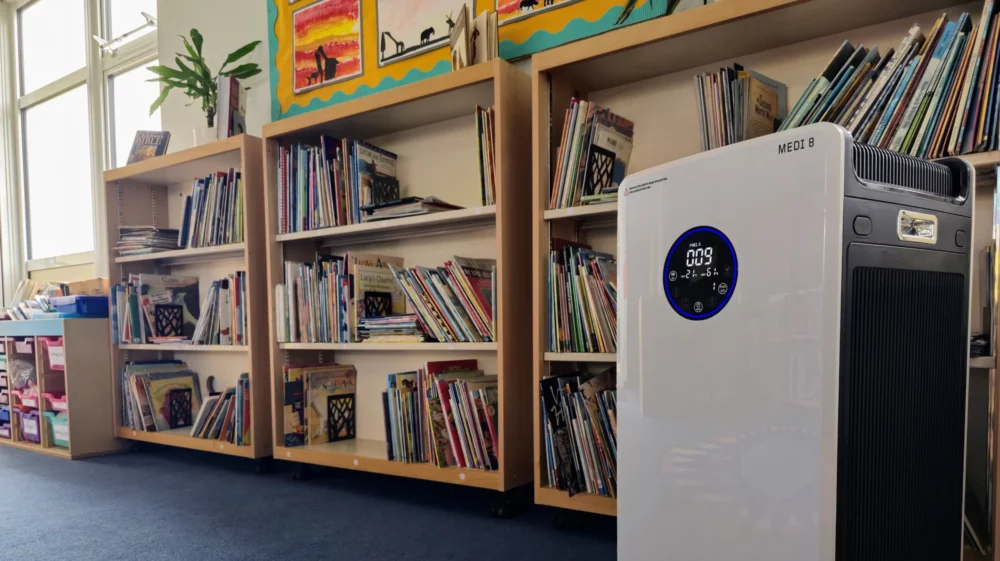
There is a growing interest in using air cleaning equipment in classrooms. Building on the SAMHE project, we have developed a web-based tool to estimate the costs and benefits (in terms of both energy use and classroom air quality) of installing HEPA filter units in individual school settings. We co-designed the tool with prospective users including schools, local authorities and the Department for Education. The CHEPA (Classroom HEPA) tool is now free and available to all.
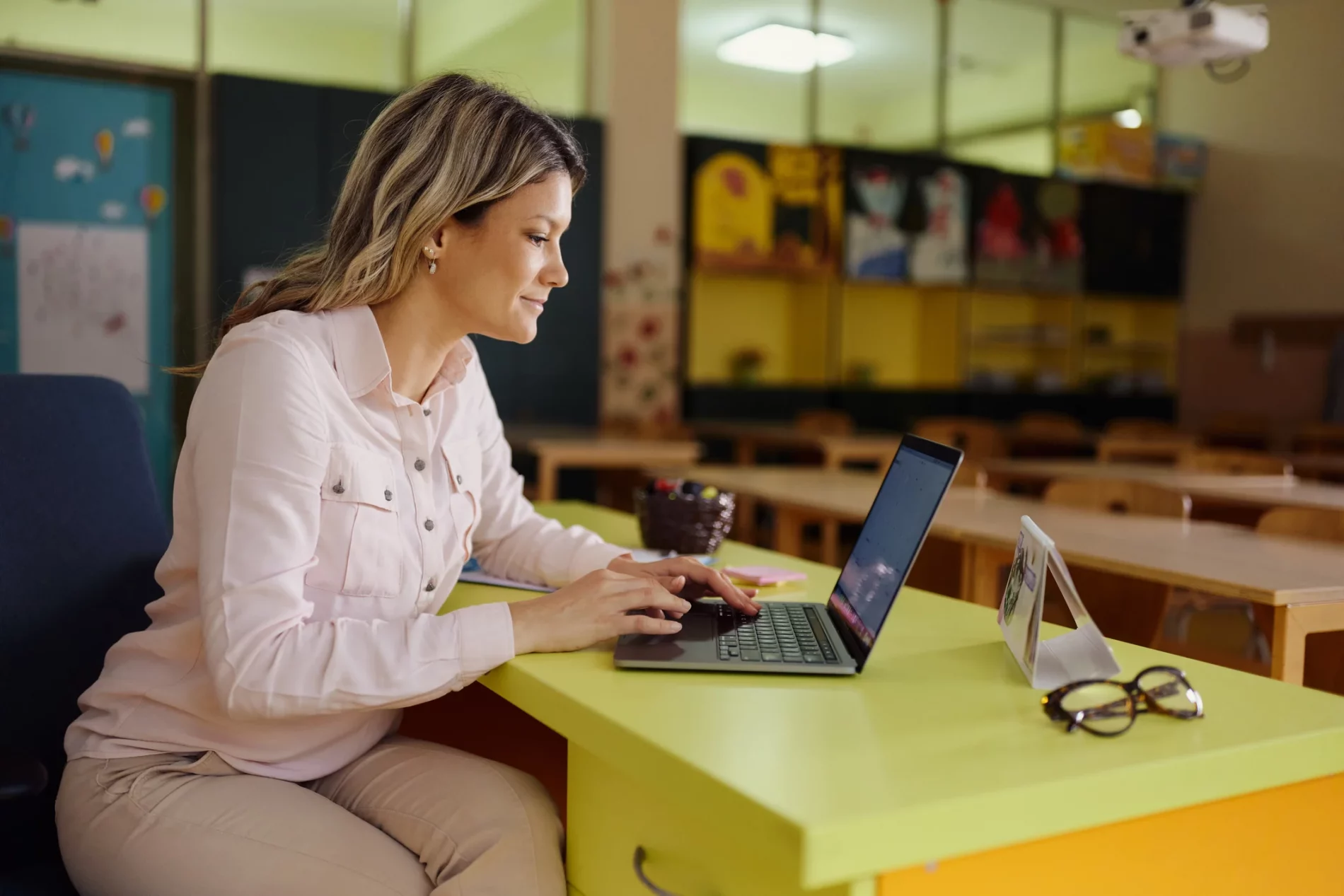
School leader using an online tool.
Photo: skynesher / Getty Images
Try the calculator to explore how a HEPA filter unit might affect air quality and energy use in your classroom. Run your own simulation and get a personalized summary.
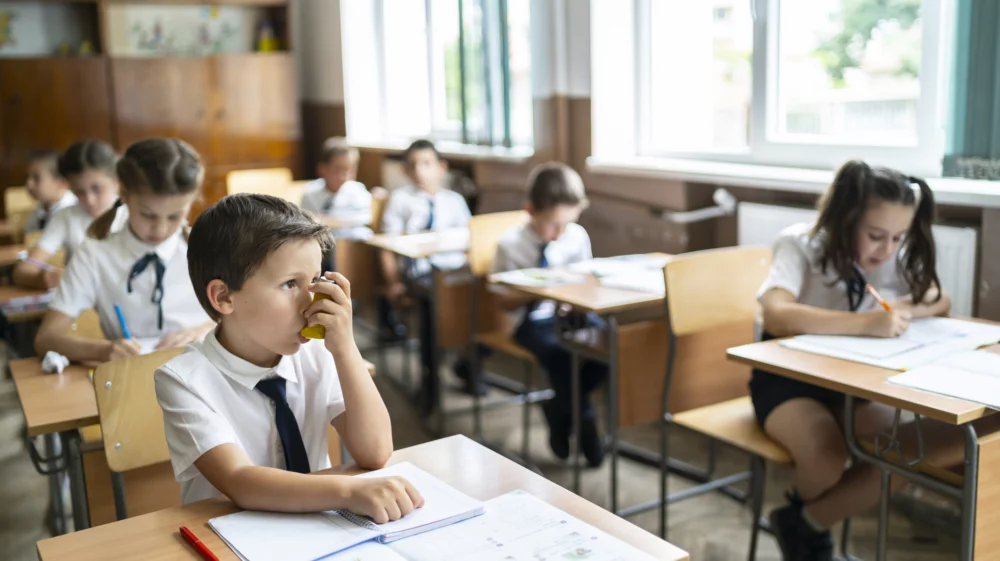
Poor air quality, including exposure to particulate matter, can have significant detrimental effects on children. It can decrease long-term lung health, increase the risk of asthma attacks and contribute to the spread of airborne illness, with resulting absenteeism. Poor air quality can also affect cognitive function, impacting pupils’ concentration in lessons and potentially affecting attainment.
In the last 3 years, around 10,000 UK classrooms have been supplied with HEPA (High Efficiency Particulate Air) filter units, primarily by the Department for Education (DfE), to provide cleaner classroom air. This has been done without any advance modelling to evaluate the likely impact, either on air quality or energy consumption.
Our project partners at Imperial College London (with whom we also collaborated on SAMHE) have recently developed a model to analyze the effect of HEPA filter air cleaners in classrooms on classroom air quality and energy consumption.
The CHEPA tool makes this model available to non-experts through an easy-to-use web-based tool. The tool allows school leaders, teachers and other end-users such as local authorities and the DfE, to assess the effect of installing high-performance air filter (HEPA) units on classroom air quality and energy consumption. This can enable better decision making for classroom air quality and energy usage.
Our partners at Imperial College London have used the CHEPA model to simulate classroom temperature, ventilation rates, carbon dioxide and particulate matter concentrations over the course of a school year. They found that using HEPA filters in classrooms would reduce classroom particulate matter by 40-60%, although this varied significantly depending on classroom conditions. The model also predicted significant reductions in airborne viral RNA concentrations, indicating that classroom HEPA filters might be expected to reduce the spread of indoor illness.
Members of Inclusive Citizen Science, SEI York’s Citizen Science group, co-designed the CHEPA Tool with school leaders, teachers and other end-users from Hertfordshire County Council, the Greater London Authority and the DfE. We used the methods for co-design and testing with schools that we developed when creating the SAMHE Web App as part of the SAMHE project.
CHEPA built on the work of the SAMHE project in other ways too. We used SAMHE air quality monitors to analyze the actual impact of using HEPA filter units in schools in Hertfordshire, through the SAMHE-HSVP project. We used that real-world data to test the CHEPA model.
The CHEPA Tool was launched in December 2025 and is hosted on the Co-Schools website – a site dedicated to providing schools and their communities with air quality information and tools.
CHEPA is funded through a UKRI Impact Acceleration grant.
Schools’ Air Quality Monitoring for Health and Education (SAMHE) has established a network of air quality monitors in schools across the UK, to generate an unparalleled dataset which will help researchers better understand schools indoor air quality. SAMHE is providing evidence for better national policies and practice. But more than that, it enables pupils to interact with real world data about their environment and gives them agency to take informed action.

Project / A citizen science project monitoring indoor air, created with and for UK schools.
Project / We worked with Hertfordshire County Council, using SAMHE to evaluate how using HEPA filters in schools affects air quality.
Project / CHILI aims to ensure that we support and improve children’s health and education as school and nursery buildings are adapted for energy efficiency.
Tool / CHEPA is an easy-to-use calculator that helps schools assess how a HEPA filter impacts classroom air quality and energy use.
Other publication / This two-page brief brings together SAMHE's findings and other evidence on air quality in UK schools and makes recommendations for policy and practice.
Journal article / The SAMHE Web App was co-designed with schools to ensure maximum acceptance and engagement by teachers and pupils, as this is critical to the project's success.