Photo: FatCamera / Getty images
Explore SEI's research on indoor air quality, its impacts on health and wellbeing, and how tackling air pollution is a win for both climate and human health.
Perspective / "A significant blind spot remains in our national health strategy " writes Sarah West in Government Business magazine.
Perspective / On World Ventilate Day 2024, SEI researcher Luke Gooding emphasizes the importance of ventilation during retrofitting to meet net-zero goals.
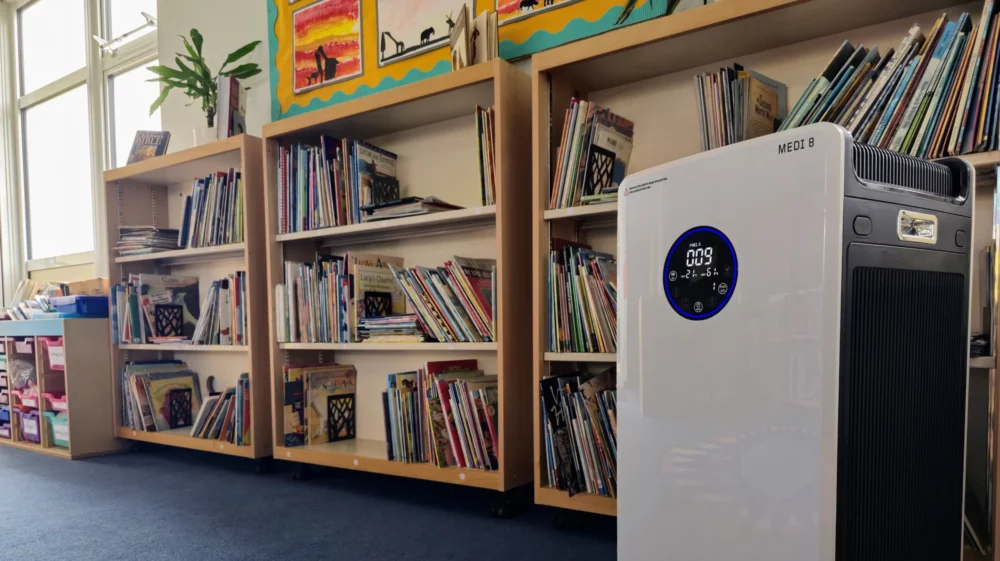
Past event / HEPA filters in classrooms significantly improved air quality in Hertfordshire schools: read a poster presented at the UK Health Security Agency Conference.
Past event / Sarah West and others explored how research can support evidence for better ventilation, including our work in UK schools. Watch the recording.
Past event / Sarah West and the wider SAMHE team shared the project's findings on indoor air quality in UK schools. Watch the recording.
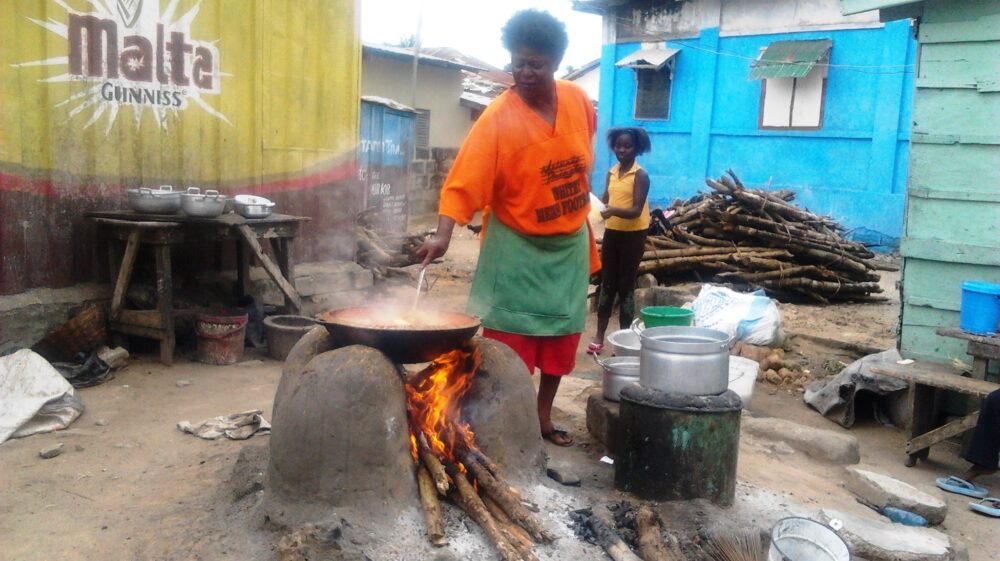
Feature / We speak with SEI US clean cooking expert Rob Bailis on how COP28 delivered for an issue that affects climate and development alike.
Perspective / An SEI study shows the need to urgently improve air quality both indoors and outdoors to protect the health of workers in Thailand.
Feature / Discover how SEI’s science-based strategies are turning research into real-world solutions for cleaner air and sustainable development.
Feature / At the INGENIOUS webinar, Sarah West and indoor air quality experts emphasized the need for further research to promote indoor air quality in all UK households.
SEI podcast / This episode explores technological innovations to enhance air quality monitoring globally.
SEI podcast / In this episode we explore how different worker groups are disproportionately exposed to and impacted by air pollution.
Feature / SEI York Centre Director Sarah West was interviewed for a recent briefing for the UK parliament.
Feature / Ahead of the UK general election, experts urge the next government to adopt a unified strategy to improve indoor air quality for better public health.
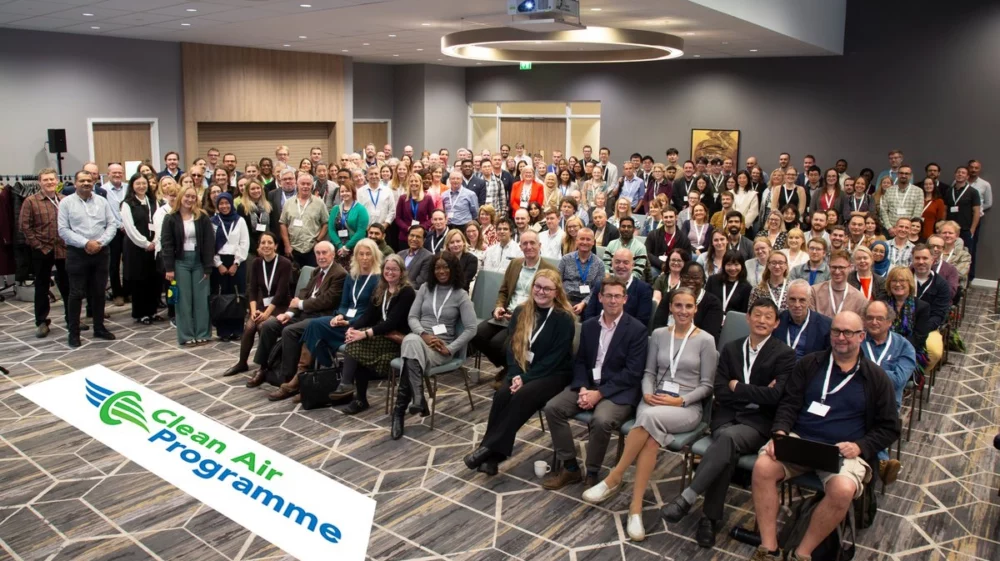
Past event / Read findings and reflections from our citizen science air quality monitoring in UK schools as presented at the UKRI/Met Office Clean Air Programme Conference.
Feature / Discover practical steps to reduce exposure and improve indoor air quality as shared by the INGENIOUS project at the UK Clean Air Conference.
Feature / On UK Clean Air Day, SEI York researchers explore the potential for UK-led initiatives to inspire and guide global policies and actions toward cleaner air.
Perspective / Improving indoor air quality remains a global issue that requires collective action.
Media coverage / Along with experts and representatives from the UK government, Dr Sarah West from SEI York contributed to a debate on indoor air quality.
Feature / SEI's Rob Bailis led research for a journal article featuring the first known analysis of the health and climate consequences of large-scale fuel transitions.
Feature / This piece looks at the day in the life of a female worker in a lacquer craft village in Viet Nam to show how female workers are exposed to air pollution.
Journal article / Access to clean, reliable energy is a cornerstone of public health, yet energy poverty continues to undermine health and equity in many lower income countries.
Journal article / Household cooking contributes significantly to greenhouse gas emissions and short-lived climate pollutants, especially where charcoal, kerosene are widely used.
Journal article / This journal article explores the effects of different cooking fuels, stoves and greater environment on users' air pollution exposure.
Journal article / SAMHE data shows that particulate matter levels in UK schools are heavily influenced by outdoor air quality.
Journal article / Biomass cookstoves remain a major source of harmful air pollution. This article analyses the research and policy landscape on these cookstoves' emissions.
Journal article / INGENIOUS project researchers studied indoor air quality in 300+ Bradford homes, linking pollutants to cooking and ventilation practices.
Other publication / This two-page brief brings together SAMHE's findings and other evidence on air quality in UK schools and makes recommendations for policy and practice.
Journal article / Carbon monoxide exposure poses a health risk to many urban residents in sub-Saharan Africa, with concentrations at their highest as evening meals are prepared.
Journal article / The SAMHE Web App was co-designed with schools to ensure maximum acceptance and engagement by teachers and pupils, as this is critical to the project's success.
Journal article / The SAMHE project introduces a novel method to generate and analyze extensive datasets via collaborative citizen science methods, in this case with UK schools.
Journal article / This article presents the first global assessment of the association between preterm births and exposure to ambient particulate matter (PM2.5) air pollution.
Journal article / This publication explored how environmental monitoring can help address the mental health needs of vulnerable perinatal adolescents.
Journal article / Adopting citizen science methods, researchers used questionnaires and breathing tests to investigate the impact of air pollution on Nairobian schoolchildren.
SEI brief / Four case studies are part of a larger study examining air pollution and workers' occupational exposures in southeast Asia.
SEI brief / A new study on air pollution and garment workers in Cambodia aims to influence policy and interventions to protect their health, with benefits across the board.
Journal article / A novel analysis shows the global climate and health benefits of switching biomass cookstoves in low- and middle-income countries to electricity and LPG.
SEI report / This scoping report assesses the interlinkages between air pollution and the world of work in East and Southeast Asia, to identify knowledge gaps to be filled.
Journal article / This paper addressed how poor ventilation and polluting cooking fuels in low-income homes cause high exposure, yet relevant global studies remain limited.
Journal article / The study aimed to measure in-home emissions from a variety of stoves in rural Indian communities.
Journal article / Improving assessments and evaluating strategies to reduce exposure to indoor air pollutants by vulnerable groups.
Journal article / Using citizen science approaches to explore personal exposure to air pollution of selected informal settlement dwellers in Nairobi, Kenya.
Journal article / This study assesses changes in carbon monoxide concentrations in kitchens after introduction of improved rocket mud stoves in Western Kenya.
Journal article / Household air pollution, caused by use of biomass fuels and coal, is a major problem in low and middle income countries
Project / An interdisciplinary network set up to understand particulate matter in indoor air, its health impacts and effective and equitable ways to address it.
Project / CHILI aims to ensure that we support and improve children’s health and education as school and nursery buildings are adapted for energy efficiency.
Project / We’ve delivered a co-designed web-based tool to enable schools to see the costs and benefits of installing HEPA filter units.
Project / We worked with Hertfordshire County Council, using SAMHE to evaluate how using HEPA filters in schools affects air quality.
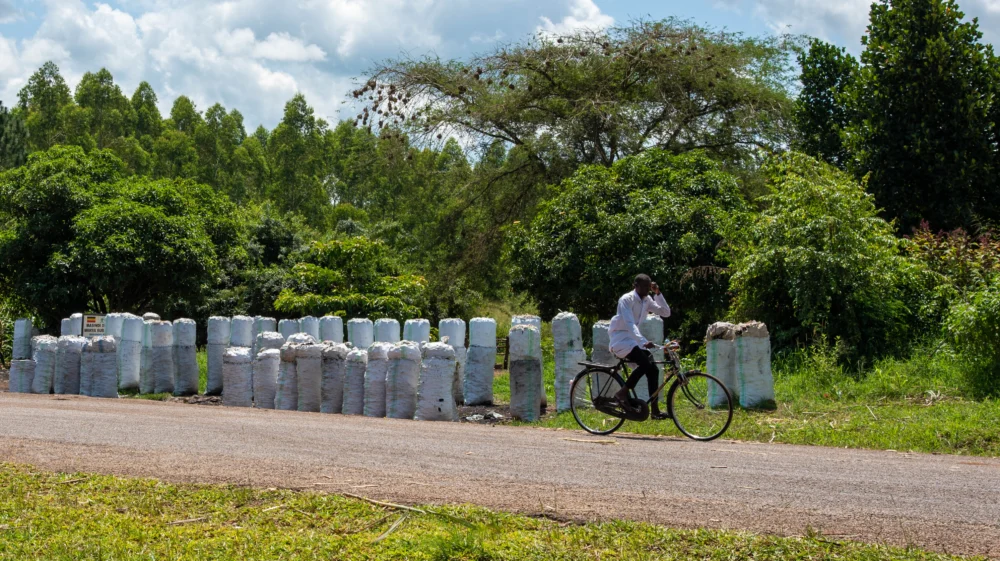
Project / The Ugandan government hopes to scale up cleaner cooking options to curb the health and climate damage caused by burning wood and charcoal.
Project / A citizen science project monitoring indoor air, created with and for UK schools.
Project / This project investigates air pollutants inside homes in the city of Bradford, UK: their sources, interactions and health effects on those living there.
Project / Improving understanding about early life origins, burden, determinants, and prognostic significance of non-communicable lung disease in Kenya.
Tool / CHEPA is an easy-to-use calculator that helps schools assess how a HEPA filter impacts classroom air quality and energy use.