Skip navigation
river
Program

Transboundary Rivers of South Asia

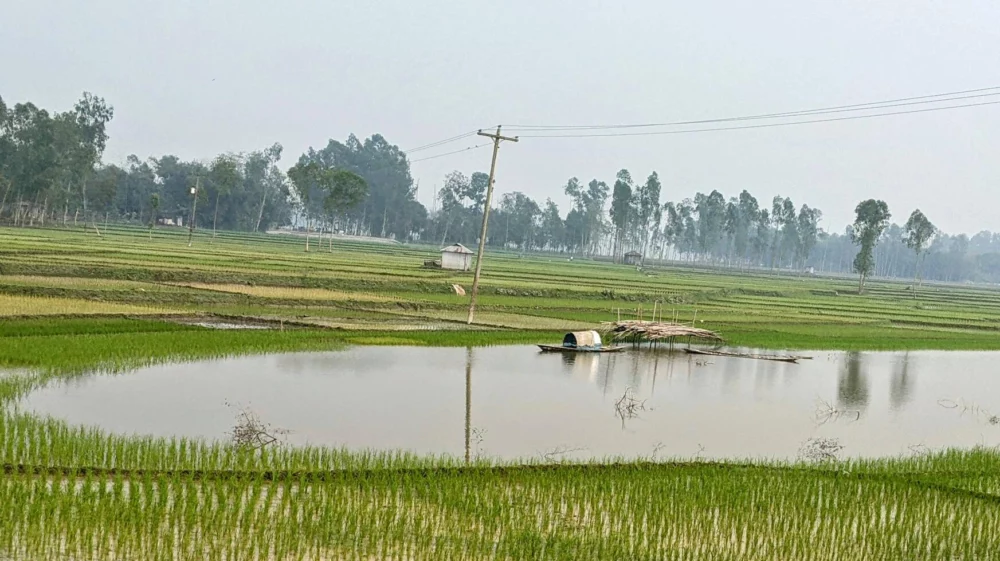
Transboundary Rivers of South Asia (TROSA) Phase-2: Rivers, Rights, and Resilience (T2:3R) is a four-year (2023–2026) regional program led by Oxfam Novib, funded by the Swedish government.

Photo: msi sakib / Unsplash.

Active project

2023–2026

This program aims to foster stronger cooperation in managing shared water resources and building resilience among riparian communities, particularly in the face of escalating climate change impacts. The work comprises the transboundary Ganga-Brahmaputra-Meghna (GBM) River Basins across Nepal, Bhutan, India, and Bangladesh.

The GBM River Basin is one of the largest in the world, covering approximately 1.7 million square kilometers and supporting over 650 million people. This area encompasses vast cultural and demographic diversity and is home to an intricate web of freshwater and terrestrial ecosystems vital for biodiversity. The rivers and connected ecosystems are essential for livelihoods, agriculture, fisheries, and water supply across the four nations. Yet, they are increasingly vulnerable due to unsustainable development, pollution, and climate change.

SEI Asia Centre serves as a regional partner in T2:3R, playing a key role in developing tools, knowledge products, and capacity-building strategies to support consortium partners’ interventions in the Brahmaputra and Meghna basins in India and Bangladesh. SEI’s involvement will enhance grassroots diplomacy, empower local communities, including women, youth, and indigenous groups, and cultivate them as key change agents. This empowerment will enable civil society actors in the region to advocate for sustainable and equitable water governance that reflects their needs and priorities.

Building upon the successes of TROSA Phase 1, this second phase, T2:3R, expands the scope by engaging ten partners who operate at regional, national, and local scales within the GBM basin. The program’s strategic focus is to enable riparian communities to make informed decisions, practice sustainable livelihoods, and foster cooperation at all levels of water governance.

SEI’s contributions to T2:3R will focus on co-producing data and insights on resource conditions, delivering practical tools, and building pathways to enhance community resilience. A significant emphasis will be placed on developing tools that mainstream gender equality and social inclusion in managing shared resources. These efforts aim to amplify the roles of women, indigenous people, and youth, ensuring they are included in decision-making processes and water governance dialogues.

Expected Outcomes:

  1. Climate-Resilient Livelihoods: Strengthening the climate resilience of communities across the GBM basins, ensuring they can sustainably manage and adapt their livelihoods in response to environmental changes.
  2. Improved Ecosystem Management: Enhancing transboundary river ecosystem health and biodiversity conservation across the GBM basin, addressing critical environmental threats and fostering sustainable practices.
  3. Leadership and Advocacy: Building leadership capacity among civil society, focusing on women, indigenous peoples, and youth, to influence policies and practices within government and the private sector on water governance.
  4. Strengthened Cooperation and Accountability: Advancing cooperation, collaboration, and accountability mechanisms across and between the GBM basins, laying the foundation for more inclusive, equitable, and transparent water governance structures.

Overall goal: Improved cooperation in governing shared water resources, strengthening resilience to climate change of riparian communities in thetransboundary Ganges-Brahmaputra-Meghna river basins

The programme will contribute to the achievement of the following Sustainable Development Goals (SDGs) by working towards:

  • Climate-resilient livelihoods of poor and vulnerable riparian communities (SDGs 1 – End poverty, and 13 – Climate action)
  • Sustainable management of and equitable access to natural resources– (SDGs 6 – Clean water and sanitation, and 12 –Responsible consumption and production, and 15 – Life on Land)
  • Empowerment and participation of local communities, especially women, youth, and Indigenous People in water governance (SDGs 5 – Gender equality, 6, 10 – Reduced inequalities and 16 – Peace, justice and strong institutions)
  • Cooperation, collaboration, and accountability in transboundary water resources governance (SDG 16)

The programme will work directly with communities in selected locations within the transboundary Ganges-Brahmaputra-Meghna river basins, across Bangladesh, India, and Nepal, including in the following sub-basins:

  • Brahmaputra basin: Brahmaputra, Jinjiram, Teesta and Saralbhanga sub-basins
  • Ganga basin: Padma, Ichamoti, Siba-Barnai, Pashur-Rupsha, Sharda and Mahakali sub-basins
  • Meghna basin: Umngi-Jalokhali-Dhamalia, Khasimara-Nawagang, Umiew-Umiam, Umsohryngkew- Dhala, Umngot-Piyan, Myntdu-Sari-Gowain, Barak-Surma-Kushiyara -Sonai-Bardal
  • Riparian communities living in the GBM basins (women, men, youth and Indigenous People, smallholder farmers, fisherfolk, boat-dwellers, and people engaged in water- or natural-resource- based livelihoods such as tourism and trade)
  • Civil society organizations representing women, youth, Indigenous communities, and livelihood groups, community groups and advocacy forums, and Women Empowerment Centres
  • Future civil society leaders (women and youth)  

In addition to the direct target groups, the programme will engage with other stakeholders, including:

  • Government and political stakeholders at all levels (local, state/ province, national and regional)
  • Academic and research institutions
  • Media organizations

Photo exhibition "Through our lens: voices from fishing communities"

This photo exhibition showcase images captured by community members themselves, featuring 18 curated photographs with captions and short narratives that document livelihoods, gender dynamics and climate resilience strategies in fishing communities.

Visit the online exhibition

More details

Perspective

Sushmita Mandal

Senior Research Fellow

SEI Asia

Thanapon Piman
Thanapon Piman

Senior Research Fellow

SEI Asia

Satish Prasad

Research Fellow

SEI Asia

Unchulee Lualon

Programme Coordinator

SEI Asia

Sizwile Khoza

Research Fellow

SEI Asia

Rajesh Daniel

Head of Communications, SEI Asia

Communications

SEI Asia